
Daniel Rabinovich
1943 - 2015Les Luthiers: Unen Canto con Humor
Jorge Maronna, Carlos López Puccio
Jorge Maronna, Marcos Mundstock
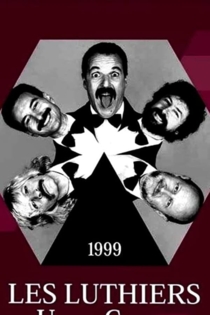
Premiered on June 9, 1994 at the Astengo Theater, in Rosario, Argentina. Last performance on January 31, 1999, at the Auditorium Theater, in Mar del Plata, Argentina. PROGRAM: 1 - El regreso del indio 2 - Manuel Darío 3 - Así hablaba Sali Baba 4 - El negro quiere bailar 5 - San Ictícola de los peces 6 - A la playa con Mariana 7 - Perdónala 8 - Fronteras de la ciencia 9 - Vote a Ortega Instruments premiered on this show: Bajo Barríltono Ferrocalíope. Recorded at the Auditorium Theater, Mar del Plata, Argentina, January 30, 1999.
Les Luthiers: Unen canto con humor
Les Luthiers: Grandes hitos
Jorge Maronna, Carlos López Puccio
Carlos López Puccio, Marcos Mundstock
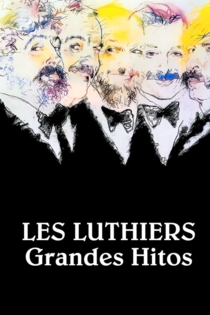
Les Luthiers is a comedy-musical group from Argentina, very popular also in several other Spanish-speaking countries such as Paraguay, Peru, Chile, Ecuador, Spain, Colombia, Mexico, Uruguay and Venezuela. They were formed in 1967 by Gerardo Masana, during the height of a period of very intense Choral Music activity in Argentina's state universities.
Les Luthiers: Grandes hitos
Les Luthiers: Bromato de armonio
Jorge Maronna, Carlos López Puccio
Jorge Maronna, Marcos Mundstock
Premiered on June 13, 1996 at the Astengo Theater, in Rosario, Argentina and last performance on December 3, 2002, at the Sports Pavilion, in León, Spain, 'Bromato De Armonio' was a show made by the Argentinian comedy-musical group Les Luthiers. The show itself was showcased all around Latin America between 1996 and 2001. PROGRAM: 1. Para Elizabeth (sonata a la carta); 2. La Princesa Caprichosa (pequeña serenata para grandes instrumentos); 3. La Vida es Hermosa (disuacidio); 4. La Hija de Escipión (fragmento de ópera); 5. La Redención del Vampiro (hematopeya); 6. Educación Sexual Moderna (cántico enclausturado); 7. ¿Quién Mató a Tom McCoffee? (música en serie); 8. La Comisión (himnovaciones); 9. Perdónala (bolérolo) The 'Campanófono a martillo' and the 'Cornetas de Asiento' were premiered on this show. Recorded live at the Teatro Coliseo in Buenos Aires, Argentina, on June the 27th, 1998.
Les Luthiers: Bromato de armonio

Les Luthiers: Mastropiero que nunca
Marcos Mundstock, Daniel Rabinovich
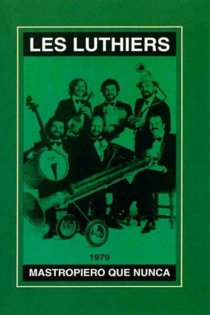
'Mastropiero que nunca' was a theatrical humour/music show by Les Luthiers, first performed on Friday 9 September 1977 and last done on Sunday 27 February 1983 (although it was headlining only during 1977 and 1978). It consisted of nine new (never performed previously) live numbers, which ranged from a madrigal to a salsa skit. PROGRAM: 1. Jingle Bass-Pipe (Obertura); 2. La Bella y Graciosa Moza Marchose a Lavar la Ropa; 3. El Asesino Misterioso; 4. Visita a la Universidad de Wildstone; 5. Kathy, la Rrina del Saloon; 6. El Beso de Ariadna; 7. Lazy Daisy; 8. Sonatas para Latín y Piano; 9. Payada de la vaca; 10. Cantata del Adelantado Don Rodrigo Díaz de Carreras, de sus Hazañas en Tierras de Indias, de los Singulares Acontecimientos en que se vió Envuelto, y de cómo se Desenvolvió; 11. El explicado. Two new instruments were introduced during this show: the 'Calephone da Casa' and the 'Shoephone'.
Les Luthiers: Mastropiero que nunca
Les Luthiers: Hacen muchas gracias de nada
Daniel Rabinovich, Jorge Maronna
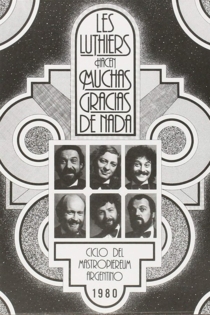
'Muchas Gracias de Nada', is a show premiered on June 15, 1979 at the Coliseo Theater in the City of Buenos Aires by the Argentinean ensemble of informal instruments, Les Luthiers. Recorded live between October 24th and 25th, 1980 at the same theater. PROGRAM: 1. La Campana Suonerá; 2. El Rey Enamorado; 3. Sinfonía Interrumpida; 4. La Tanda; 5. Canción para Moverse; 6. La Gallina Dijo Eureka; 7. Trío Op. 115; 8. Cartas de Color; 9. Tango Op. 11. In this show 'Antenor' made its first appearance, an advanced robot (for the time it was built - 1979) that weighed 80 kilos and was equipped with several motors that allowed it to move around the stage, turn its head, etc. The robot caught fire during the last performance of this play (Palacio de Bellas Artes, Mexico - 1980) in the middle of the stage and before the astonished gaze of all those who were there.
Les Luthiers: Hacen muchas gracias de nada
Les Luthiers: El grosso concerto
Carlos López Puccio
Carlos López Puccio, Jorge Maronna
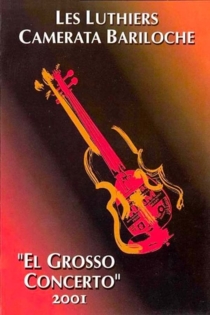
El Grosso Concerto, opus 58, fue un espectáculo del conjunto de instrumentos informales Les Luthiers en compañía de la Camerata Bariloche. El título, El Grosso Concerto, es en realidad una variación del título de una obra incluida en el espectáculo: el Concerto grosso alla rústica (un verdadero concerto grosso barroco, al estilo de Vivaldi). Esta obra fue compuesta por el compositor ficticio Johann Sebastian Mastropiero, inspirado en un poema del "famoso" poeta ficticio Torcuato Gémini. El título de la obra no tiene nada que ver con la forma musical de que se trata (el concerto grosso barroco), sino a la dedicatoria que le hizo Gemini a una regordeta y tosca doncella del altiplano argentino, a la que iba dedicado el poema. Dicha dedicatoria decía así: "Con certo sentimento d´amore, alla signorina grossa e rústica".
Les Luthiers: El grosso concerto
Les Luthiers: Las Obras de Ayer
Les Luthiers
Carlos López Puccio, Jorge Maronna
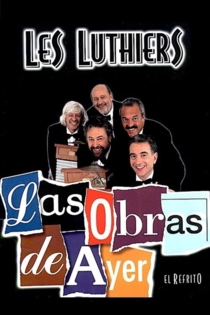
Les Luthiers is a comedy-musical group from Argentina, very popular also in several other Spanish-speaking countries such as Paraguay, Peru, Chile, Ecuador, Spain, Colombia, Mexico, Uruguay and Venezuela. They were formed in 1967 by Gerardo Masana, during the height of a period of very intense Choral Music activity in Argentina's state universities.
Les Luthiers: Las obras de ayer
La Argentina de Tato
Alejandro Borensztein, Sebastián Borensztein
Leonardo Sbaraglia, Alfredo Casero
In a Mockuocumentary format, led by the personage represented by Leonardo Sbaraglia, in 2499 the research is presented - carried out by scientists from the University of Heidelberg, Germany, whose exposition is in charge of Helmut Strasse, founder of the first school of Argentinology - about the remote existence of Argentina, an unknown country of great potential inexplicably disappeared from the face of the Earth.
Tato's Argentina


Papeles en el viento
Juan Taratuto
Diego Peretti, Pablo Echarri
When El Mono dies, his three longtime friends try to recover from the loss and want to secure his little girl's future. But for Fernando, Mauricio and El Ruso this will not be easy. They decide to recover a big investment El Mono had made when he had bought a soccer player who was supposed to become a star.
Roles in the Wind

Mi primera boda
Ariel Winograd
Natalia Oreiro, Daniel Hendler
On her wedding day, Adrian, nervous, make a small mistake that aims to hide Leonora, his girlfriend, to avoid problems. But far from avoiding them, complicates the matter and the party runs the risk of end badly, like the future marriage of the couple.
Mi primera boda

Espérame Mucho
Juan José Jusid
Víctor Laplace, Alicia Bruzzo
Juan remembers his childhood spent during the fifties in Argentina, when he lived doubts, fears and conflicts typical of the passage towards adolescence, surrounded by his family and the neighbors of the neighborhood
Keep Waiting for Me

Strangers in the Night
Alejandro Montiel
Diego Torres, Julieta Zylberberg
When Martín and Sol try to solve the enigma of a missing neighbor, they will discover that nothing is what it seems, that your hearing can trick you just like your imagination and that your heart is a double-edged weapon.
Strangers in the Night

Les Luthiers: Aquí Les Luthiers
Ernesto Acher, Jorge Maronna
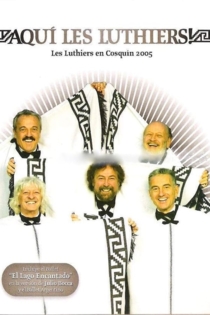
Here Les Luthiers is a recital of the Argentine group of informal musical instruments Les Luthiers, made especially for the 45th edition of the Cosquín Folk Festival. It was presented for the only time on January 28, 2005, at the Plaza Prosper Molina in the city of Cosquín, Córdoba, Argentina, traditional venue of the festival.1
Les Luthiers: Aquí Les Luthiers
Les Luthiers: Viejos Fracasos
Carlos López Puccio, Carlos Núñez Cortés
Premiered on July 22, 1976 at the Odeón Theater, in Buenos Aires. Last performance on May 15, 1977 at the Coliseo Theater, in Buenos Aires. PROGRAM: 1) Miss Lilly Higgins SIngs Shimmy in Mississippi's Spring (shimmy); 2) Brotan und Gretchen (aria aria); 3) Serenata Mariachi (serenata mariachi); 4) Epopeya de Edipo de Tebas (cantar bastante de gesta); 5) Les Nuits de París (chanson francesa); 6) Si no fuera Santiagueño (chacarera de Santiago); 7) Recitado Gauchesco (aires de manguera); 8) Concierto de Mpkstroff (concierto para piano y orquesta) and; 9) Oi Gadóñaya (canciones de los barqueros del Vólgota). It is the first anthology of the group. First entire show ever filmed. This show had its Portuguese version when Les Luthiers performed in Brazil during 1976 and 1977.
Les Luthiers: Viejos Fracasos