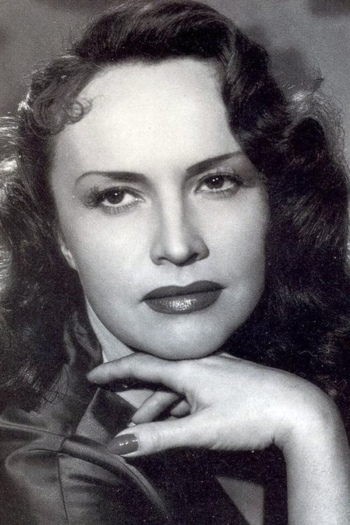
Ginette Leclerc
1912 - 1992She was born Geneviève Lucie Menut in Paris, France and died in Paris. She is possibly best-remembered for her roles in such films as Le Corbeau (1943), L'homme de nulle part (1937), The Baker's Wife (1938), Cab Number 13 (1948), and Tropic of Cancer (1970).
Description above from the Wikipedia article Ginette Leclerc, licensed under CC-BY-SA, full list of contributors on Wikipedia
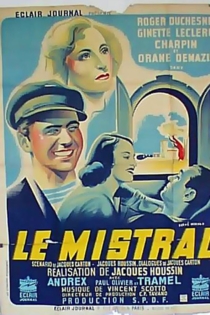

Jacques et Jacotte
Robert Péguy
Roger Tréville, Jacotte
Jacotte and her older sister Annie live in a Montmartrois workshop where Annie paints pictures of flowers. But the paintings do not sell. The bailiff threatens to seize the furniture so Jacotte decides to go see the owner. Jacques is conquered by the little girl and soon after by Annie.
Jacques et Jacotte
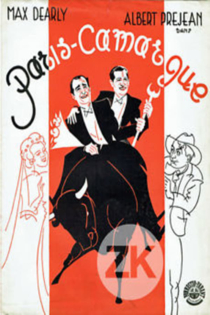
Paris-Camargue
Jack Forrester
Albert Préjean, Max Dearly
In the Camargue, the rich owner Jules Fabregoul squanders all his fortune to please his mistress, a Parisian actress with luxury tastes. But he is not the only one to be in trouble. His niece is having sentimental problems: she thinks she is being cheated on by her fiance Gérard, a music-hall artist. She takes refuge with Jules's sister, Aunt Fabregoul, the director of a home for repentant young girls. But Gérard did not make a mistake and the reconciliation takes place during the recording of a radio program.
Paris-Camargue
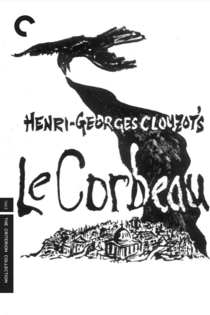
Le Corbeau
Henri-Georges Clouzot
Pierre Fresnay, Ginette Leclerc
Remy Germain is a doctor in a French town who becomes the focus of a vicious smear campaign, as letters accusing him of having an affair and performing unlawful abortions are mailed to village leaders. The mysterious writer, who signs each letter as "Le Corbeau" (The Raven) soon targets the whole town, exposing everyone's dark secrets. This allegorical film was highly controversial at the time of its release, and was banned in France after the Liberation.
Le Corbeau
L'heureuse aventure
Jean Georgescu
Pierre Alcover, Brunel
A problem forces a plane carrying passengers bound for the Far East to land on a desert island. Couples forms and they are happy. They are finally located, rescued and repatriated. A few months of 'civilization' are enough to pit them against each other. Then they decide to return to their paradise lost.
L'heureuse aventure

Le Plaisir
Max Ophüls
Claude Dauphin, Gaby Morlay
Three stories about the pleasure. The first one is about a man hiding his age behind a mask to keep going to balls and fancying women - pleasure and youth. Then comes the long tale of Mme Tellier taking her girls (whores) to the country for attending her niece's communion - pleasure and purity. And lastly, Jean the painter falling in love with his model - pleasure and death.
Le Plaisir

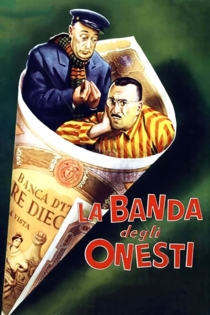
La banda degli onesti
Camillo Mastrocinque
Totò, Peppino De Filippo
Italy, mid '60s. Three guys from a poor neighbourhood try to get rich by printing fake money using the fact that one of them works as a typographer. The story unravels around their embarrassed efforts to spend the money, their little family issues and ends with a surprise.
The Band of Honest Men
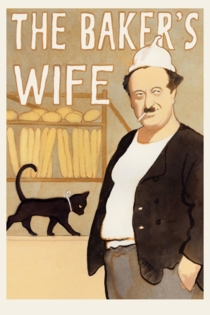
La Femme du boulanger
Marcel Pagnol
Raimu, Ginette Leclerc
In this little Provencal village, a new baker, Aimable, settles down. His wife Aurelie is beautiful and much younger than he. She departs with a shepherd the night after Aimable produces his first breads. Aimable is so afflicted that he can not work anymore. Therefore, the villagers, who initially laughed at his cuckoldry, take the matter very seriously (they want the bread) and organize a plan to find Aurelie and to bring her back to the bakery.
The Baker's Wife
Jamie's Super Food
Christian-Jaque
Armand Bernard, Jamie Oliver
On his wedding day, Robert confesses his father-in-law that twenty years ago, he seduced a lady in a sleeping car of a train. His mother-in-law overhears the conversation and convinces Robert that she was that lady and that makes Robert's bride also his daughter. The wedding is in danger of being annulled when the trickery is finally discovered.
Ladies Only Compartment

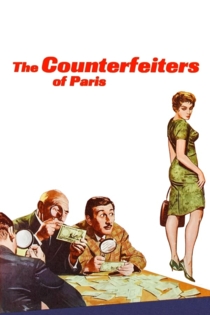
The Counterfeiters of Paris
Gilles Grangier
Jean Gabin, Bernard Blier
"Le Dabe" retired many years ago and now he lives in the Tropics where he owns stables and horses. He is a very rich man. He was the king of all money counterfeiters. He is contacted from Paris to organize a new job. He says no. But when he finds out the the currency that should be counterfeited is the Dutch florin, he accepts immediately. He retired after having counterfeited 100 florin notes just before the Queen Wilhelmina retired them from circulation. He flies to Paris. But the gang is not to be trusted, at least not all of them.
The Counterfeiters of Paris
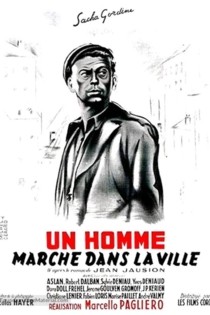
Un homme marche dans la ville
Marcello Pagliero
Ginette Leclerc, Jean-Pierre Kérien
Le Havre, France, in 1949. In a town that still shows the scars of war, several friends meet up in Albert's café. One of them, Laurent, has lost his job on the docks and his marriage to Madeleine is falling apart. He knows that his wife wants to start an affair with friend, Jean Sauviot. Jean is a lonely man who is attracted to Madeleine but doesn't want to commit himself to the wife of a friend. On the day that Madeleine tells her husband that she is seeing Jean, Laurent goes looking for Jean to find an explanation. Arriving on the docks in the evening, he attacks an American sailor who looks like Jean, but the man fights back and runs away after killing Laurent accidentally. Madeleine thinks that Laurent was killed by Jean and believes that she can start a new life with her lover. The police have other ideas...
A Man Walks in the City
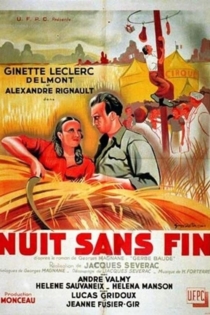
Nuit sans fin
Jacques Séverac
Ginette Leclerc, Édouard Delmont
Fleeing Paris where he killed, Olivier takes refuge in the Giraud farm and falls in love with his daughter, to the chagrin of her suitor, a man named Joseph. When the latter is found dead, Olivier is accused and the young woman will arrive too late to clear him, the poor man having fallen into a ravine while trying to flee.
Endless Night
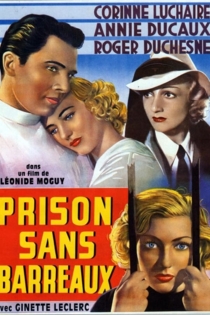
Prison sans barreaux
Léonide Moguy
Corinne Luchaire, Annie Ducaux
In a state correctional institute for teenage girls, Madame Appel, the superintendent, rules with an iron fist. The State appoints thirty-year-old Yvonne to evaluate the situation. The young woman is convinced that the girls should feel wanted rather than be constantly subdued and is accordingly determined to make Madame Appel change her methods of education.
Prison Without Bars