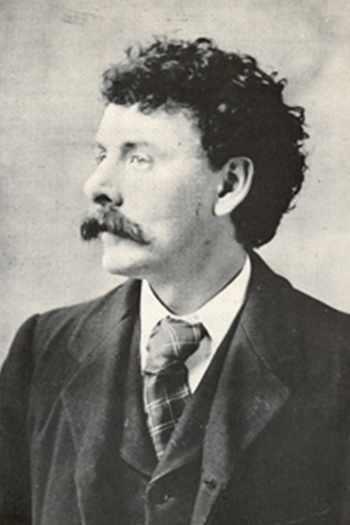
George Albert Smith
1864 - 1959Mary Jane's Mishap
George Albert Smith
Laura Bayley
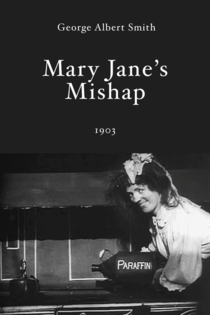
Mary Jane tries to light the oven. When she's unsuccessful, she plays around, getting black boot polish on her face. She mugs before a mirror. Then, it's back to work. When the stove still won't light, she pours in paraffin, winks at the camera, and lights a match. Kaboom! Is there any rest for the foolish, even in the grave?
Mary Jane's Mishap
The Kiss in the Tunnel
George Albert Smith
Laura Bayley, George Albert Smith
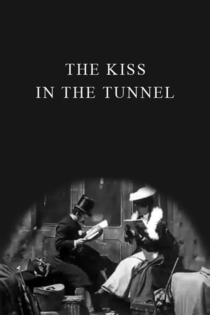
Produced and directed by George Albert Smith, the film shows a couple sharing a brief kiss as their train passes through a tunnel. The Kiss in the Tunnel is said to mark the beginnings of narrative editing.
The Kiss in the Tunnel
The X-Ray Fiend
George Albert Smith
Laura Bayley, Tom Green
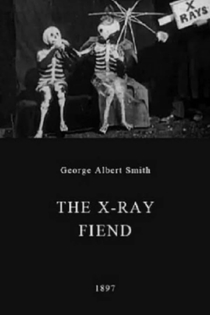
A romantic couple are transformed into skeletons via X-Rays. The film combines two very recent innovations: Wilhelm Roentgen's discovery of X-rays in 1895, and Georges Méliès' accidental realisation of the special-effects potential of the jump-cut in 1896.
The X-Ray Fiend
Grand Display of Brock's Fireworks at the Crystal Palace
George Albert Smith
An actuality of the Brock's fireworks factory to celebrate its 40th anniversary organizes. The final shot has two flaming portraits of King Edward VII and Queen Alexandra, originally presented by Brock's at the coronation in 1902. The film is a cornucopia of colors, as it was originally a hand-painted film. The 2011 restoration has tried to revive the brilliance and the impact of colors through digital reproduction. The original film archival print is at the National Cinema Museum.
Grand Display of Brock's Fireworks at the Crystal Palace

A Visit to the Seaside
George Albert Smith
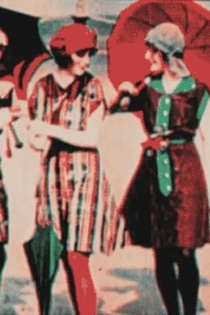
The first successful motion picture in natural color, filmed with Kinemacolor. It is an 8 minute short film directed by George Albert Smith of Brighton, showing people doing everyday activities. It is ranked of high historical importance. Kinemacolor later influenced and replaced by Technicolor, which was used from 1916 to 1952.
A Visit to the Seaside
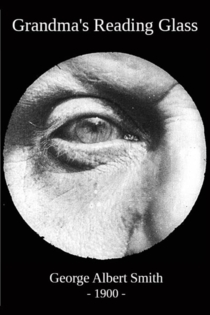
Grandma's Reading Glass
George Albert Smith
Harold Smith
A child borrows his grandmother's magnifying glass to look at a newspaper ad for Bovril, at a watch, and then at a bird. The child shows grandma what he is doing. The child looks next at grandma's eye, then at a kitten.
Grandma's Reading Glass
The Sick Kitten
George Albert Smith
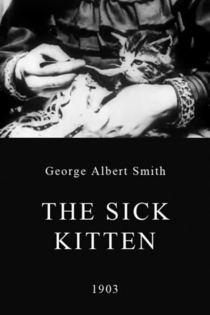
A simple scene of two rather flamboyantly-dressed Edwardian children attempting to feed a spoonful of medicine to a sick kitten. The film is important for being one of the earliest films to cut to a close-up, then back again to the same medium shot as before.
The Sick Kitten
Let Me Dream Again
George Albert Smith
Laura Bayley, Tom Green
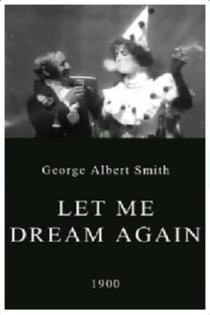
Possibly the first film to utilize the technique of focus pulling. A man kisses a beautiful and lively woman, then the image blurs and dissolves into a clear image of the man waking up to his nagging wife.
Let Me Dream Again
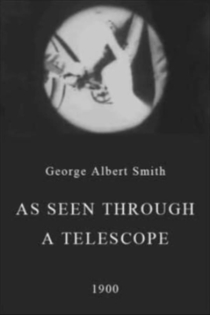
As Seen Through a Telescope
George Albert Smith
An elderly gentleman in a silk hat sits on a stool in front of a store on the main street of town. He has a telescope that focuses on the ankle of a young woman who is a short distance away. Her husband catches the gent looking. What will the two men do now?
As Seen Through a Telescope
The Miller and the Sweep
George Albert Smith
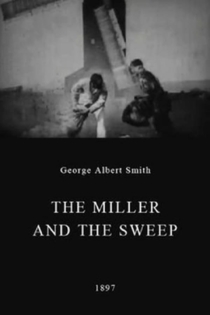
In front of a flour mill, two men fight. One is the miller, and he's swinging a bag of flour in the scuffle. The other is a chimney sweep, and he's swinging what may be a bag of flour, but when it breaks open, it's clearly something else. Well into the havoc, spectators gather and give chase to the flour-covered sweep and the "well-sooted" miller.
The Miller and the Sweep
The House That Jack Built
George Albert Smith
Dorothy Smith, Harold Smith
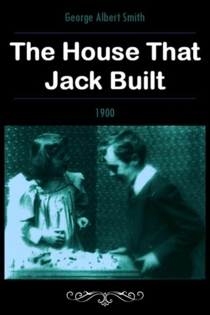
A cleverly conceived picture of a little boy and girl with building blocks. The little girl has erected a pretty structure, which the boy proceeds to demolish with pokes of his fingers. When the demolition of the house is completed, the film is shown in reverse, and the little building comes back to its original form in a most marvellous manner.
The House That Jack Built
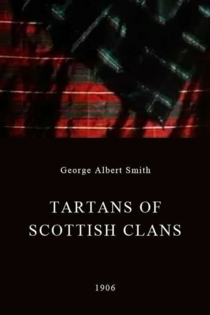
Tartans of Scottish Clans
George Albert Smith
It's common knowledge that Scotsmen are macho enough to pull off wearing a skirt - perhaps it's all that caber-tossing. This disarmingly simple film concentrates on the tartan cloths of various clans rather than the men who wore them, and is an early filmic reminder of their huge importance to both Scottish national identity and the thriving tourist industry north of the border. The film's unique selling point was that pioneering filmmaker G. A. Smith showed off the vibrant designs in Kinemacolor, among the earliest colour film processes that didn't involve meticulous hand-painting. And no dangly bits in sight.
Tartans of Scottish Clans