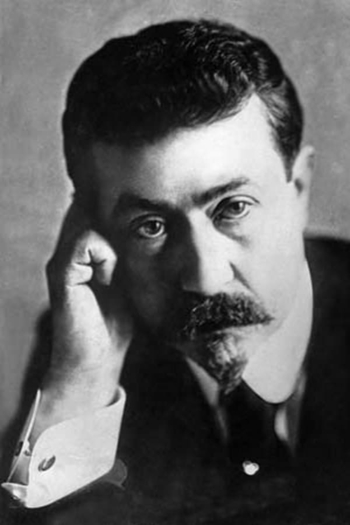
Jean Painlevé
1902 - 1989Science Is Fiction: The Films of Jean Painlevé
Jean Painlevé
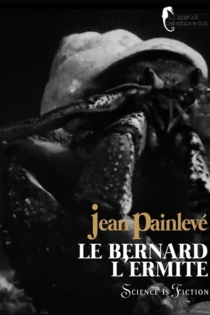
The mesmerizing, utterly unclassifiable science films of Jean Painlevé (1902-89) have to be seen to be believed: delightful, surrealist-influenced dream works that are also serious science. The French filmmaker-scientist-inventor had a decades-spanning career in which he created hundreds of short films on subjects ranging from astronomy to pigeons to, most famously, such marine-life marvels as the sea horse and the sea urchin.
Science Is Fiction: The Films of Jean Painlevé
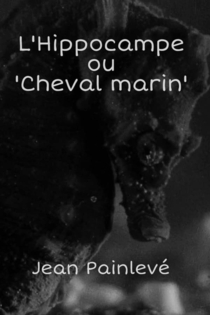
L'Hippocampe, ou 'Cheval marin'
Jean Painlevé
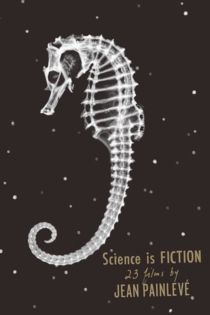
Examines the sea horse, the only fish that swims upright. We watch it use its prehensile tail to wrap around plants and other sea horses. A frontal bulge houses organs including an air ballast. Three fins propel this fish. We see a female place her eggs in a male's pouch where they are fertilized and nurtured until birth in violent contractions. Inside the pouch are nurturing blood vessels. We then follow the growth of an embryo, greatly magnified: we examine its heart beating and its dorsal fin moving. Young sea horses attach themselves to each other. The film ends with images of many sea horses moving on the ocean floor, superimposed on a horse race.
The Sea Horse
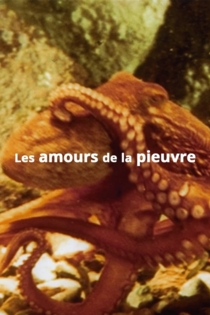
Les amours de la pieuvre
Jean Painlevé, Geneviève Hamon
An octopus slithers into a narrow crack near the shore; we see its eye up close. It feeds on a crab. In spring it's time to mate. A male grabs a female; he inserts his third arm in her respiratory cavity. We watch another pair: a larger female is the aggressor here. Mating is repeated over hours and days. The female releases strings of fertilized eggs that hang from the roof of a nest. She guards her spawn for a month, fanning the strings to circulate water for oxygen and cleanliness.
The Love Life of an Octopus
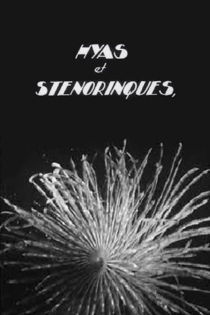
Hyas et stenorinques
Jean Painlevé
In close-ups and extreme close-ups, we watch two small species of marine crustaceans, the slender long-legged stenorhynchus and the clumsy, short-legged hyas. To blend in, both cover themselves with found objects, such as algae and sponges. We watch them move, eat, greet each other, and fight. They have small mandibles and large claws. Near them are spirograph worms, 6 inches long, with a plume of branchiae that fan out like exploding fireworks. We see vibrating cilia, 0.001 mm long, on the branchiae, sending food toward the mouth at the plume's center. Chopin's music and an off-screen narrator suggest we're watching a ballet.
Hyas and Stenorhynchus
La quatrième dimension
Jean Painlevé
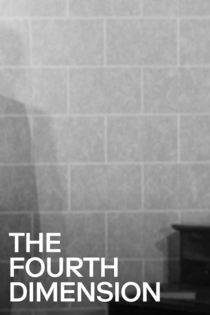
The film begins with methodical descriptions of one-dimensional, two-dimensional, and three-dimensional space. It then looks at a two-dimensional world inhabited by flat mice. It imagines how a human, from the third dimension could interact with that world. It then suggests how beings from a fourth dimension might interact with us. Next the film posits time as a fourth dimension, with scenes to aid comprehension. An off-screen narrator, graphs, and clever photography provide explanations and illustrations. The film asks viewers to use their imaginations.
The Fourth Dimension
Liquid Crystals
Jean Painlevé
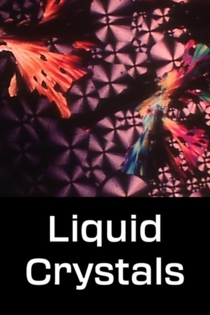
Title cards introduce images we watch without narration; they are displays of shape and color. François de Roubaix's electronic music accompanies these images, photographed under a polarizing microscope. The crystals appear to move like tiny organisms: small four-part fans share the frame with flowing lines of pink. Multiple patterns appear side by side.
Liquid Crystals
Les Oursins
Jean Painlevé, Geneviève Hamon
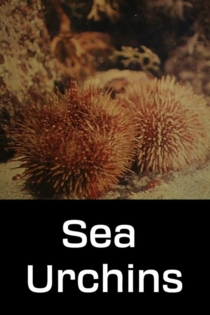
A complex creature. Regular underwater photography, magnified close-ups, and film through a microscope present sea urchins. We see their mouth and five teeth close and open. After injecting one with gelatin, the shell is removed and we see the muscle structure, digestive tube, and reproductive organs. Magnified stems reveal suction cups; stems lengthen and contract allowing the sea urchin to move. We see microscopic calcareous stems; at their ends are jaws with various uses. Cilia everywhere are in constant motion, stirring up water and debris. African music on the soundtrack suggests a shuffle dance.
Sea Urchins
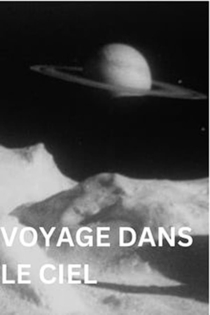
Voyage dans le ciel
Jean Painlevé
We begin on planet Earth, with a demonstration of measuring distances using triangulation. Then, an imaginary voyage begins from earth to the moon, on to Mars, Saturn, the closest star (besides the sun), and beyond to the edge of our universe. The film depicts imagined landscapes, and it speculates on universes beyond ours. It ends with philosophical musings about the significance of Earth.
Voyage to the Sky

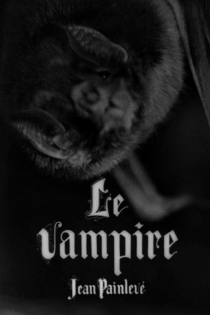
Le vampire
Jean Painlevé
Max Schreck
After a look at some strange creatures, the narrator and camera take us to the Chaco forest, on the borders of Paraguay, Argentina, and Brazil, where a vampire bat lives, desmodus rotondus, attacking wildlife and domesticated creatures, killing small ones by draining all their blood and killing large ones by leaving a parasite in their bloodstream. Four inches long, with a 12-inch wingspread, we see it walk, approach a victim, pull out a patch of fur large enough for it to engage its teeth, then lap six or seven ounces of blood. Its saliva may be an anesthetic keeping its victims from waking. A stub nose and harelip contribute to its efficiency and its hideous look.
The Vampire
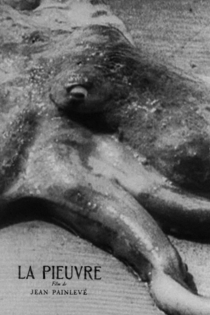
La pieuvre
Jean Painlevé
An octopus slithers over objects on land—a doll, a skull—then oozes along the shore into the sea. It secretes its ink. The camera follows it along rocks into deeper water, watching closely as it breathes. Its eye is closed then open. Simple titles, in French and German, suggest what to watch. The octopus alternates the use of breathing tubes on either side. It changes color as cells on its skin contract or dilate. Extreme magnification helps us see these changes. Two struggle, one dies. On shore, fishermen catch them and put them in pails. A single tentacle still has life. Back in the sea, two octopi attack a crab. Soon only a couple of crab legs are visible in the mouth of the victor.
The Octopus
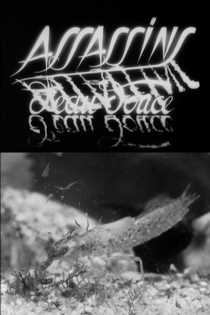
Assassins d'eau douce
Jean Painlevé
In a freshwater pond, it's "eat or be eaten." A dragonfly larva eats a midge; a water beetle larva eats a damselfly larva. Snail larvae grow. A beetle larva eats one. Up close, we see the eating apparatus of a damselfly larva—with a retractable hook beneath mandibles. Some creatures bite and chew, others suck. A water beetle larva holds on to its prey, injects a poison that turns the victim's insides to soup, and then sucks it dry. We watch one eat a damselfly larvae and then another water beetle larva. Some have ingenious ways to camouflage themselves, like the water scorpion, and to breathe air while hunting under water. Caddisfly larvae hide in debris, then eat.
Freshwater Assassins
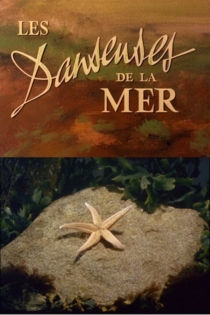
Les danseuses de mer
Jean Painlevé, Geneviève Hamon
Two kinds of starfish, the brittle and the feather. The brittle star moves its arms alone, without the aid of suckers. Underneath is a single opening. Stalks move food close to the mouth and move waste away. We see vents, used in reproduction and breathing. We watch the hatched young expelled into the water. The camera shows us brittle stars' intricate patters. We observe feather stars in clusters, like ferns. One turns over slowly; arms have branches with stalks for breathing and gathering microscopic food. Reproductive organs are inside branches. We see eggs develop at 1,400 nature's speed. Larvae emerge, 0.1 mm long. They grow. A feather star takes a walk.
Sea Ballerinas