
José Fonseca e Costa
1933 - 2015Velhos são os Trapos
Monique Rutler
José Fonseca e Costa, João Guedes
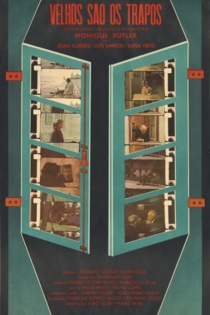
Old people tend to be kept apart, even humiliated by the new generations. The stories and different destinies of three old persons are linked together, and the realism of it imposes itself on us.
Velhos são os Trapos
As Armas e o Povo
Glauber Rocha, Fernando Lopes
Glauber Rocha, Adelino Gomes
Film directors with hand-held cameras went to the streets of Lisbon from April 25 to May 1, 1974, registering interviews and political events of the Portuguese "Carnations Revolution", as that period would be later known.
As Armas e o Povo


Alto Bairro
Rui Simões
Lia Gama, Henrique Gil
In Lisbon 1950, John, 13, decides to invade the neighborhood of prostitutes, nobility and sailors, starting a new stage in his life. Today this neighborhood is reflected in a scattered public debate centered on its night life.
Alto Bairro

Lisboa no Cinema, Um Ponto de Vista
Manuel Mozos
Alberto Seixas Santos, António da Cunha Telles
The city during the beginning of cinema. The typical city at the time of the dictatorship. The New Lisbon of the New Cinema. Lisbon after the Revolution. The white city of foreigners. A geographical and moviegoer screenplay of Lisbon through the images of films and testimonies of several filmmakers who filmed in Lisbon.
Lisboa no Cinema, Um Ponto de Vista

Viúva Rica Solteira Não Fica
José Fonseca e Costa
Bianca Byington, Cucha Carvalheiro
Ana Catarina returns from Brazil with her father and her nanny to marry a man she doesn't know and doesn't like. A terrible coincidence happens when, on the same day, the young woman becomes a widow and an orphan, a fact that leaves her heir to an incalculable fortune and coveted by all the aristocrats in the region.
Viúva Rica Solteira Não Fica

Cinco Dias, Cinco Noites
José Fonseca e Costa
Paulo Pires, Vítor Norte
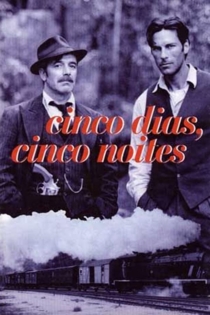
Portugal, late 1940's. André must leave the country after running away from prison. In Oporto some friends get him a guide, Lambaça, a smuggler who knows very well the Trás-os-Montes border from Portugal to Spain.
Five Days, Five Nights
Sem Sombra de Pecado
José Fonseca e Costa
Victoria Abril, Saul Santos
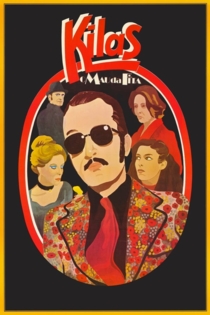
A young man from a high-bourgeois family, Henrique receives mysterious phone calls from a woman at the barracks where he is serving in the military, which attracts him to meetings without consequences.
No Trace of Sin

A Mulher do Próximo
José Fonseca e Costa
Carmen Dolores, Virgílio Teixeira
Two lovers meet again in strange circumstances, when she is a recent widow not particularly grieving, and he is a divorcée mourning his daughter. They reunite, only to break again - this time for good.
Your Neighbour's Wife

Balada da Praia dos Cães
José Fonseca e Costa
Assumpta Serna, Raul Solnado
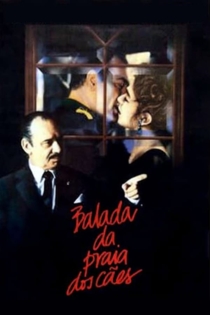
In Portugal, in the 60s, the corpse of a man appears on Dog's Beach. The corpse is identified as the major Dantas, a man wanted by authorities after his escape from a military prison where he was awaiting trial for insurrection.
Balada da Praia dos Cães
Axilas
José Fonseca e Costa
Margarida Marinho, Pedro Lacerda
Lazarus de Jesus is the adopted son of a wealthy lady from Lisbon, whom he calls Grandmother. It is she who introduces him to Godfather, a great businessman who takes him as his protégé, and Angelina, the woman Grandma wants him to marry. But Lazarus has other hidden interests, the most important of which is an obsessive fixation on female armpits. When he sees the violinist Maria Pia playing, Lazarus immediately falls in love and starts to live for her, which will precipitate an absolutely unpredictable ending.
Armpits

Jogo de Mão
Monique Rutler
Amílcar Botica, Márcia Breia
In a unique approach to what amounts to four pseudo-morality plays, director Monique Rutler has a street entertainer with hand puppets summarize the characters and idea of each story. The first sketch is about a young man who shines shoes for a living, and tries to keep up a relationship with two women while convincing each she is his only true love. The next story is about a man who beats up his wife when he is drunk, and sells furs for a living. One day, as she is riding in the back of his truck with the furs, he hits a bad patch and she and some furs fall out. The question is, will the woman be enterprising and leave the jerk - or not? The third tale concerns a woman looking into how much control a prostitute has over her clients, and to really find out, she becomes a prostitute herself for awhile - leading to some quite unexpected situations. The last segment handles the uglier side of the life styles of the rich and famous.
Jogo de Mão

The Jew
Jom Tob Azulay
Dina Sfat, Fernanda Torres
The story of Brazilian Antônio José da Silva, a jewish poet, playwright and lawyer living in the 18th Century Lisbon, who managed to avoid Inquisition by converting himself to Catholicism, after being tortured. But his fierce criticism of Portugal's élite led him to persecution and torture, becoming kind of a scapegoat.
The Jew