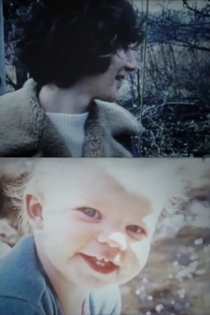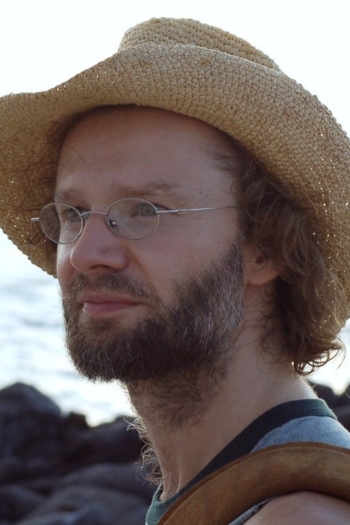
David Gatten
1971 (55 лет)Among other projects, they are currently working on a series of films entitled Secret History of the Dividing Line, a True Account in Nine Parts, a project which Artforum magazine called "one of the most erudite and ambitious undertakings in recent cinema." He was awarded a Guggenheim Fellowship in 2005 to continue work on this series of films exploring the library of William Byrd II of Westover (1674–1744) and the lives of William Byrd and their daughter Evelyn Byrd (1707–1737). [Wikipedia]
The Illinois Parables
Deborah Stratman
C. Felton Jennings II, Anna Toborg
From dreamy aerial opening shots, we are sent on an expedition through the storied land of our fifth most populous state, Illinois, often called a miniature version of America. Deborah Stratman’s experimental documentary explores how physical landscapes and human politics can each re-interpret historical events. Eleven parables relay histories of settlement, removal, technological breakthrough, violence, messianism, and resistance. Who gets to write history—physical monuments, official news accounts, or personal spoken-word memories?
The Illinois Parables
Secret History of the Dividing Line
David Gatten
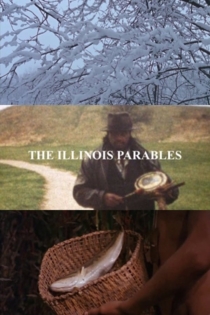
Paired texts as dueling histories; a journey imagined and remembered; 57 mileage markers produce an equal number of prospects. The latest in a series of films about the division of landscapes, objects, people, ideas and the Byrd family of Virginia during the early 18th century. —David Gatten
Secret History of the Dividing Line
What The Water Said, nos. 4-6
David Gatten
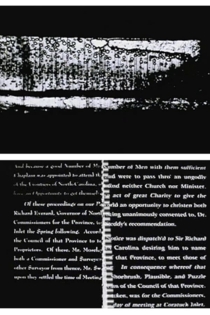
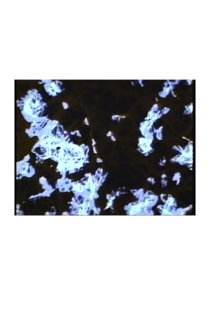
Strips of previously unexposed film went into the ocean and these fragments are what returned. In this final installment of a nine year project documenting the underwater world off the coast of South Carolina, both the sounds and images are the result of the oceanic inscriptions written directly into the emulsion of the film as it was buffeted by the salt water, sand and rocks; as it was chewed by the crabs, fish and underwater creatures.
What The Water Said, Nos. 4-6
Hardwood Process
David Gatten
A history of scarred surfaces, an inquiry, and an imagining: for the marks we see and the marks we make, for the languages we can read and for those we are trying to learn. Reproduced by hand on an old contact printer resulting in individual, unique release prints.
Hardwood Process
What The Water Said, Nos. 1-3
David Gatten
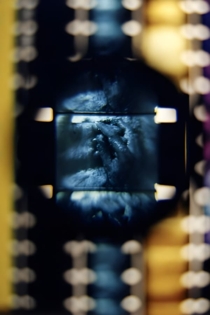
The result of a series of camera-less collaborations between the filmmaker, the Atlantic Ocean, and a crab trap. For three days in January and three days in October of 1997, and again, for a day, in August of 1998, lengths of unexposed, undeveloped film were soaked in a crab cage on a South Carolina beach. Both the sound and image are the result of the ensuing oceanic inscriptions written directly into the emulsion of the film as it was buffeted by the salt water, sand, rocks and shells.
What The Water Said, Nos. 1-3
Journals and Remarks
David Gatten
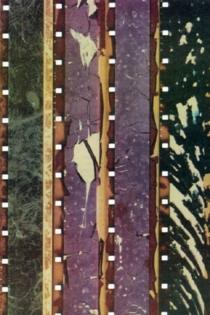
JOURNAL AND REMARKS, the second reel of the ongoing Continuous Quantities series, contains 700 shots, 29 frames each, shuttling between the 1839 version of what later became Charles Darwin’s A Voyage of the Beagle (1845) and images I gathered on a recent trip to the Galapagos Islands. Space and time, word and image, animal and landscape are divided and drawn together in accordance with Leonardo da Vinci’s Notebook entry No. 917: “Describe the nature of Time as distinguished from the Geometrical definitions.”
Journals and Remarks
So Sure of Nowhere Buying Times to Come
David Gatten
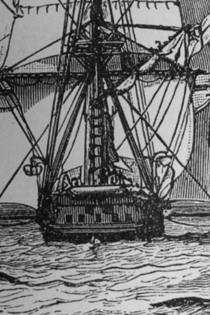
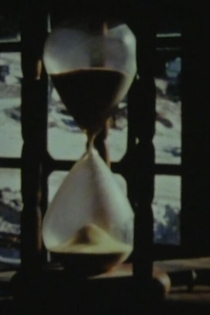
"Excerpts from Sir Thomas Browne's 1658 text Hydriotaphia Urne-Buriall Or, A Brief Discourse of the Sepulchrall Urnes Lately Found in Norfolk are superimposed with the stone faces of grave markers and burial urns. This image-text bookends a series of objects framed in the ancient glass window panes of a tiny shop, in a tiny snow covered town, on a mountain top in Colorado. A pocket watch, a postal scale, a small mirror. A stop watch, some stamps, a knife, some bandages, an hour glass. Time is short. Time is running out. The time left is all the time we have."--Gatten
So Sure of Nowhere Buying Times to Come
Film for Invisible Ink, Case No. 142: Abbreviation for Dead Winter [Diminished by 1,794]
David Gatten
“A single piece of paper, a second stab at suture, a story three times over, a frame for every mile. With words by Charles Darwin. A long-distance dedication for a far-away friend halfway up the mountain.” —David Gatten
Film for Invisible Ink, Case No. 142: Abbreviation for Dead Winter [Diminished by 1,794]
![Film for Invisible Ink, Case No. 142: Abbreviation for Dead Winter [Diminished by 1,794]](https://api.mamonto.com/media/cache/w210_hA/movies/5805/9033/1b9d2cda1515_6663f2f3b4884.jpg)
The Extravagant Shadows
David Gatten
Suggestion is the rock, and the physical evidence is the evanescent spray that breaks against the unseen. Transitive enharmonics of things touching in middair, an air which is Time—not an actual intersection, but with a consequence as powerful as predestination, a momentary fulfillment, a trail beyond mere pattern, like a streak of truth alive and uncontained, like something that runs through infinity slowing to leave condensation, sonority, a temperature. Lines crossing lines. Not there. There. Invisibilities smudging. Gesture and impression, optic suggestions, agents on and in the mind. Each with vibrations, dollops, whispers, throbs, particles and waves. A finger of pigment brushing a lip of language exchanging carriage supports, liquidities, fire. Moire of meanings. Micro settings in the heart. The time it takes. The very least one can say is to say The Extravagant Shadows is a major work. Humanly essential, adventurous and necessary.
The Extravagant Shadows
Fragment Portals, Bright Particulars and the Edge of Space
David Gatten
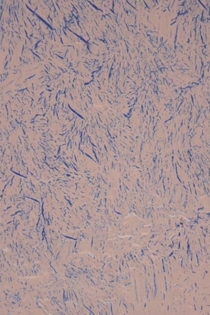
“A companion of sorts to WHAT THE WATER SAID. An attempt to assess the potentials, possibilities and pitfalls of finding meaning in – or assigning human meaning to – the natural world; by way of Wallace Stevens. ‘The Idea of Order at Key West’ and ‘Of Mere Being’ translated into Ogham (the 5th-century ‘tree alphabet’ derived from a notational system used by shepherds to record notes on their wooden staffs), and carved a letter at a time into a piece of semi-transparent flexible wood (black leader).” (DG)
Fragrant Portals, Bright Particulars and the Edge of Space
The Great Art of Knowing
David Gatten
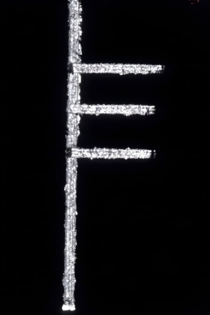
On either side of a life, find a library before and an auction after: consider these figures as the sites for a collection created for the purposes of division and dispersal. From Leonardo da Vinci to Jules-Etienne Marey, practitioners of a certain mode of transcendental empiricism turned repeatedly to combinations of words and images describing the flight of birds. This film-as-bibliography of William Byrd's library finds its name and shape within a single volume from that collection: Athanasius Kircher's 17th century encyclopedia, The Great Art of Knowing. Herein you find tangled texts and crossed destinies, filled with figures at once buried deep and tossed high by history, lined with traces of Evelyn Byrd's hidden romance. Love finds purchase between tightly shelved volumes. In the spaces between the letters. In the lines themselves. An antinomian cinema seems possible; a gentle iconoclasm? The image is always backwards in a mirror. The story unfolds slowly.
The Great Art of Knowing
Film for Invisible Ink, case no. 323. Once Upon a Time in the West
David Gatten
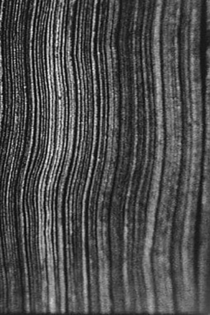
Film for Invisible Ink, case no. 323: ONCE UPON A TIME IN THE WEST (2010), was composed as an epithalamium, or matrimonial poem, for Erin Espelie. Bringing together Western Union Telegraphic Code and Francis Bacon’s list of twenty-seven privileged instances from The New Organon (1620), along with passages from the Book of Common Prayer, the film is as stenographic as it is steganographic, a shorthand for the immense and indescribable “instances” that shape a life.
Film for Invisible Ink, case no. 323. Once Upon a Time in the West
Shrimp Boat Log
David Gatten
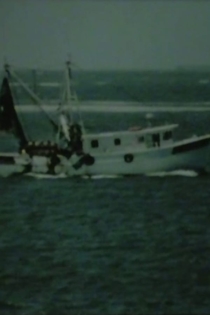
Footage of a logbook of shrimp boat names and the boats in question at the mouth of the Edisto river on the east coast of the US, edited into 300, 29-frame shots on 16mm. Edited in line with Leonardo da Vinci's instruction number 918 in which he subdivided an hour into 3,000 equal sections.
Shrimp Boat Log
By Pain and Rhyme and Arabesques of Foraging
David Gatten
This timeless experimental film draws on the work of 17th century scientist Robert Boyle to present a varied combination of texts, objects, colours and textures. The traditional tone of the cinematic impressions takes us back into the past (evocations of Boyle’s era, projection using damaged film stock) and the images have something of a cathartic quality about them. The title of this dream-like, mood- -inducing film, a tribute of sorts to the Irish thinker, was inspired by a Jorie Graham poem and underlines the nature of the 14-year process during which the film came together.
By Pain and Rhyme and Arabesques of Foraging
Moxon’s Mechanick Exercises or the Doctrine of Handy-Works Applied to the Art of Printing
David Gatten
"Linked together by the texturality of forgotten objects and frayed (or physically manipulated) imprinted text images, the film represents a thematic collapsing of distinct objects that further erases the bounds between image (and text) from meaning, where recursive shifting of once seemingly separate entities become alternate presentations of a visible (and invisible) continuum - a decontextualized mood piece where absence and emptiness become increasingly tactile - an impression."
Moxon’s Mechanick Exercises or the Doctrine of Handy-Works Applied to the Art of Printing
Devotions Upon Emergent Occasions
David Gatten
Four uncut camera rolls, unspooled intermittently across thirteen years. One is a portrait of a friend, another is of a particular plant, the third of one kind of family, the fourth of another kind; all of them photographed to mark a particular time or a specific event. To build a future together one must always share a bit of one's past. These rolls represent the first collection in what remains an ongoing project. - David Gatten
Devotions Upon Emergent Occasions