Kati Kovács
2021She is one of the most famous singers of Hungary with dozens of recorded albums, awards and presentations in Hungary and abroad, and with international recognition and a very active career until today.
Kovacs is known for her raspy and very strong mezzo-soprano singing voice which received wide praise from Hungarian music critics who have called her: "The Best Female Voice of Hungary". She can sing opera, rock, jazz, pop, dance, blues and rock and roll.
She appeared first time on stage in 1962. She became the first famous nationally in 1965 when she won the seminal TV talent show in Hungary "Ki mit tud?". A year later, she achieved some even greater successes with her performance of the song I Won't Be Your Plaything (Nem leszek a játékszered) which won the TV Dance Song Festivals in Hungary in 1966.
In 1968 she played the leading roles in some films, for example The Girl.
The psychedelic spiritual Lord Send Us Rain (Add már, uram, az esőt!) won the Hungarian Dance Song Festival and the German Song Contest in 1972.
She worked with the Hungarian rock band Locomotiv GT on three albums (Kovács Kati & Locomotiv GT, Közel a naphoz and Kati) and a compilation (Rock and Roller).
In 1974 she won the Castlebar Song Contest in Ireland with the song Roses Are Red, Violets Are Blue (Nálad lenni újra jó lenne).
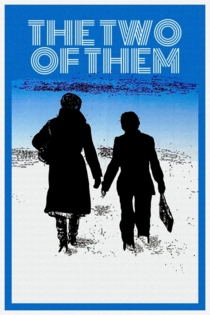
She appeared as a singer in the 1977 Hungarian film Ök ketten (Women), which was directed by Márta Mészáros.
Since 1979 she sang the covers of several disco and hit songs in Hungary originally performed by Donna Summer, Barbra Streisand, Laura Branigan, Madonna, Tanita Tikaram, Sam Brown, Anastacia etc.
Besides singing, Kati Kovács also writes lyrics. One of her best known works which she also performed is the lyrics to Vangelis’ composition 1492: The Conquest of Paradise.
Since 23 October 2009 she works with the psychedelic soul-beat band The Qualitons. They had a very successful concert in Budapest with the singer's rare beat and funk songs. It is said to be Kati's big comeback. In 2010 they are on tour around the country. They were planning a new album together but their connection is lost.
Christina Aguilera's 2010 single "Woohoo" contains a sample from the song Add már, uram, az esőt!.
Source: Article "Kati Kovács" from Wikipedia in English, licensed under CC-BY-SA 3.0.
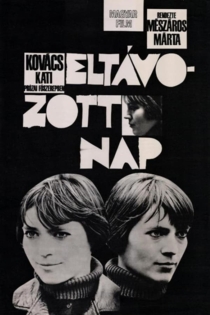
Eltávozott nap
Márta Mészáros
Kati Kovács, Teri Horváth
A young woman leaves a state orphanage to find her mother in this interesting examination of how the overt repression of women in the older pattern of village life has been replaced by the more subtle exploitation inherent in the apparently freer existence of young girls in the contemporary city.
The Girl
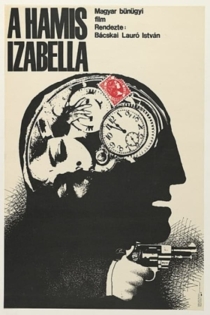
A Hamis Izabella
István Bácskai Lauró
Éva Ruttkai, Kati Kovács
Végh Márta, the teacher is looking for her student Vadász Ica in the Buda villa, but she only finds the tenant, Mrs. Paár - dead. The investigation reveals that Mrs. Paár was murdered for an invaluable stamp, the "Fake Isabella".
The Fake "Isabella"

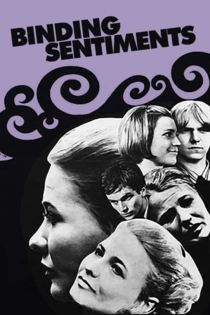
Holdudvar
Márta Mészáros
Mari Törőcsik, Kati Kovács
Edit, who became the wife of a politician out of a simple peasant girl, suddenly becomes a widow as a result of an accident. She never loved her husband. She lives a wealthy and lonely life amidst false friends, facing one of the last alternatives of her life, i.e. having to face her past in the hope of an independent new beginning.
Binding Sentiments
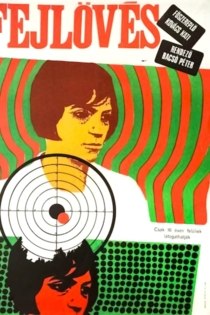
Fejlövés
Péter Bacsó
Kosztolányi Balázs, Kati Kovács
Laci and the divorced Klári decide to commit suicide, since neither's parents give them shelter, they have no place to sleep, no decent job and no future. Béla, who lives on stealing cars, joins them. He has a gun. Based on a true story.
The Fatal Shot
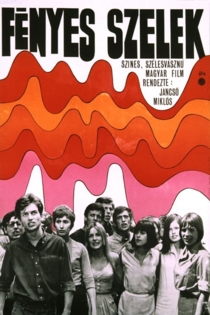
Fényes szelek
Miklós Jancsó
Andrea Drahota, Kati Kovács
Paralleling the dramatic student protests and riots that were exploding across the world in the 1960s at the time the film was made, The Confrontation is a story of protest and rebellion in 1947 Hungary when the Communist Party have just taken power. Jancsó's first colour film is another virtuoso display by a director at the peak of his powers, and eloquently explores the complex issues and inherent problems of revolutionary democracy.
The Confrontation