Sabine Gruffat
2021I Have Always Been a Dreamer
Sabine Gruffat
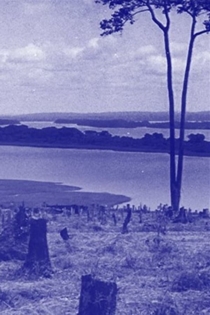
I Have Always Been A Dreamer is a documentary travelogue and film portrait of two cities in contrasting states of development: Dubai, UAE and Detroit, U.S.A. Within the context of a boom and bust economy, the film questions the collective ideologies that shape the physical landscape and impact local communities.
I Have Always Been a Dreamer
Speculation Nation
Sabine Gruffat, Bill Brown
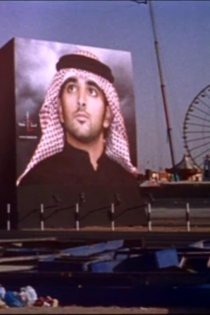
In this impressionistic documentary film, Sabine Gruffat and Bill Brown travel across Spain to explore responses to the housing crisis of the early 2000s. The filmmakers visit families squatting in failed condo developments; intentional communities of mountain cave dwellers; protest campsites in front of bank branches; and empty apartment buildings transformed into experiments in 'utopian' living.
Speculation Nation
Take It Down
Sabine Gruffat
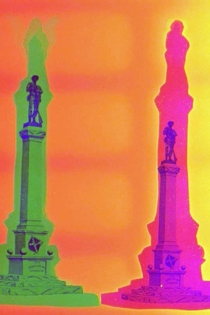
A last stand for the silent guardians of the old order. Take It Down is a filmic day of reckoning for the Old Confederate South. What is up must come down, like the Confederate soldier monuments standing in court house squares across the South. At long last, a grand inversion! Solarized film makes positives bleed into negatives. The South is renewed.
Take It Down
Amarillo Ramp
Sabine Gruffat, Bill Brown
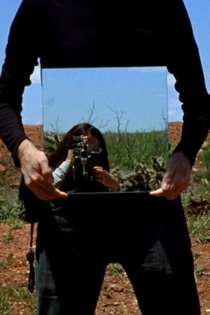
Perhaps best known for his Spiral Jetty, sculptor Robert Smithson’s interest in landscape and land use was prophetic. In 1973, Texas oil millionaire Stanley Marsh 3 commissioned Smithson to create an earthwork on Marsh’s cattle ranch north of Amarillo, called ‘Amarillo Ramp’.
Amarillo Ramp
Framelines
Sabine Gruffat
Framelines is an abstract scratch film made by laser etching abstract patterns on the film emulsion of negative and positive 35mm film. The strips of film were then re-photographed on top of each other as photograms then contact printed. The soundtrack filters and layers the noise made by the laser etched optical track.
Framelines
To The South Was 72
Sabine Gruffat
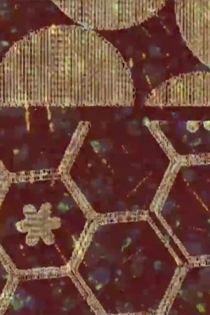
This video retells and disorders an important of a pre-Columbian Native American city directly across the Mississippi River from modern St. Louis, Missouri: a location that is visited, preserved, and endlessly repeated via prescribed routes and prerecorded narratives. Rather than strive for originality, my intention is to work with found audio so as to displace these repetitions.
To The South Was 72
A Return to The Return to Reason
Sabine Gruffat
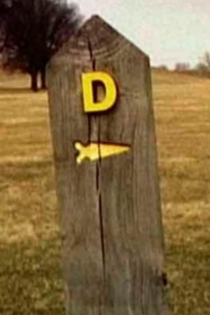
A Return to The Return to Reason is a tribute to Man Ray's 1923 film "Le Retour à La Raison" (A return to Reason), the first film to use his 'Rayograph' technique in which Man Ray exposed found objects onto film negative. In this film the found object is Man Ray’s digitized film, the first Dada film. The “original” film was digitized with all its aged emulsions, scratches, and splices, then compiled into digital filmstrips. These filmstrips are used to output a dithered and inverted image that the laser engraver may etch onto black 35mm film leader. The film images are created as the laser engraver scratches away the emulsion on the black leader.
A Return to The Return to Reason
Headlines: Hybrid Films
Sabine Gruffat
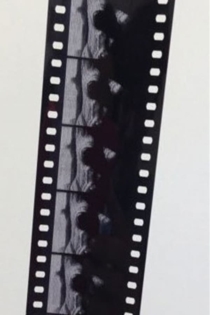
These films were made from The New York Times newspaper articles. The semi - automated animation process resulted in sentence recombinations that sometimes made sense while randomly emphasizing certain words and images. Each computer animation was transferred to one 100ft roll of 16mm Tri-X reversal film and then hand-processed. The reversal negative is the original.
Headlines: Hybrid Films
Brave New World
Sabine Gruffat
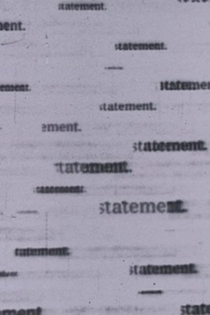
In this video, 35mm archival silent documentary film footage shot by Henry Ford’s own filmmakers is reworked and given a soundtrack revealing the colonial lens through which the filmmakers apprehended unfamiliar nature. Through editing and processing the film confronts the violent history of Fordism while questioning the limits of mediated vision.
Brave New World