Noriaki Tsuchimoto
1928 - 2008Umi to otsukisama tachi
Noriaki Tsuchimoto
Teiji Ōmiya
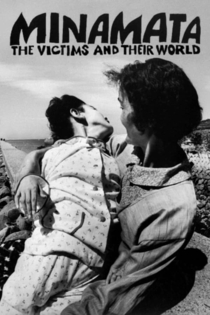
Since Minamata: The Victims and Their World (1971), director Tsuchimoto Noriaki has made numerous works depicting people living in Minamata. This work for children is a visual fantasy poetically depicting the moon that governs the ocean’s tides, the fishermen and the various fish living there.
Fishing Moon
不知火海
Noriaki Tsuchimoto
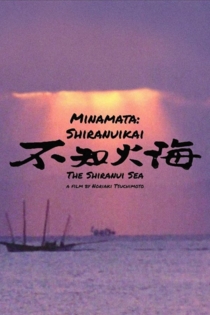
The sea around Minamata was heavily polluted with mercury during the 1950s and 1960s from the Chisso Corporation's chemical factory. This highly toxic chemical bioaccumulated in shellfish and fish in the Yatsushiro Sea which, when eaten by the local populace, gave rise to Minamata disease. The disease was responsible for the deaths and disabling of thousands of residents, all around the Yatsushiro Sea. The marine ecosystem was also extensively damaged.
The Shiranui Sea
ドキュメント 路上
Noriaki Tsuchimoto
Kimio Kawasaki
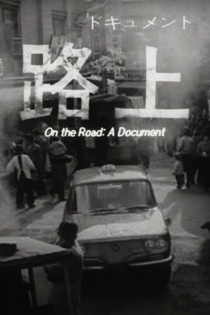
Japanese documentary from 1964 directed by Noriaki Tsuchimoto. The film focuses on the taxi drivers of Tokyo in the year before the Tokyo Olympics and the difficulties they face: construction obstructing traffic, poor working conditions, numerous accidents, and bad pay. It becomes a critique of a changing and modernizing urban Japan.
On the Road : A Document
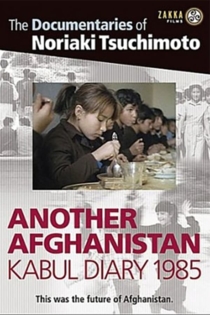
Mouhitotsu no Afuganisutan: Kabûru nikki 1985 nen
Noriaki Tsuchimoto
The daily life of the citizens of Kabul during the civil war: the bazaar, mosques, the literacy movement awarded honors by UNESCO, women's education, and English school. Scenes of live and self-defense in nearby farm villages. The lives of war orphans. And a new holiday-the anniversary of the revolution, seen in the faces of the 200,000 people gathered to celebrate. This is a document of the only "democratic republic" in the West.
Another Afghanistan: Kabul Diary 1985
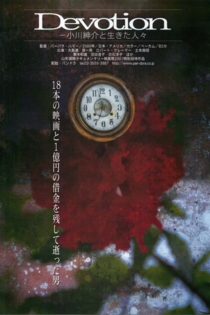
Devotion: A Film About Ogawa Productions
Barbara Hammer
Nagisa Ōshima, Sumiko Uno
Devotion investigates the extremely complex and heirarchical relationships among a committed group of Japanese filmmakers who dedicated up to 30 years of their lives making films for one man-Ogawa Shinsuke. Members of Ogawa Pro filmed the student movement of the late 60's; the fight by farmers to save their land from government confiscaton for the Narita airport at Sanrizuka; and the village life of a small farming community, Magino Village, in northern Japan. These heartbreaking and sometimes funny stories have never been told on film before. Rare footage, stills, and diaries with interviews with Oshima Nagisa, Hara Kazuo and Robert Kramer make this historical inquiry visually exciting as well as valuable.
Devotion: A Film About Ogawa Productions
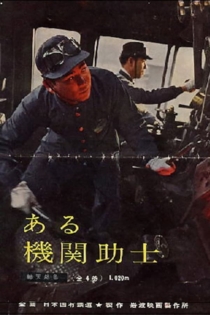
Aru kikanjoshi
Noriaki Tsuchimoto
"In my filmography, An Engineer’s Assistant (1963) is called my “first film.” This PR film on the safety of the Japanese National Railways was designed to be “self-criticism” after the big accident on the Joban line at Mikawashima Station, which had occurred in 1962. Right after the events back then, the responsibility for the accident was considered to be negligence of the engineer and the engineer’s assistant. The topic of this project was the promotion of a new device to avoid accidents. However, I had seen that the true cause of the accident was a congested service schedule, and I consciously placed emphasis on the depiction of the actual work of the engineer and his assistant, and of those who had chosen the route and were responsible for safety on the line on which the accident took place."
An Engineer's Assistant
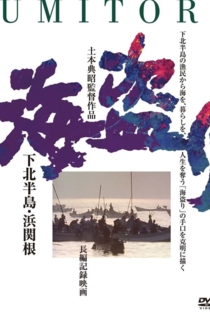
Umitori - Shimokita hanto Hamasekine
Noriaki Tsuchimoto
Umitori takes place in Shimokita Peninsula on the northern edge of the mainland, which was becoming a “nuclear energy peninsula”, undergoing tremendous development and serving as the home port for Mutsu, a nuclear-powered ship. Focusing on the fishermen and their stories, Tsuchimoto and his crew made their subject matter the “theft of the sea” perpetrated by giant business conglomerates. While the fishermen of Minamata were obvious victims of the mercury-poisoning tragedy, the fishermen in Shimokita were inadvertently becoming the permanent victims of another announced tragedy. Tsuchimoto interviews the fishermen, especially focusing on a stage play actor and his boat-owner family, establishing, as it became his practice, a complex reflection about the threat brought to small communities by the forces of “progress”.
The Stolen Sea
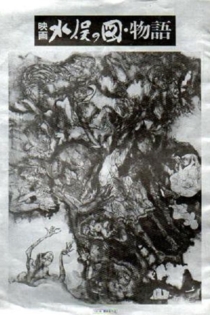
The Minamata Mural
Noriaki Tsuchimoto
Soichi Ito
After a handful of groundbreaking films detailing the tragedy and suffering of the mercury-poisoned Japanese town of Minamata, documentary master Noriaki Tsuchimoto revisits the subject of Minamata through the eyes of the celebrated husband-and-wife painting duo Iri and Toshi Maruki. Tsuchimoto follows the Marukis from their quaint homestead studio, where they paint slews of ghastly, psychotropic mural panels depicting the effects of Minamata disease, to the streets of Minamata, where they meet and paint portraits of several victims of mercury poisoning.
The Minamata Mural
Yomigaere Karêzu
Abdul Latif, Noriaki Tsuchimoto
With Afghan Spring, Noriaki Tsuchimoto widened his focus to the international arena. Working in collaboration with his compatriot, Hiroko Kumagai, and Afghan film-maker, Abdul Latif, he examined society and politics in Afghanistan af the time of the Soviet withdrawal. The film now serves as a valuable record of a culture partially destroyed soon after by the Taleban regime.
Afghan Spring
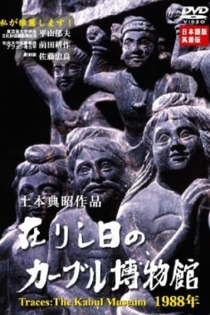
Traces: The Kabul Museum
Noriaki Tsuchimoto
John Junkerman
The Kabul National Museum, once known as the "face of Afghanistan," was destroyed in 1993. We filmed the most important cultural treasures of the still-intact museum in 1988: ancient Greco-Roman art and antiquitied of Hellenistic civilization, as well as Buddhist sculpture that was said to have mythology--the art of Gandhara, Bamiyan, and Shotorak among them. After the fall of the Democratic Republic of Afghanistan in 1992, some seventy percent of the contents of the museum was destroyed, stolen, or smuggled overseas to Japan and other countries. The movement to return these items is also touched upon. The footage in this video represents that only film documentation of the Kabul Museum ever made.
Traces: The Kabul Museum 1988