Bruce Baillie
1931 - 2020
Quixote
Bruce Baillie
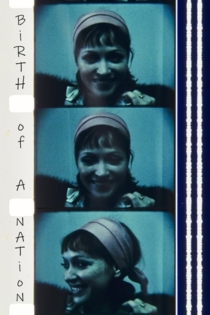
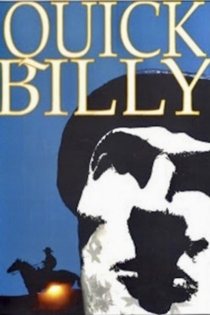
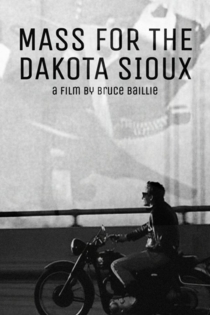
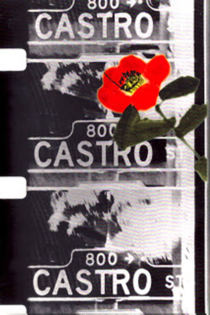
Co-founder of Canyon Cinema and the San Francisco Cinematheque and one of the godparents of experimental film, Bruce Baillie (1931-2020) has forged a singular path in his visionary explorations of the world, his exquisite treatment of light and fragmented storytelling influencing successive generations of like-minded filmmakers. Shot on a cross-country journey during 1964 and 1965, is the Baillie film most in need of rediscovery. Joining the ranks of Bob Dylan, Robert Frank and Jack Kerouac in chronicling a tumultuous period in American history from the road, Baillie sets out "to show how in the conquest of our environment in the New World, Americans have isolated themselves from nature and from one another."
Quixote
Here I Am
Bruce Baillie
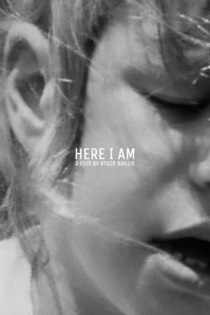
A sensitive, low-key portrait of the East Bay Activity Center, a school in Oakland, California, started in the 1950s to help emotionally disturbed children. The atmospheric documentary opens with hilly East Bay streets shrouded in fog. The mist lifts as the film moves to children at play. Often shown in unobtrusive close-up, the youngsters appear as thinking individuals, enjoying the swings, puzzling out problems, or interacting with their teacher in the classroom.
Here I Am
Pietá
Bruce Baillie
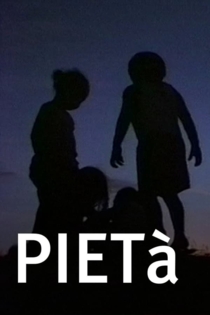
These scenes are a one-minute, condensed version of the conclusion to my last work, Memories of an Angel. The scene of children was shot in the Phillipines recentely, including my daughter, Wind Baillie. The birds, near our home in Washington State. The concluding Pietà, with my wife Lorie and son, Keith-Kenneth, was recorded at the beach here. All the last light of day: "Te lucis ante terminum." (Bruce Baillie)
Pietá
The P-38 Pilot
Bruce Baillie
“For the dispossessed, the excluded, the condemned, fallen from life and loving.” These words are typed across the screen at the outset of THE P-38 PILOT, Bruce Baillie’s experimental video portrait of a former pilot outraged by old age and bitter with regrets. We hear the man's disputatious monologue on the soundtrack: “I’m not the kind of guy to end up in a slime pit… I can’t understand it, see?” Baillie, an established master of 16mm cinematography, uses the video medium to search the man's confined space for rustling movements and leaking colors. Chet Baker sings “There Will Never Be Another You” as the filmmaker bids the pilot a peaceful adieu.
The P-38 Pilot

To Parsifal
Bruce Baillie
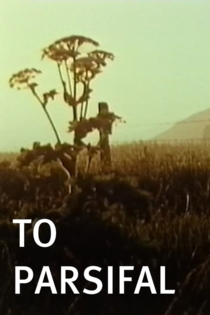
The 16-minute film falls neatly into two nearly equal parts, separated by fades to and from black. Part one depicts a sunrise, a journey out to sea in a boat, then gulls flying around the boat while fish are cleaned, and finally the journey back and the reappearance of land.
To Parsifal
Mr. Hayashi
Bruce Baillie
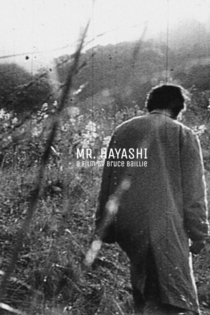
Bruce Baillie's Mr. Hayashi might be thought of as a putative East Coast story transformed by a West Coast sensibility. The narrative, slight as it is, mounts a social critique of sorts, involving the difficulty the title character, a Japanese gardener, has finding work that pays adequately. But the beauty of Baillie's black-and-white photography, the misty lusciousness of the landscapes he chooses to photograph, and the powerful silence of Mr. Hayashi's figure within them make the viewer forget all about economics and ethnicity. The shots remind us of Sung scrolls of fields and mountain peaks, where the human figure is dwarfed in the middle distance. Rather than a study of unemployment, the film becomes a study of nested layers of stillness and serenity.
Mr. Hayashi