Jun Arai
1890 - 1943麗人
Yasujirō Shimazu
Sumiko Kurishima, Yukichi Iwata
Немой фильм «Прекрасная» (иной вариант перевода — «Красавица») является примером жанра кэйко-эйга (так называемых «тенденциозных фильмов») левого толка и продвигает социальную критику через несправедливые переживания женщины.
Reijin
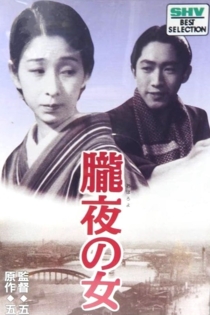
朧夜の女
Heinosuke Gosho
Toshiko Iizuka, Shin Tokudaiji
Otoku asks her brother Bunkichi to speak with her son Seiichi, a young man for whom sacrificed everything but who now seems to be headed for a wastrel life. Bunkichi admonishes the boy to study harder, but it seems his uncle's advice may already be too late.
Woman in the Mist
夜ごとの夢
Mikio Naruse
Sumiko Kurishima, Tatsuo Saitô
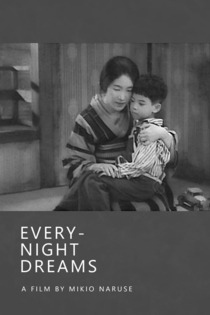
In the formally ravishing Every-Night Dreams, set in the dockside neighborhoods of Tokyo, a single mother works tirelessly as a Ginza bar hostess to ensure a better life for her young son—until her long-lost husband returns.
Every-Night Dreams
兄とその妹
Yasujirō Shimazu
Shin Saburi, Kuniko Miyake
A man who works late hours at a deadening job lives together with his wife and his younger sister. The younger sister's a modern girl who's starting to receive romantic attention from one of her co-workers.
A Brother and His Younger Sister
Chushingura
Teinosuke Kinugasa
Jusaburo Bando, Kazuo Hasegawa
This 1932 adaptation is the earliest sound version of the ever-popular and much-filmed Chushingura story of the loyal 47 retainers who avenged their feudal lord after he was obliged to commit hara-kiri due to the machinations of a villainous courtier. As the first sound version of the classic narrative, the film was something of an event, and employed a stellar cast, who give a roster of memorable performances. Director Teinosuke Kinugasa was primarily a specialist in jidai-geki (period films), such as the internationally celebrated Gate of Hell (Jigokumon, 1953), and although he is now most famous as the maker of the avant-garde silent films A Page of Madness (Kurutta ichipeji, 1926) and Crossroads (Jujiro, 1928), Chushingura is in fact more typical of his output than those experimental works. The film ranked third in that year’s Kinema Junpo critics’ poll, and Joseph Anderson and Donald Richie noted that 'not only the sound but the quick cutting was admired by many critics.
The Loyal 47 Ronin
恋の花咲く 伊豆の踊子
Heinosuke Gosho
Kinuyo Tanaka, Den Obinata
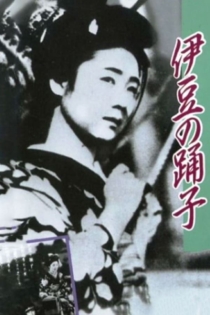
"The Dancing Girl of Izu" tells of the story between a young male student who is touring the Izu Peninsula and a family of traveling dancers he meets there, including their youngest girl. The student finds the naïve girl attractive even though he eventually has to part with the family after spending memorable time together.
The Dancing Girl of Izu
愛撫
Heinosuke Gosho
Yoshiko Okada, Tadao Watanabe
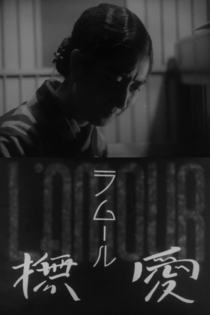
Heinosuke Gosho evokes in this film the family conflicts engendered by the eternal problem of a father who projects his professional desires on the life of his son. The sister Machiko is the essential link that will allow everyone to apologize to each other and achieve reconciliation
Love
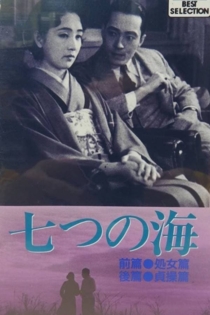
七つの海・前篇・処女篇
Hiroshi Shimizu
Joji Oka, Ureo Egawa
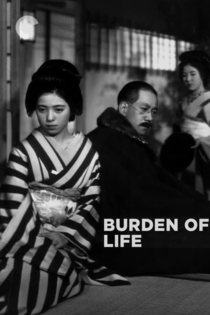
The film is a lengthy work interweaving characters from different backgrounds and social strata in a narrative centered around the experiences of its heroine, Yumie Sone. Over two hours long, Seven Seas was released theatrically in two parts, with the first part entitled "Virginity Chapter" coming out in December 1931, while the second part, "Chastity Chapter," followed in March 1932. Near the beginning of the narrative, at a garden party given by the wealthy Yagibashi family in Tokyo, Yumie meets Takehiko, the Yagibashis' playboy son and the brother of Yumie's fiancé, Yuzuru. Yumie, a young middle-class woman, lives with her ailing father, a retired ministry official, an older sister, and a younger sister still a child (played by a very young Hideko Takamine). Takehiko, who has just returned from a trip to Europe, is attracted to Yumie and contrives to have her stay overnight at his family's mansion where he takes advantage of her.
Seven Seas: Virginity Chapter