
Paulo Porto
1917 - 1999
Go Ahead, Brazil!
Roberto Farias
Reginaldo Faria, Antônio Fagundes
Mid-1970s. When the military regime's "economic miracle" and the victory of the Brazilian football team on the World Cup serve as a distraction for the persecution of opposition leaders by the political police of the dictatorship. Under this context, Jofre Godoi da Fonseca, an alienated middle-class man, is mistaken for Sarmento, a political activist he met at an airport prior to his assassination. He is then arrested for being "subversive".
Go Ahead, Brazil!

Como Ganhar na Loteria Sem Perder a Esportiva
J.B. Tanko
Costinha, Flávio Migliaccio
A comedy about the happiness of several people who won the number 12 of Sports Lottery, thinking they are the only winner. Among them, one priest seduced by the devil disguised as a sacristan, one taxi driver who is planning to buy an entire fleet of cars, and prostitutes who leave their brothel, only to return again later.
Como Ganhar na Loteria Sem Perder a Esportiva

A Penúltima Donzela
Fernando Amaral
Adriana Prieto, Paulo Porto
A young women from a conservative family loses her virginity to her boyfriend who dumps her after. She starts a new relationship, but when her parents find out she has been "ruined" they try to arrange a marriage with the first boyfriend.
A Penúltima Donzela

O Bravo Guerreiro
Gustavo Dahl
Paulo César Peréio, Mário Lago
Young congressman Miguel Horta represents a party that is directly opposed to the present government. He slyly switches parties in order to gain favor with those in power, seriously compromising his own ideals and ethics in the process.
The Brave Warrior


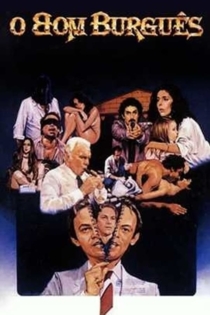
O Bom Burguês
Oswaldo Caldeira
José Wilker, Betty Faria
True story of Brazilian bank clerk who supplied money for the guerrilla fighting against the military dictatorship of the 70s. When he changes his disguise, he gets involved with high society, and with industrialists who were financing repression to the groups he stood for.
O Bom Burguês
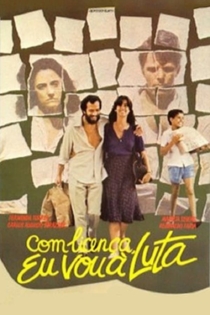
Com Licença, Eu Vou à Luta
Lui Farias
Reginaldo Faria, Marieta Severo
In Nilópolis, Eliane, a 15-year-old girl, who is the daughter of a lower-middle-class couple, falls in love with Otávio, a 33-year-old divorcee. Upon learning of the relationship, Eliane's parents forbid her to meet her lover.
Com Licença, Eu Vou à Luta
Dedé Mamata
Rodolfo Brandão
Guilherme Fontes, Malu Mader
Dede (Guilherne Fontes) is a Brazilian teen who lives with his middle-class grandparents who are members of the local communist party. When his grandmother dies, his grandfather's health soon fades to the point where he can't speak or walk. The local party officials ask Dede to continue to family tradition and take over his grandfather's position of social authority, but when Dede is introduced to cocaine by his best friend Alpino (Marcos Palmeira), the attraction to drugs is more appealing to him than political activism.
Dedé Mamata

O Casamento
Arnaldo Jabor
Adriana Prieto, Paulo Porto
18-year-old Glorinha finds herself on the eve of her wedding when a series of revelations plague her and her circle of family and friends. Dr. Camarinha, friend of Sabino, his father, who is a a wealthy construction entrepreneur, says Glorinha's fiancé is homosexual. Glorinha, for his part, reveals to him that she had been a lover of his dead son, Antônioa year ago. Sabino reveals to Noemia, his secretary with whom he ends up having a sexual relationship, who had experienced a homosexual practice as a child and calls her by the name of his daughter. Noemia, in turn, Xavier's mistress, who lives with a leprous woman who has long since cared for, reveals to him that she no longer intends to be his mistress. Glorinha goes with her father to a deserted beach, where she makes insinuations that she loves him and, when kissed by her father, runs desperately and tells her mother that her father had tried to rape her. Xavier, in turn, assassinates Noemia in the office.
The Wedding

As Borboletas Também Amam
J.B. Tanko
Paulo Porto, Rossana Ghessa
Monica, a naive schoolgirl from a suburb of Rio de Janeiro, meets Virginia, a former neighbor, now living in Copacabana. Influenced by her, she decides to take on a double life: in the morning she is the suburban girl, in the afternoon she attends a brothel in the South Zone. One day she meets Flávio, a friend and eventual lover of Virginia. Flávio falls in love with the purity of Monica and wants to drive away her friends, for considering Virginia a bad company for her beloved.
Butterflies also Love


Fome de Amor
Nelson Pereira dos Santos
Arduíno Colassanti, Manfredo Colassanti
An extended research tour of US university film programs introduced dos Santos to the American avant-garde filmmakers, among them Jonas Mekas and Stan Brakhage, who would directly inspire his formally radical adaptation of an allegorical short story about adultery and colonialism by Guilherme de Figueiredo. Filmed in both Manhattan and Brazil and set against the background of the Vietnam War and its protests, Hunger for Love uses a rigorously abstract soundtrack and narrative structure to evoke the acute paranoia of the period building up to the December 1968 military coup that tipped Brazil perilously close to a conservative dictatorship. With its harsh critique of the decadent tendencies of the Sixties counterculture, Hunger for Love offers a key expression of the self-consciously “ideological” phase of Cinema Novo. -Harvard Film Archive
Hunger for Love


Fim de Festa
Paulo Porto
Paulo Porto, Zaira Zambelli
Marcelo and Márcia, a successful couple, have different social backgrounds. She's always been rich and attached to tradition, while her husband hasn't. One day he leaves for another city, Angra dos Reis, where he meets two girls, Lena and Tânia. Marcelo and Lena get involved, while Tânia is jealous. One night the three go to a party, where a tragic accident happens.
Fim de Festa