Colette
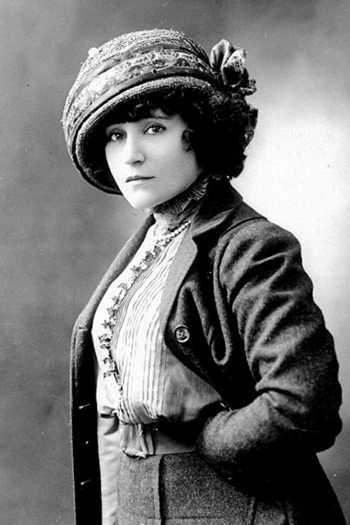
1873 - 1954Her work—mostly at novella length, short and sharp—survives because her chief subject is one that never goes out of fashion. "Love, the bread and butter of my pen," she wrote, though she put it more bluntly in her book The Pure and the Impure (1932): "The flesh, always the flesh, the mysteries and betrayals and frustrations and surprises of the flesh." The story of Colette and her work is one of the most astonishing in modern literature. She was a pioneer of the French school of autofiction (autobiographical fiction), writing about women's lives in ways that broke new ground. Her books were simultaneously popular and acclaimed—read by critics and the public alike—not to mention scandalous. And she made of her life a project just as fascinating and subversive as her books.
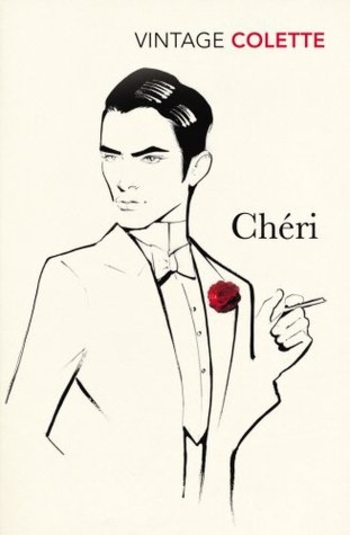
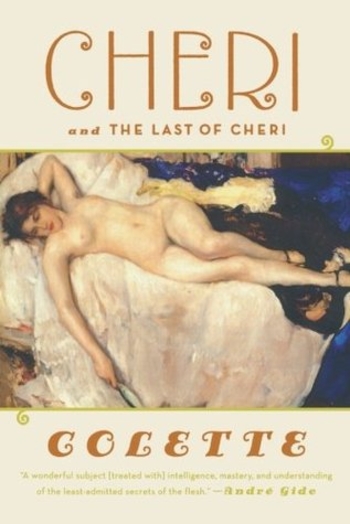
Among Colette's best known works are the "Claudine" novels, "La naissance du jour," "Gigi," "Chéri," "The Tendrils of the Vine,"... She was also a mime, actress, journalist and a woman of letters. Colette was the first woman to be elected to the Académie Goncourt and the Belgian Royal Academy, both indicia of respect for her writing.
Colette, l'insoumise
Cécile Denjean
Colette
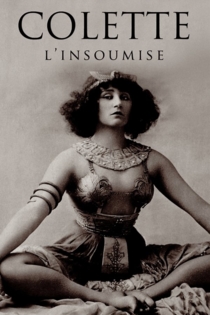
The incredible life of novelist, screenwriter, actress and nude dancer Sidonie-Gabrielle Colette (1873-1954), who led her life to the beat, constantly reinventing herself through words, scandals and metamorphoses; a peasant woman who became an icon of the European Belle Époque; an artist who defied religion and social prejudices to live a hedonist existence worthy of her desires; a real woman who turned herself into a fictional character…
Colette, l'insoumise
Colette
Yannick Bellon
Colette
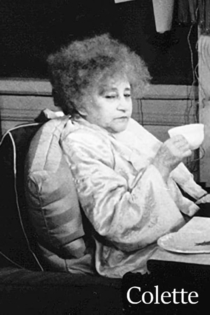
In conversation, in her Paris apartment, Sidonie-Gabrielle Colette, mime, dancer, novelist, wonders whether she should give the green light to a proposed film about the houses in which she lived. “I’m no longer photogenic,” she insists; nearly 80, marriages, affair with a stepson and intermittent lesbianism behind her, refusing now even to mention the arthritis that confines and assaults her, Colette is vivacious. Yannick Bellon’s captivating postmodernist film, as much a study of evanescence as any poem by Dickinson, segues into the film that Colette, a few years before her end, has just said she doesn’t want to do. Giving voice(over) to her own commentary, she goes back, first, to the home in Saint-Sauveur-en-Puisaye, Yonne, where she was born.
Colette