Arduíno Colassanti
1936 - 2014Seen as one of the main leading men of Cinema Novo by his distinguishable blond hair and blue eyes, during his career Colassanti was directed by filmmakers such as Nelson Pereira dos Santos, Leon Hirszman, Walter Lima Jr., Joaquim Pedro de Andrade, Tereza Trautman and Luiz Carlos Lacerda.
Born in Livorno, Italy, Colassanti was also a surfer and an pioneer in the early steps of aquatic photography in Brazil. He spent his twillight years in the city of Niterói, where he passed and was buried in 2014.

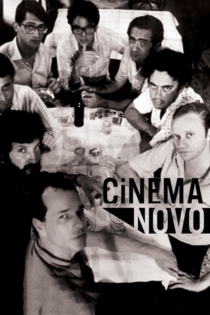
Improvisiert und zielbewusst: Cinema Novo
Joaquim Pedro de Andrade
Glauber Rocha, Arnaldo Jabor
Originally produced for German TV, Improvised and Purposeful is a firsthand look at the "Cinema Novo" movement (otherwise known as the 'Brazilian New Wave'). Director Joaquim Pedro de Andrade focuses on six Cinema Novo filmmakers working in Rio in 1967.
Improvised and Purposeful: Cinema Novo
El Justicero
Nelson Pereira dos Santos
Arduíno Colassanti, Adriana Prieto
A shockingly irreverent follow-up to the rural austerity of Barren Lives, dos Santos’ Godardian social satire owes more than a nod to the self-conscious antics of the French New Wave. The pampered son of a general, El Justicero is a hipster playboy who fancies himself a James Bond/Jean Paul Sartre urban hero. “Archetypical” yet “full of contradictions,” he sees that justice is achieved for the disadvantaged while taking advantage of certain bourgeois perks. His exploits are closely followed and eventually directed by his biographer who decides a film is not only more lucrative than a book, but it gives him the luxury of reviewing previous scenes. Unlike Bond, El Jus eventually experiences an awakening which threatens to compromise the entertainment value and glamour of his life story. - Harvard Film Archive
El Justicero

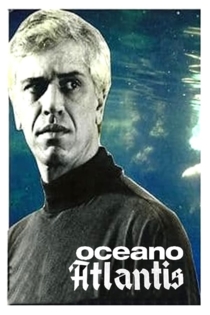
Oceano Atlantis
Francisco de Paula
Antônio Abujamra, Arduíno Colassanti
In a Rio de Janeiro after the catastrophe, only the hills were immune to a flood that left the asphalt submerged. While the Navy is rationing provisions and some are sacrificing themselves to avoid starvation, a diver goes to the bottom of the sea and finds a submerged civilization there.
Oceano Atlantis
Garôta de Ipanema
Leon Hirszman
Márcia Rodrigues, Arduíno Colassanti
Chronicles the life of a 17 year-old girl living in the upper-class Rio de Janeiro neighbourhood of Ipanema. Márcia lives a life of parties and spend her days among bohemians, musicians and intellectuals. While seeming happy in the outside, she's extremely anguished inside. Based on the famous song by Antonio Carlos Jobim and Vinicius de Moraes.
The Girl from Ipanema

Quem é Beta?
Nelson Pereira dos Santos
Noëlle Adam, Sylvie Fennec
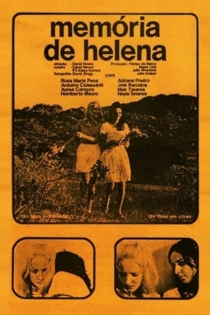
The critical success in France of How Tasty Was My Little Frenchman made possible dos Santos’ delirious science-fiction vision of free love in a post-apocalyptic wilderness besieged by flesh hungry zombies contaminated by an unnamed nuclear attack. Who is Beta? follows two statuesque survivors drawn irresistibly together only to be entranced by the arrival and sudden disappearance of a third, the bewitching raven haired Beta. With its cartoon-like depiction of extreme violence and desire, Who is Beta? offers a heady Pop-infused companion to Hunger for Love. Yet beneath its giddy play of surfaces, dos Santos' underappreciated film gradually reveals a darkly ambiguous metaphoric dimension. -Harvard Film Archive
Who Is Beta?
Como Era Gostoso o Meu Francês
Nelson Pereira dos Santos
Arduíno Colassanti, Ana Maria Magalhães
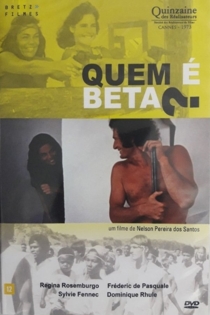
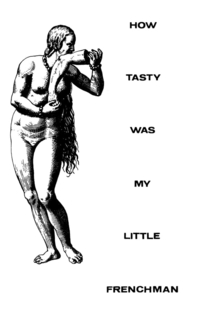
Brazil, 1594. The Tupinambás natives are friends of the French and their enemies are the Tupiniquins, friends of the Portuguese. A Frenchman is captured by the Tupinambás, and in spite of his trial to convince them that he is French, they believe he is Portuguese. The Frenchman becomes their slave, and maritally lives with Seboipepe.
How Tasty Was My Little Frenchman

Quilombo
Carlos Diegues
Tony Tornado, Antônio Pompêo
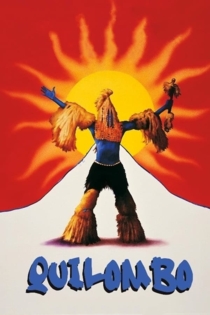
Quilombo dos Palmares was a real-life democratic society, created in Brazil in the 17th century. This incredibly elaborate (and surprisingly little-known) film traces the origins of Quilombo, which began as a community of freed slaves. The colony becomes a safe harbor for other outcasts of the world, including Indians and Jews. Ganga Zumba (Toni Tornado) becomes president of Quilombo, the first freely elected leader in the Western Hemisphere. Naturally, the ruling Portuguese want to subjugate Zumba and his followers, but the Quilombians are ready for their would-be oppressors. The end of this Brave New World is not pleasant, but the followers of Zumba and his ideals take to the hills, where they honor his memory to this day. Writer/director Carlos Diegues takes every available opportunity to compare the rise and fall of Quilombo with the state of affairs in modern-day Brazil.
Quilombo

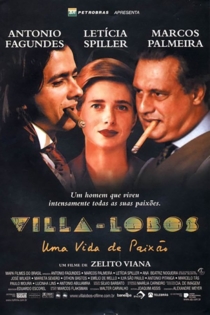
Villa-Lobos: Uma Vida de Paixão
Zelito Viana
Antônio Fagundes, Marcos Palmeira
The film tells the story of an intuitive, adventurous man who loved his country and being Brazilian. This man fought to be loyal to himself. His music is a transparent portrait of his genius, intuition, freedom, adventure and passion for Brazil.
Villa-Lobos: A Life of Passion