Natsuko Kahara
1921 - 1991
When a Woman Ascends the Stairs
Mikio Naruse
Hideko Takamine, Masayuki Mori
Keiko, whom everyone calls Mama, narrates her story: she's a hostess on the Ginza, 30, a widow. She describes life's vicious cycle: acting cheerful around drunks, dressing and living well to convey confidence, needing money for these expenses and for her demanding mother and brother, and knowing she's growing older. She's of an age when she must choose: to seek marriage (difficult given her tarnished occupation), to be a kept woman, or to borrow money to buy a bar of her own. Each route has dangers, including investors demanding a return on their loans. Keiko has a quiet dignity that attracts men, but are they what they seem? Does she actually have choices?
When a Woman Ascends the Stairs


The Bad Sleep Well
Akira Kurosawa
Toshirō Mifune, Masayuki Mori
In this loose adaptation of "Hamlet," illegitimate son Kôichi Nishi climbs to a high position within a Japanese corporation and marries the crippled daughter of company vice president Iwabuchi. At the reception, the wedding cake is a replica of their corporate headquarters, but an aspect of the design reminds the party of the hushed-up death of Nishi's father. It is then that Nishi unleashes his plan to avenge his father's death.
The Bad Sleep Well



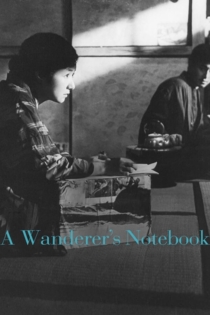
A Wanderer's Notebook
Mikio Naruse
Hideko Takamine, Akira Takarada
Considered one of the finest late Naruses and a model of film biography, A Wanderer’s Notebook features remarkable performances by Hideko Takamine – Phillip Lopate calls it “probably her greatest performance” – and Kinuyo Tanaka as mother and daughter living from hand to mouth in Twenties Tokyo. Based on the life and career of Fumiko Hayashi, the novelist whose work Naruse adapted to the screen several times, A Wanderer’s Notebook traces her bitter struggle for literary recognition in the first half of the twentieth century – her affairs with feckless men, the jobs she took to survive (peddler, waitress, bar maid), and her arduous, often humiliating attempts to get published in a male-dominated culture.
A Wanderer's Notebook
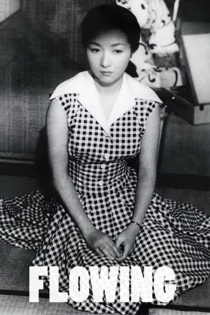
流れる
Mikio Naruse
Kinuyo Tanaka, Isuzu Yamada
Otsuta is running the geisha house Tsuta in Tokyo. Her business is heavily in debt. Her daughter Katsuyo doesn't see any future in her mother's trade in the late days of Geisha. But Otsuta will not give up. This film portraits the day time life of geisha when not entertaining customers.
Flowing
The Approach of Autumn
Mikio Naruse
Nobuko Otowa, Yōsuke Natsuki
A single mother from the country raising a 6th grade boy comes to Tokyo, leaves the boy to live with his uncle's family, runs a struggling grocery store, and works a local inn. The boy befriends a girl, the daughter of the innkeeper...
The Approach of Autumn

鰯雲
Mikio Naruse
Chikage Awashima, Yôko Tsukasa
A war widow with a young boy manages a farm with her bossy mother-in-law. When a reporter comes to interview her, the two begin an affair. He turns out to be married and won't leave his wife. Her older brother tries to marry off his children and hang on to/ extend his farm through an advantageous marriage in the face of threatened land confiscation and the desire of his children to get comfortable urban jobs instead of the backbreaking work in the paddy fields under parental control.
Summer Clouds




あらくれ
Mikio Naruse
Hideko Takamine, Ken Uehara
A woman marries, gives birth to a stillborn child, and divorces, falls in love with a hotel-keeper, only to find herself subordinated to his drive for success, takes up with a tailor who cannot console himself with her strong personality.
Untamed Woman

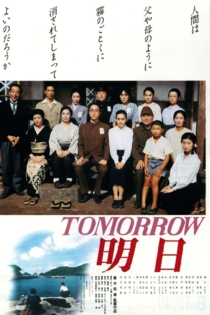
Tomorrow
Kazuo Kuroki
Kaori Momoi, Kaho Minami
On August 9, 1945, the Americans dropped an atomic bomb on Nagasaki. This film, based on a story by Mitsukaru Inoue, describes the daily life of people in Nagasaki the day before that fateful event. It presents the human drama of people's lives, and their feelings of joy and sadness. These include a newlywed couple, an expectant mother, and lovers who must say farewell because the boy is called to serve in the army. Each of these people, like others in the city, hoped to live with their dreams for ‘tomorrow’. But tomorrow never comes for them, as their lives are brought to an abrupt and unexpected end. Knowing how the story ends, in this case, doesn't detract from it at all; rather, it enhances the emotional impact, which is further heightened by the poignant musical score from Teizo Matsumura. 'Ashita' is the first film in Kazuo Kuroki's 'War Requiem Trilogy,' which also includes 'Utsukushii Natsu Kirishima' (2002) and 'Chichi to Kuraseba' (2004).
Tomorrow