Adriano Aprà
1940 (85 лет)
Red Ashes
Adriano Aprà, Augusto Contento
People of a volcanic island 'Stromboli' share their memory of beautiful actress Ingrid Bergman starred in Stromboli directed by Rossellini. Their testimonies describe relations around Stromboli . Movie scenes and the island's scenary are crossed, enriching life and art.
Red Ashes

Glauber, Claro
César Meneghetti
Bernardo Bertolucci, Marco Bellocchio
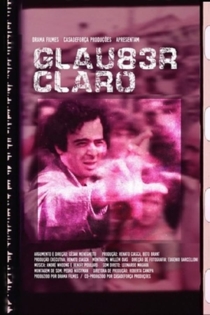
A deep dive into Glauber Rocha's years exiled in Italy in the 70s. Through a collection of interviews and archives, the movie shows the making of his film Claro (1975) and his relation with European auteurs in their filmic and political views.
Glauber, Claro
In the Shade of the Conformist
Adriano Aprà
Bernardo Bertolucci
In this visual essay, renowned film critic and historian Adriano Apra takes a closer look at Bernardo Bertolucci's work with Pier Paolo Pasolini on La Commare Secca and discusses its poetic qualities and visual style; Before the Revolution, which was inspired by the French Nouvelle Vague; Agony, a segment from the anthology film Love and Anger; the politically charged Partner, with Pierre Clémenti, which was filmed during the '68 student riots; and The Spider's Stratagem. Adriano Apra also discusses The Conformist and its unusual color scheme, the camera movement, the lensing, etc. Also included in the essay are clips from a very long interview with the Italian director in which he explains how The Conformist came to exist, and discusses its production history, its script and Alberto Moravia's novel, the casting process, the key conflicts in the film, etc.
In the Shade of the Conformist
Questione di cuore
Francesca Archibugi
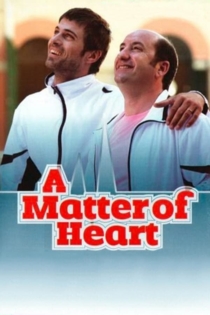
Antonio Albanese, Kim Rossi Stuart
Garage owner Angelo and big-time film producer Alberto find themselves occupying neighbouring beds in a Rome hospital after suffering heart attacks. Alberto is a gregarious joker - and chain smoker - who has a strong effect on the impressionable Angelo. However, as one of the men's condition deteriorates, the other becomes more deeply involved in his personal life.
A Matter of Heart
Il seme dell'uomo
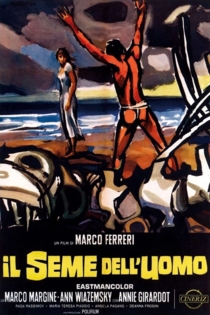
Marco Ferreri
Marco Margine, Anne Wiazemsky
During a Post-Apocalyptic period in the near future the majority of the European population has been wiped out by some sort of undefined plague. Cino and Dora, a young couple, are rounded up by what constitutes the authorities on an isolated temporary base. They are examined and given antibiotics which will protect them for six months, told to pick out a deserted house to live in the area, and use that time to conceive a child.
The Seed of Man
Les yeux ne veulent pas en tout temps se fermer, ou Peut-être qu'un jour Rome se permettra de choisir à son tour
Jean-Marie Straub, Danièle Huillet
Adriano Aprà, Anne Brumagne
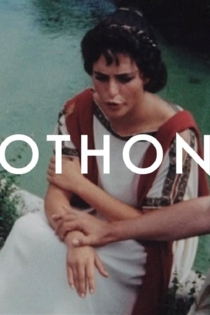
Straub-Huillet’s first color film, adapts a lesser-known Corneille tragedy from 1664, which in turn was based on an episode of imperial court intrigue chronicled in Tacitus’s Histories. The costuming is classical, and the toga-clad, nonprofessional cast performs the drama’s original French text amid the ruins of Rome’s Palatine Hill while the noise of contemporary urban life hums in the background. Their lines are executed with a terrific flatness and frequently through heavy accents; the language in Othon becomes not merely an expression but a thing itself, an element whose plainness here alerts us to qualities of the work that might otherwise be subordinated.
Othon
Fortini/Cani
Jean-Marie Straub, Danièle Huillet
Franco Fortini, Luciana Nissim
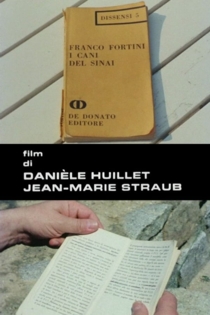
The film is a sort of presentation of Franco Fortini's book 'I Cani del Sinai'. Fortini, an Italian Jew, reads excerpts from the book about his alienation from Judaism and from the social relations around him, the rise of Fascism in Italy, the anti-Arab attitude of European culture. The images, mostly a series of Italian landscape shots, provide a backdrop that highlights the meaning of the text. - Fabrizio Sabidussi
Fortini/Cani
La balena di Rossellini
Claudio Bondi
Roberto Rossellini, Renzo Rossellini
La Balena di Rossellini origins from one of the most beautiful Roberto Rossellini's dreams, an exemplary project for his autorial path. The film conceived, but never realized, by Rossellini took shape in his notes after a trip to Chile conducted in May of 1971, a trip made to conduct an interview-portrait of Salvador Allende, then actually carried out by the director of "Rome, Open City". October 28, 1971: Rossellini, back from Santiago, Chile, reads a newspaper reports of a beached whale on the Pacific coast near a poor village inhabited by fishermen. From this simple news comes a film script for a fable about wealth and poverty. A film whose shooting Rossellini would have been entrusted to the young student Claudio Bondì, just graduated from the Experimental Center of Cinematography.
La balena di Rossellini
Rossellini visto da Rossellini
Adriano Aprà
Roberto Rossellini, Ingrid Bergman
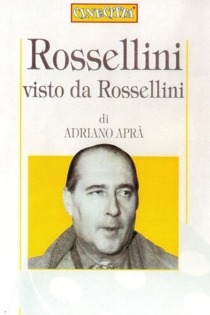
Made up almost entirely of archival interviews with Italian film director Roberto Rossellini (with audio interviews playing over various behind-the-scene bits and archival footage) the director recalls his early life, how he got into film, his political beliefs and how they were formed.
Rossellini Through His Own Eyes
Poltrone Rosse - Parma e il cinema
Francesco Barilli
Michele Guerra, Bernardo Bertolucci
The relations between Parma and cinema were so strong for almost the whole of the twentieth century that this city became an early laboratory of ideas and theories on cinema and a set chosen by some of the greatest Italian authors and beyond. Furthermore, a considerable number of directors, actors, screenwriters and set designers were born in Parma who have made their way internationally, testifying to the fact that in this small city in Northern Italy there was a decidedly cinematic air. Red armchairs takes up the thread of this story, wondering why, unique among the Italian provincial cities, Parma has given so much to the cinema, accompanying the viewer on a journey backwards that from the first projections of the Lumière cinema reaches the ultramodern experience of new multiplexes. During this journey we will meet the characters who created the conditions for this diffusion of cinematographic culture in Parma.
Red Chairs - Parma and the Cinema
Amore e rabbia
Marco Bellocchio, Carlo Lizzani
Nino Castelnuovo, Petra Vogt
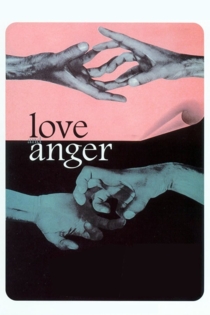
Five short stories with contemporary settings. In New York, people are indifferent to derelicts sleeping on sidewalks, to a woman's assault in front of an apartment building, and to a couple injured in a car crash. A man, stripped of his identity, dies in bed with actors expressing his agony. A cheerful, innocent young man walking a city street in a time of war pays a price for this innocence. A couple talks about cinema while it watches another couple talk of love and truth on the eve of one character's return to Cuba. Striking students take over a university classroom; an argument follows about revolution or incremental change.
Love and Anger
L'età d'oro
Emanuela Piovano
Laura Morante, Giulio Scarpati
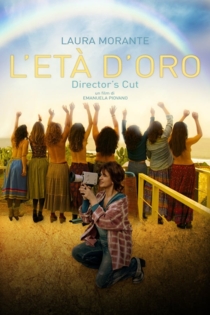
Sid grew up with his mother Arabella in a cheerful and somewhat naïve Apulian community, which was filled with affection and a great passion for cinema. After years away he returns to the land of his childhood where his mother had created a cinematic arena and this trip in his childhood memories will lead to a better understanding of her human and existential aspects.
L'età d'oro