Peter B. Hutton
1944 - 2016In Marin County
Peter B. Hutton
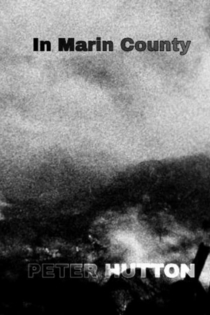
"IN MARIN COUNTY approaches the subject of America's ecological disaster as a comic yet bizarre vision. The tradition of Old MacDonald's farm has long since disappeared and in its place are bulldozer and insect sprays. Our fascination with these mechanized wonders of civilization may well prove to be more lethal than we would have imagined. Peter Hutton has succeeded in making an important statement on ecology and the strange delight Americans take in destroying things." - Whitney Museum of American Art
In Marin County
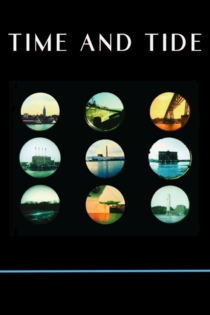
New York Near Sleep for Saskia
Peter B. Hutton
“Using exciting juxtapositions of shade and movement, this silent and surreally poetic film examines subtle changes of light and landscape in New York. NEW YORK NEAR SLEEP exploits the basic potential of film for capturing light refractions. Hutton imposes on this film the aesthetics of still photography and uses as a structural device the duration of perception of the subtle reflection of movements and illuminations.” – Bill Moritz, Theatre Vanguard
New York Near Sleep for Saskia

Three Landscapes
Peter B. Hutton
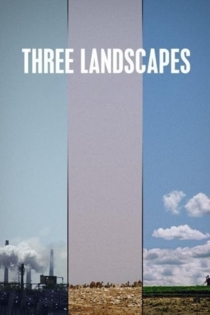
Shot on 16mm, this wondrous silent film study from avant-garde master Peter Hutton (At Sea) observes human movement across three distinct landscapes: Detroit, along the Hudson River Valley and in the Dallol Depression in Ethiopia.
Three Landscapes
Images of Asian Music (A Diary from Life 1973-74)
Peter B. Hutton
A contemplative, seemingly timeless record of the years Hutton spent in Southeast Asia while working as a merchant seaman. Jon Jost writes, "The film is rich with truly wonderful visions: a thick, white porcelain cup perched on a ship's rail, the tea within swaying gently in sync with the ship while the sea rushes by beyond the faces of crewmen posing awkwardly but also movingly for the camera; a cockfight on ship; scenes from a bucolic pre–Pol Pot Phnom Penh. Images has the haunting elegiac resonance of Eugène Atget's Paris, the echo of a time and place that was." - MoMA
Images of Asian Music (A Diary from Life 1973-74)
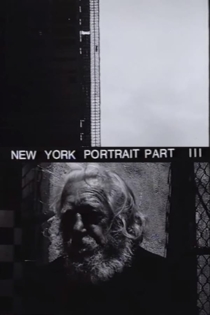
New York Portrait, Chapter III
Peter B. Hutton
"[Hutton’s] latest urban film, New York Portrait, Chapter III, takes on a unique tone in relation to Hutton’s ongoing exploration of rural landscape. The very fact that Hutton is dealing with older footage, with archives of memory more than immediacy, gives it a different texture than his earlier New York films. Hutton always found the presence of nature in the city, not only in his many shots of sky and vegetation, but also in the geometry and texture of the city itself, which seemed to project an independence from the human." (Tom Gunning)
New York Portrait, Chapter III
New York Portrait, Chapter I
Peter B. Hutton
Hutton's most impressive work ... the filmmaker's style takes on an assertive edge that marks his maturity. The landscape has a majesty that serves to reflect the meditative interiority of the artist independent of any human presence. ... New York is framed in the dark nights of a lonely winter. The pulse of street life finds no role in NEW YORK PORTRAIT; the dense metropolitan population and imposing urban locale disappear before Hutton's concern for the primal force of a universal presence. With an eye for the ordinary, Hutton can point his camera toward the clouds finding flocks of birds, or turn back to the simple objects around his apartment struggling to elicit a personal intuition from their presence. ... Hutton finds a harmonious, if at times melancholy, rapport with the natural elements that retain their grace in spite of the city's artificial environment. The city becomes a ghost town that the filmmaker transforms into a vehicle reflecting his personal mood.
New York Portrait, Chapter I
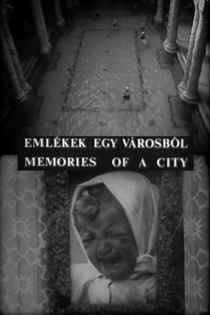
July '71 in San Francisco, Living at Beach Street, Working at Canyon Cinema, Swimming in the Valley of the Moon
Peter B. Hutton
July ’71 is as much a record of the daily experiences of light and shadow as it is a catalogue of domestic life. More involved with “straight photography” than Brakhage, but far more engaged with tactility and the plastics of the image than Jonas Mekas, this early work embraces the mundane—making bread in the kitchen, riding bikes by the San Francisco Bay, hanging out in a cheap-looking flat with friends, plucking a game fowl for supper—while also paying attention to the wind, water, and trees that surround these fleeting moments.
July '71 in San Francisco, Living at Beach Street, Working at Canyon Cinema, Swimming in the Valley of the Moon
Two Rivers
Peter B. Hutton
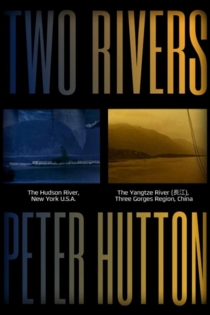
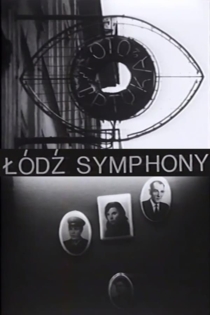
Commissioned by the arts organization Minetta Brook, Two Rivers was inspired by Henry Hudson’s failed 1609 quest to discover a trade route between North America and China. Hutton observes the bustling industry of the Hudson from atop a ship’s deck. "A poetic, comparative portrait of the Hudson River and Yangtze River that speaks to the rise of China in relation to the decline of a post-industrial American region."
Two Rivers