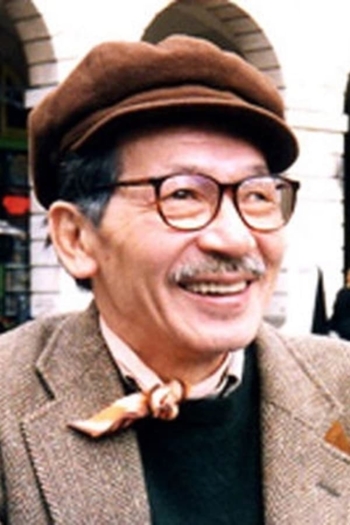
Noboru Mitani
1932 (93 года)
軍旗はためく下に
Kinji Fukasaku
Sachiko Hidari, Tetsurō Tamba
A war widow determined to clear the name of her disgraced husband, who was court-martialed for desertion and executed. Official records have been destroyed, and the ministry that distributes benefits continues to deny her a pension. Twenty-six years after the war, she seeks out four survivors of her husband's garrison. Each tells a dramatically different story about her husband's conduct, but she is determined to learn the truth.
Under the Flag of the Rising Sun

Black Rain
Shōhei Imamura
Yoshiko Tanaka, Kazuo Kitamura
Shigematsu Shizuma lives with his senile mother, his wife Shigeko, and his niece Yasuko in a village near Fukuyama. He, his wife, his niece and his close friends in the village were present at the atomic bombing of Hiroshima. The Shizumas look for prospective husbands for Yasuko, but find that the families withdraw on finding out she was at Hiroshima.
Black Rain

Minbo: the Gentle Art of Japanese Extortion
Juzo Itami
Nobuko Miyamoto, Yasuo Daichi
An upscale Japanese hotel hires Mahiru Inoue, a lawyer adept at dealing with the Yakuza, to help them rid their hotel of the local gangsters so they can get a contract for a meeting of important foreign officials.
Minbo: the Gentle Art of Japanese Extortion

The Demon
Yoshitaro Nomura
Shima Iwashita, Ken Ogata
When Sokichi stops providing his long-time lover Kikuyo enough money to pay for the care of their three young children, Kikuyo leaves the children with Sokichi - and his very surprised and angry wife Oume - and disappears.
The Demon
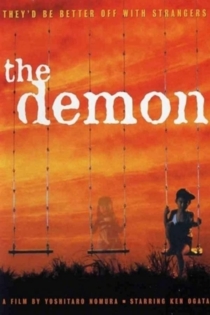
Tomorrow
Kazuo Kuroki
Kaori Momoi, Kaho Minami
On August 9, 1945, the Americans dropped an atomic bomb on Nagasaki. This film, based on a story by Mitsukaru Inoue, describes the daily life of people in Nagasaki the day before that fateful event. It presents the human drama of people's lives, and their feelings of joy and sadness. These include a newlywed couple, an expectant mother, and lovers who must say farewell because the boy is called to serve in the army. Each of these people, like others in the city, hoped to live with their dreams for ‘tomorrow’. But tomorrow never comes for them, as their lives are brought to an abrupt and unexpected end. Knowing how the story ends, in this case, doesn't detract from it at all; rather, it enhances the emotional impact, which is further heightened by the poignant musical score from Teizo Matsumura. 'Ashita' is the first film in Kazuo Kuroki's 'War Requiem Trilogy,' which also includes 'Utsukushii Natsu Kirishima' (2002) and 'Chichi to Kuraseba' (2004).
Tomorrow
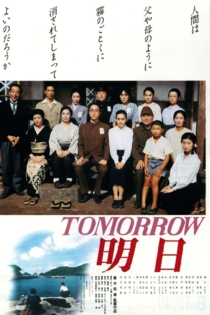
でらしね
Shun Nakahara
Eiji Okuda, Asuka Kurosawa
A mysterious street-painter, Jouji, wanders aimlessly, homeless. Together with his homeless pals, he makes his living by selling his paintings on the street. His paintings, dynamically exploding on pieces of cardboard, catch the eyes of Kyoko, an art dealer. He can feel alive only if he keeps painting, but unable to find something to fill his void inside, he tries to drown himself in alcohol. Drawn to Jouji, Kyoko commissions him to paint for her. The two travel to a secluded mountain-side, and there Jouji becomes inspired both by the natural surroundings and Kyoko herself.
Déracine
Dodes'ka-den
Akira Kurosawa
Yoshitaka Zushi, Kin Sugai
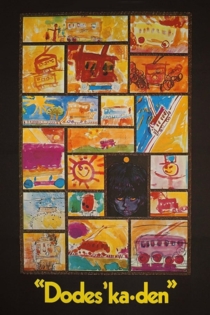
This film follows the daily lives of a group of people barely scraping by in a slum on the outskirts of Tokyo. Yet as desperate as their circumstances are, each of them—the homeless father and son envisioning their dream house; the young woman abused by her uncle; the boy who imagines himself a trolley conductor—finds reasons to carry on.
Dodes'ka-den
おろしや国酔夢譚
Jun'ya Satô
Ken Ogata, Toshiyuki Nishida
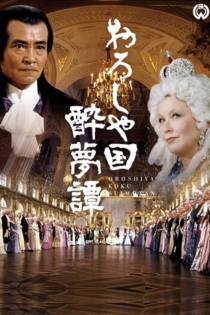
Sumptuous filming of the journey of a shipwrecked Japanese expedition from the Pacific Ocean across Siberia to the court of Catherine the Great of Russia. A Russo-Japanese co-production of a unique event in history which was the hit of Cannes and other film festivals but did not receive wide distribution despite its huge scope, high production values, and very human story of culture clash.
The Dream of Russia
Love Letter
Tatsumi Kumashiro
Kenichi Hagiwara, Mitsuko Baisho
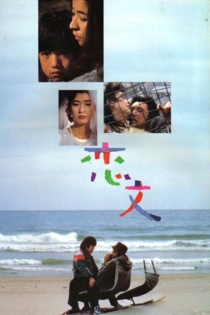
A drama depicting the conflict between a man that ran to an old lover suffering from advanced leukemia, his wife and child that were left behind, and the friendship that develops between his wife and his former lover.
Love Letter

仁義の墓場
Kinji Fukasaku
Tetsuya Watari, Tatsuo Umemiya
A look at the life of renegade yakuza, Rikio Ishikawa, particularly the years from 1946 to 1950 when his violent antics get him in trouble with his own clan, Kawada, and then with the clan of his protector, Kozaburo Imai. In these years, he can rely on Chieko, a young Tokyo courtesan who gives him shelter. He's banished to Osaka, where he picks up a drug habit. Through it all, he keeps his friends and enemies off balance with unpredictable behavior - and he seems indestructible.
Graveyard of Honor

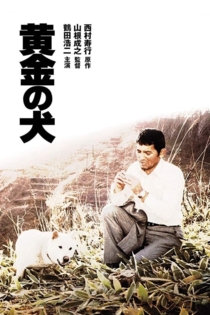
黄金の犬
Shigeyuki Yamane
Koji Tsuruta, Yoko Shimada
From Hokkaido to Tokyo, hunting dog Goro embarks on a long and grueling journey to reach home. With the loss of his master who held a secret to a weapons smuggling case and the corruptions of those who are involved, Goro's adventure unfolds.
Dog of Fortune
おもちゃ
Kinji Fukasaku
Maki Miyamoto, Sumiko Fuji
Set in the late 1950s, when geisha culture was threatened by moral crusades, it tells the story of Omacha (Miyamoto Maki), a young girl who sees the geisha life as a way to lift her poverty-stricken family from their hand-to-mouth existence. Through her eyes, we see the protocols and complex financial relationships which dictate the running of the geisha house. Fukasaku's film is a work of great delicacy with moments of hypnotic beauty, and his tender direction, often touched with a sense of wonder, fills the screen with lovingly constructed scenes. At its heart is the poignant situation of the women who must sacrifice their normal relationships to live an ambiguous life in which they are a key part of society while being kept, for the most part, on its periphery, like perpetual mistresses.
The Geisha House
