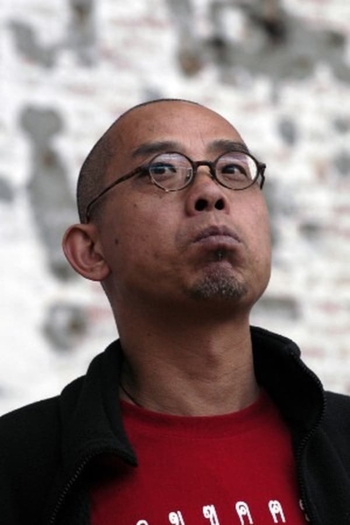
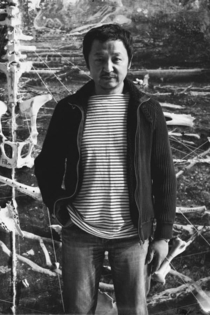
Wu Wenguang
1956 (70 лет)Wu has completed documentaries: Bumming in Beijing (1990), 1966, My Time in the Red Guards (1993), Jiang Hu: Life on the Road (1999), Fuck Cinema (2005), Bare Your Staff (2010), Treating (2010), Because of Hunger (2013), Investigating My Father (2016), Autobiography: Pass Through (2017), Autobiography: Struggle (2018) Autobiography: Fear (2019), Riding Through (2020), and has screened in many film festivals in the world. Wu also has created some short video, which like Diary: Snow, 21 Nov, 1998 (1999), Public Space (2000), Search: Hamlet in China (2002).
Wu had been created in theater, which like Treating (2009), Memory: Hunger (2010), Investigating My Father (2013) and Reading Hunger (2016), Reading Father (2019)
Also Wu had some no-fiction books published (Bumming in Beijing, 1966, Revolution Scene, Report on Jianghu)
In 2005, Wu found the Village Documentary Project, and in 2010, found the Folk Memory Project .
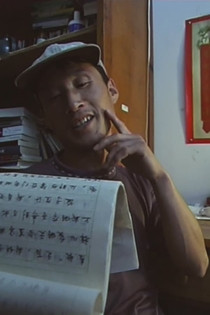
1966, My Time in the Red Guards
Wu Wenguang
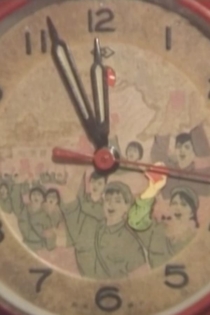
More preoccupied with "history" than Wu's other works, My Time in the Red Guards is a record of his fascination with the missed moment, Mao's Cultural Revolution. In 1966, the Red Guards ironically represented the official avant-garde, a movement carried forward by youth determined to become heroes of the Revolution. Wu interviews people who had joined the Red Guards as high schoolers, most now successful professionals, some Party members. The miscalculations and cruelties of this extreme cultural campaign are spread out before us, detailed by personal recollection and further illustrated by old agit-prop newsreels. Misgivings and fond remembrance vie for position as the interviewees seem to confuse the nostalgia of youthful action with the excesses of historical fact.
1966, My Time in the Red Guards
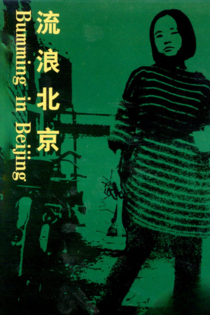
流浪北京
Wu Wenguang
Bo Gao, Zhang Xiaping
A documentary following five young artists from around China, who travelled to Beijing in the 1980s to work as freelancers, exploring their lives, careers, and what aspirations they may have for the future.
Bumming in Beijing: The Last Dreamers
霾与雾
Cao Fei
Wu Wenguang
Darkly humorous reinterpretation of the zombie film, set in Beijing. Here the undead are real estate agents, nouveau riche businessmen, security guards, manicurists, and sex workers seeking contact in an increasingly individualized, alienating society.
Haze and Fog

At Home in the World
Wu Wenguang
Bo Gao, Ci Zhang
A year after he made Bumming in Beijing, Wu Wenguang visited his main figures in Austria, France, Italy and the USA. The desire to escape everything, which was the most compelling feeling while they were still living in Beijing, has meanwhile faded and they are now confronted with the dynamics of emigration. Wu asks what it means to feels deserted by one's own country and how it is when one reacts by deserting it in turn.
At Home in the World
纪念碑
Wu Wenguang
Wu Wenguang, Zhang Mengqi
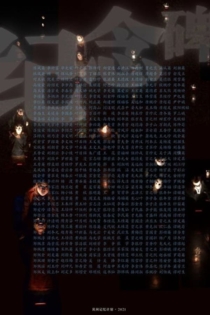
Edited together from materials taken from Caochangdi performances and activities between 2012-2013 and Wu Wenguang's own body camera record, this film can be regarded as a kind of "story follow-up" version of "Because of Hunger". In short, it is a kind of "remembrance".
The Monument
洛洛的恐惧
Luo Luo
Wu Wenguang, Zhang Mengqi
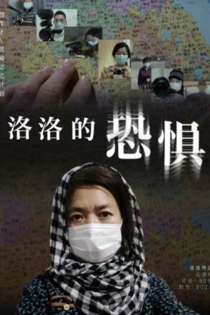
Luo Luo’s intense fear of Covid-19 keeps her in the house during the pandemic. She listens to her father relate their family history, and spends time on Zoom with fellow Folk Memory Project members Wu Wenguang and Zhang Mengqi.
Luo Luo’s Fear
亮出你的家伙
Wu Wenguang
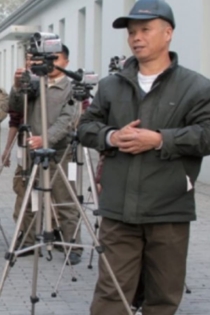
Wu Wenguang's comment: This film looks at my relationship with the village filmmakers— or I might say, how we met and got entangled. The film’s material comes from video recordings of the Villager Documentary Project from 2005-2009. It is about how these complete strangers and I became tied, bound, and rolled up together. And it’s about the phrase I keep wanting to shout to them,“Stand your ground! None of you run from this!”
Bare Your Stuff
調查父親
Wu Wenguang
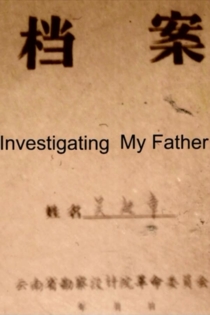
My father was a landowner’s son and an ex-Kuomintang Air Force pilot, who remained in mainland China after 1949. For survival, he tried to transform himself from a man of the ‘old society’ to a man of the ‘new society’. As his son, I started investigating his ‘history before 1949’, which he had kept away from me. This film documents the process of my investigation over twenty years.
Investigating My Father
自传系列
Wu Wenguang
This film is the second segment of my “Autobiography Series.” From the moment when my mother disclosed a long kept secret, my birth was accompanied by many struggles for my mother. Those “struggles” include: during pregnancy, “should this child be kept,” to the painful struggles in the delivery process. Struggles have also accompanied since I was born, becoming part of my life.
Autobiography: Struggles