Mayuri Mokushô
1929 (96 лет)
酔いどれ天使
Akira Kurosawa
Takashi Shimura, Toshirō Mifune
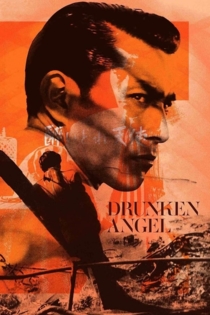
Doctor Sanada treats gangster Matsunaga after he is wounded in a gunfight, and discovers that he is suffering from tuberculosis. Sanada tries to convince Matsunaga to stay for treatment, which would drastically change his lifestyle. They form an uneasy friendship until Matsunaga's old boss Okada returns from prison.
Drunken Angel
ひまわり娘
Yasuki Chiba
Toshirō Mifune, Ineko Arima
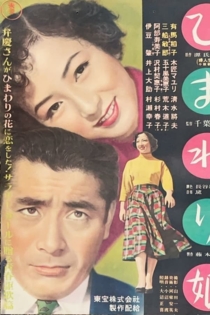
Young Setsuko Fujino begins a new job at Tokyo Chemical Company. She likes her boss, Ippei Hitachi, and enjoys serving him tea, despite the fact that her fellow workers think the women employees should not have to act in such a servile manner. When the women go on strike over the issue, Setsuko finds herself caught in the middle. When the heir to the company, Ryosuke Tanabe, proposes marriage to Setsuko, she is honored, but realizes that her real affection is for Hitachi.
Sunflower Girl
どぶ
Kaneto Shindō
Nobuko Otowa, Jūkichi Uno
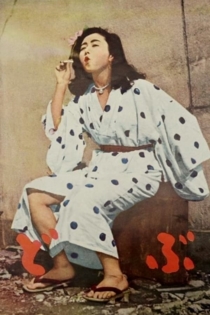
Toku, a factory worker gives food to a starving woman, Tsuru, who then follows him home. He shares a shack in a shanty village in Kawasaki with his friend Pin-chan. The two men try to get rid of her but then let her stay when she gives them money. Tsuru tells the people of the village that she lost her job due to a strike, then was robbed of her severance pay, then sold to a brothel in Tsuchiura. She ran away with a friend from Kawasaki. Toku and Pin-chan sell her to a geisha house and spend the money. She is thrown out. The owner demands his money back. Tsuru earns the money to pay their debt by working as a prostitute outside the station. The other prostitutes beat her. She fends them off with a policeman's revolver and is then shot dead by the police.
The Ditch
怒りの街
Mikio Naruse
Jūkichi Uno, Yasumi Hara
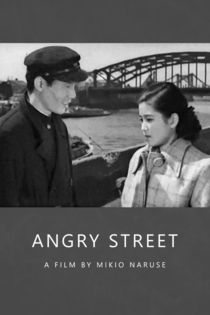
The Angry Street includes a great deal of location shooting in the rebuilt city, including downtown streets, residential neighborhoods, the campus of the University of Tokyo, and the high life of jazzy dance halls. Sudo (Hara Yasumi) and Mori (Uno Jukichi) are two university students who make money by picking up rich girls in dance clubs and conning them into giving them cash. Mori is the brains of the operation, and Sudo is the suave dancer who picks up the girls. Over the course of the film, Sudo becomes involved with three different girls and is drawn into the gangster milieu, which he seems unable to resist even though he is responsible for his mother, grandmother, and sister, Masako (Wakayama Setsuko). In this world of bad boys and girls, Masako is the pillar of strength and moral virtue who finally enables Mori to straighten out.
The Angry Street
白い野獣
Mikio Naruse
Mitsuko Miura, Sō Yamamura
The critical establishment was clearly not prepared to accept a woman's prison film featuring former prostitutes recovering from venereal diseases, unwanted pregnancies, and estranged lovers. With its cat fights, hysterical tantrums, film noir lighting, and dramatic music, White Beast is indicative of the new influences of the Hollywood psychological thriller on Naruse. Caged (John Cromwell, 1950) initiated a cycle of women's prison movies in the United States that may or may not have been shown in Japan, but the stylistics of White Beast draw on the same paranoid woman's films and film noir conventions that preceded the American cycle.
White Beast

ゴジラの逆襲
Motoyoshi Oda
Hiroshi Koizumi, Setsuko Wakayama
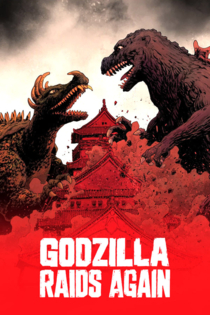
Two fishing scout pilots make a horrifying discovery when they encounter a second Godzilla alongside a new monster named Anguirus. Without the weapon that killed the original, authorities attempt to lure Godzilla away from the mainland. But Anguirus soon arrives and the two monsters make their way towards Osaka as Japan braces for tragedy.
Godzilla Raids Again