John Cage
1912 - 1992
Sound??
Dick Fontaine
Rahsaan Roland Kirk, John Cage
Although Rahsaan Roland Kirk and John Cage never actually meet in this film (Cage's enigmatic questions about sound are intercut with some of Kirk's more ambitious experiments with it) these two very different musical iconoclasts share a similar vision of the boundless possibilities of music.
Sound??
At Land
Maya Deren
Maya Deren, John Cage
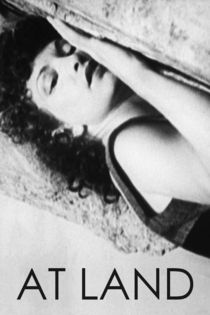
A woman lies on the sand, left there by the tides and waves (and in a pose that would be copied in From Here to Eternity). She reaches up across tree roots and makes a difficult climb. Only to discover herself climbing horizontally along a long dinner table as bourgeoise black-tie guests chat and drink and smoke, oblivious to her. At the top of the table, a man is playing chess but abandons the game. Fascinated, she gazes at board, the pieces moving unaided. The woman chases a pawn as it falls to the floor. Falls down a waterfall. Is lost.
At Land
American Art in the 1960s
Michael Blackwood
John Cage, Helen Frankenthaler
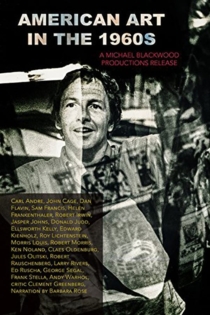
During this critical decade in American life, artists built on the styles of the 1950s. An explosion of artistic energy produced Pop Art, Minimalism, color-field painting, and hard-edged abstraction. Sculptors and painters on both coasts explored new methods and new subject matter. American Art in the Sixties examines the key figures of that decade including Rauschenberg and Johns, two crucial transitional figures between Abstract Expressionism and the sensibilities of the new decade. The art of that time mirrors the optimism and the affluence, and the technology and the vulgarity of those boom years.
American Art in the 1960s
John Cage: I Have Nothing to Say and I Am Saying It
Allan Miller
John Cage, Merce Cunningham
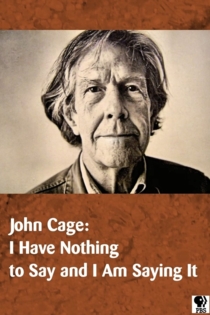
This 56-minute documentary on America's most controversial and unique composer manages to cover a great many aspects of Cage's work and thought. His love for mushrooms, his Zen beliefs and use of the I Ching, and basic bio details are all explained intelligently and dynamically. Black Mountain, Buckminster Fuller, Rauschenberg, Duchamp are mentioned. Yoko Ono, John Rockwell, Laurie Anderson, Richard Kostelanetz make appearances. Fascinating performance sequences include Margaret Leng-Tan performing on prepared piano, Merce Cunningham and company, and performances of Credo In Us, Water Music, and Third Construction. Demystifies the man who made music from silence, from all sounds, from life.
John Cage: I Have Nothing to Say and I Am Saying It
Tentatives de se décrire
Boris Lehman
Mirèse Aerdts, Nathalie André
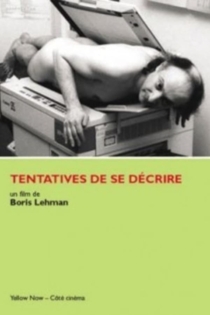
Trying to describe oneself is a movie about representation. How it is possible, through film, to describe oneself and describe others. With the camera as mirror and third eye. At first, a collage-like combination of letter-writing, investigation and journey, something between documentary and feature film. Finally, a portrait of Boris Lehman from 1989 to 1995, part II of BABEL.
Trying to Describe Oneself
Global Groove
John Godfrey, Nam June Paik
John Cage, Russell Connor
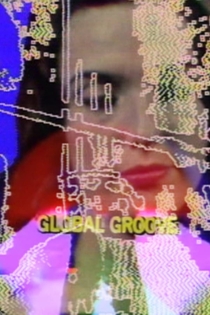
Global Groove was a collaborative piece by Nam June Paik and John Godfrey. Paik, amongst other artists who shared the same vision in the 1960s, saw the potential in the television beyond it being a one-sided medium to present programs and commercials. Instead, he saw it more as a place to facilitate a free flow of information exchange. He wanted to strip away the limitations from copyright system and network restrictions and bring in a new TV culture where information could be accessed inexpensively and conveniently. The full length of the piece ran 28 minutes and was first broadcasted in January 30, 1974 on WNET.
Global Groove
Uncle Howard
Aaron Brookner
Howard Brookner, Aaron Brookner
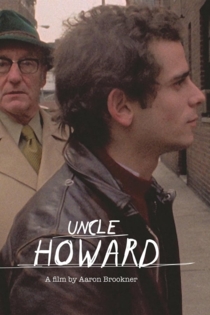
When Howard Brookner lost his life to AIDS in 1989, the 35-year-old director had completed two feature documentaries and was in post-production on his narrative debut, Bloodhounds of Broadway. Twenty-five years later, his nephew, Aaron, sets out on a quest to find the lost negative of Burroughs: The Movie, his uncle's critically-acclaimed portrait of legendary author William S. Burroughs. When Aaron uncovers Howard's extensive archive in Burroughs’ bunker, it not only revives the film for a new generation, but also opens a vibrant window on New York City’s creative culture from the 1970s and ‘80s, and inspires a wide-ranging exploration of his beloved uncle's legacy.
Uncle Howard
Twinkle Dammit!
Chuang Xu
Margaret Leng Tan, George Crumb
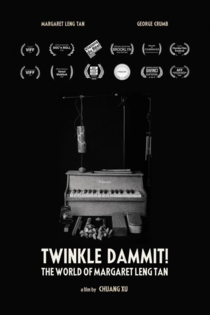
In 1971, Margaret Leng Tan was the first woman to earn a Doctorate degree from the Juilliard School. Since then, her five-decade career has made the musician a figurehead of avant-garde music, owing predominantly to her incorporation of the toy piano in her performances. We meet Leng Tan at the age of 71 as she embarks on an iconic collaboration with George Crumb, one of the last remaining avant-garde composers of his era. "Twinkle Dammit!" gives access to the rarely-seen creative process between two musical geniuses, peeling back the public-facing surface of the world's greatest toy-piano-virtuoso to explore the private obsessions that have lead to a life committed to the avant-garde.
Twinkle Dammit!
Poetry in Motion
Ron Mann
Charles Bukowski, William S. Burroughs
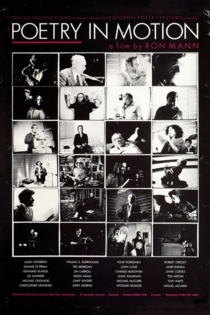
More than 20 contemporary North American poets recite, sing, and perform their work. Early in the film, Charles Bukowski talks about the energy of poets and of a poem. These poets are the children of Walt Whitman and of Charles Olson, incantatory and oratorical, radical, sometimes incorporating contemporary political imagery. Black Mountain poets, the Beats, minimalists like John Cage, the wordless Four Horsemen, Tom Waits, and others capture aspects of poets as troubadours.
Poetry in Motion
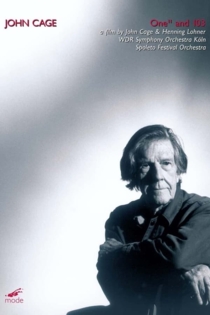
One 11 and 103
Henning Lohner
John Cage
Avant-garde composer John Cage is famous for his experimental pieces and "chance music" but temporarily branched into video in 1992 with this art film about meaningless activity. The work is composed of two segments that are supposed to be played simultaneously: "One 11" contains the artistic statement, and "103" is a 17-part orchestral piece. Also included is a revealing documentary about Cage and director Henning Lohner.
One 11 and 103
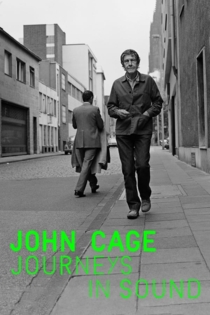
John Cage: Journeys in Sound
Allan Miller, Paul Smaczny
John Cage
A sonic innovator or an expert on chance? This documentary by Oscar-winning director Allan Miller and Emmy-winner Paul Smaczny pays tribute to the most fascinating American avant-garde composer. Shot in America, Germany and Japan, 'Journeys in Sound' premieres rare archival footage and features associates of John Cage and contemporary artists.
John Cage: Journeys in Sound
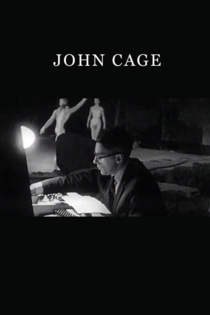
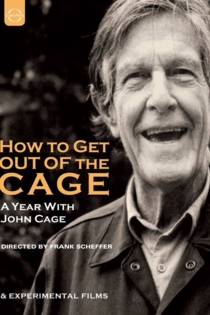
How to Get Out of the Cage (A year with John Cage)
Frank Scheffer
John Cage
2012 documentary on John Cage celebrating his 100th birthday in the form of a re-edit of partially unused film material shot for the film 'Time is Music’ in 1987. Includes interviews and recordings of performances with the influential zen composer.
How to Get Out of the Cage (A year with John Cage)