Steve Reich
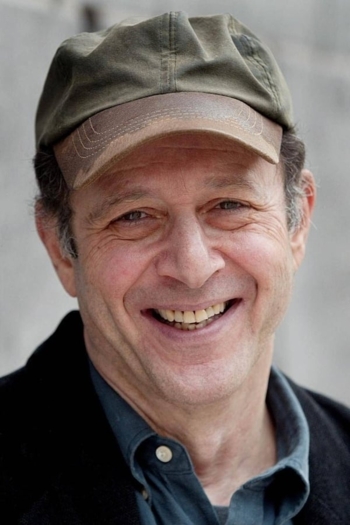
1936 (89 лет)Stephen Michael Reich (born October 3, 1936) is an American composer who, along with La Monte Young, Terry Riley, and Philip Glass, pioneered minimal music in the mid to late 1960s.
Reich's style of composition influenced many composers and groups. His innovations include using tape loops to create phasing patterns (for example, his early compositions It's Gonna Rain and Come Out), and the use of simple, audible processes to explore musical concepts (for instance, Pendulum Music and Four Organs). These compositions, marked by their use of repetitive figures, slow harmonic rhythm and canons, have significantly influenced contemporary music, especially in the US. Reich's work took on a darker character in the 1980s with the introduction of historical themes as well as themes from his Jewish heritage, notably Different Trains.
Writing in The Guardian, music critic Andrew Clements suggested that Reich is one of "a handful of living composers who can legitimately claim to have altered the direction of musical history".[6] The American composer and critic Kyle Gann has said that Reich "may ... be considered, by general acclamation, America's greatest living composer".
From Wikipedia, the free encyclopedia

Steve Reich: City Life
Manfred Waffender
Steve Reich
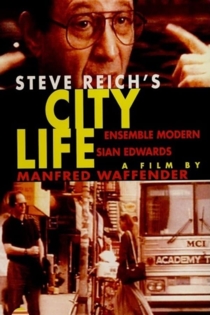
Delve into the life story and professional career of musical genius Steve Reich, considered one of the greatest American composers of the 20th century. Manfred Waffender's documentary reveals how Reich's minimalist style and phrasing innovations have altered the direction of musical history. Special attention is paid to "City Life," a collection of everyday streets sounds brought together to create an aural representation of the urban landscape.
Steve Reich - City Life
BAM150
Michael Sládek
Maggie Gyllenhaal, Isabella Rossellini
A captivating history of the nation's oldest performing arts center - which largely mirrors the evolution of experimental and progressive performing arts in 20th century America - BAM150 chronicles the vibrant past, present and future of the Brooklyn Academy of Music. Through footage of recent performances, intimate interviews, and an astonishing treasure trove of 150 years' worth of archival materials, BAM150 is a testament to the power and stamina of the institution that established Brooklyn as a cultural mecca-serving as a home to such greats as Enrico Caruso, Sarah Bernhardt, Edwin Booth, Merce Cunningham, Robert Wilson, Mark Morris, Laurie Anderson, and Pina Bausch.
BAM150

Steve Reich: A New Musical Language
Margaret Williams
Steve Reich
A profile of composer Steve Reich, a leading creator of stripped-down, "minimal" music. The program explores how Reich's music eventually became accessible to the musical audience at large. Included are interviews with the composer himself, and contemporaries, and also performances of some of his works.
Steve Reich: A New Musical Language
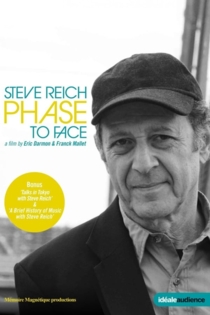
Steve Reich: Phase to Face
Franck Mallet, Éric Darmon
Steve Reich
A student of Darius Milhaud and Luciano Berio, musician Steve Reich (born in 1936) quickly developed a style of his own, inspired by Baroque music, Bartók, Webern and Stravinsky, as well as jazz, traditional music (especially African), and Hebrew cantillation. As a trailblazing exponent of minimalist music, Reich rejected the characteristic complexity of mid-20th-century classical harmony and tonality in order to make large-scale works from minimal materials a single chord, a brief musical motif, a spoken exclamation – thereby reconciling sacred and popular music. In this profile he looks back on the key stages of his 40-years lasting career, from the formation of his own group, Steve Reich and Musicians, to the American avant-garde he helped to create, from new video performances to his quasi-religious music. Despite his success and wide recognition Steve Reich has never renounced his independent spirit.
Steve Reich: Phase to Face