Kurt Kren
1929 - 1998He began making films in 1957. 2/60 48 Köpfe Aus Dem Szondi -Test (1960) was his first serial film and 3/60 Bäume Im Herbst (1960) confirmed this structural orientation. He realized in the 1960s his most famous films with the Viennese actionists, where his skill of short film blossomed. In 1966, he took part in the « Destruction in Art Symposium » organized by Metzger in London. In 1968 he visited the USA for the first time, showing his films in New York and St. Louis. This very year he became a founder of the Austria Filmmakers Cooperative. After a participation in a happening "Kunst und Revolution" ("Art and Revolution") at the University of Vienna in 1968, Kren's films were confiscated and he was fired from the National Bank. He participated in 1970 in the International Underground Film Festival (London) and in 1971, in the Cannes Film Festival. He then moved to Cologne for five years. Retrospectives were set up by the London National Film Theatre in 1976 and the New York Museum of Modern Art in 1979. He was also involved in the Dokumenta 6 of Kassel in 1977.
From 1978 to 1989, Kren lived in the USA and presented lectures for universities and schools. He did many jobs such as security officer in the Houston Museum of Fine Arts. Within this period he made his bad home movies as he used to call them inspired by his travels across the country. He finally returned to his native Vienna in 1990. He died from pneumonia in Vienna in 1998.
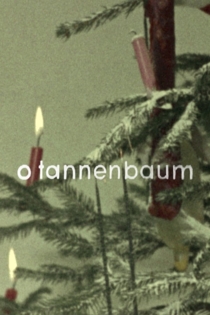
9/64: O Tannenbaum
Kurt Kren
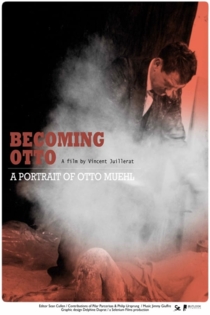
In 9/64 O Christmas Tree Kren offers a more visually descriptive development of a Muehl "action". The images have been chosen to follow a more dramatic sequence, probably because the action itself contained a wide range of images and materials.
9/64: O Christmas Tree
10/65: Selbstverstümmelung
Kurt Kren
Günter Brus
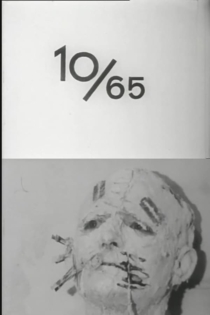
Kren’s 10/65 Selfmutilation is developed from a Gunter Brus “action”. What the film emphasizes is the surrealistic drama of symbolic self-destruction that Kren drew out of Brus’ action, pacing out each gesture so that one gets a tense, iconoclastic revelation of a man covered in white plaster lying surrounded by razor blades and a range of instruments looking as if they have been taken from an operating theatre. The blades, scissors and scalpels are gradually inserted into him in a ritualistic self-operation. (Stephen Dwoskin)
10/65: Self-Mutilation
3/60: Bäume im Herbst
Kurt Kren
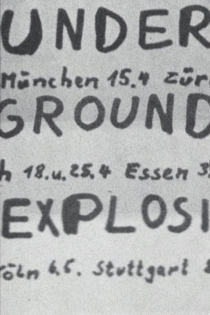
The first embodiment of (a) concept of structural activity in cinema comes in Kren's Bäume im Herbst, where the camera as a subjective observer is constrained within a systematic or structural procedure, incidentally the precursors of the most structuralist aspect of Michael Snow's later work. In this film, perception of material relationships in the world is seen to be no more than a product of the structural activity in the work. Art forms experience.
3/60: Trees in Autumn

8/64: Ana – Aktion Brus
Kurt Kren
Günter Brus
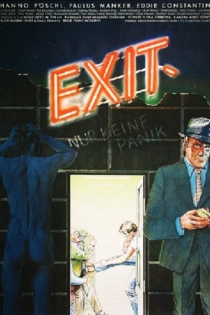
This three-minute film was far more akin to the American-style "happening" in that the content was not particularly extreme. It was built up from items such as broken bicycle parts, a nude model, pieces of furniture, and these elements were then obscured or transformed by having a layer of paint thrown on them.
8/64: Ana - Action Brus
29/73 Ready-Made
Kurt Kren
Kurt Kren
In a TV film about the film Casablanca, Kren is meant to read aloud three letters that Groucho Marx wrote to Warner Bros., because they wanted to take legal action against him over A Night in Casablanca. The recorded material could not be used on television and was meant to be destroyed. Kren found it and showed it uncut with its repetitions.
29/73 Ready-Made
7/64: Leda mit dem Schwan
Kurt Kren
Otto Muehl
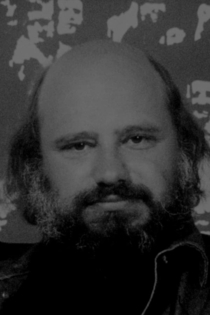
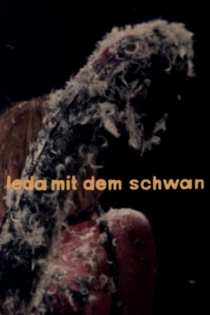
Based on a Muehl Happening. The almost convulsive use of juxtaposition reappears here, but the captured gesture assumes a more erotic sensitivity, though the "action" itself was primarily a gradual destruction of the erotic.
7/64: Leda and the Swan
31/75: Asyl
Kurt Kren
A meadow, a lake, the silhouette of a hill, trees. 21 days of the same view in Saarland. 21 days with five different cut-outs in a mask before the camera, which finally reveals a complete panorama. The landscape changes with the advancing seasons and becomes slowly delirious in its technical alienation.
31/75: Asylum