
Kiki of Montparnasse
1901 - 1953L'Inhumaine
Marcel L'Herbier
Jaque Catelain, Léonid Walter de Malte
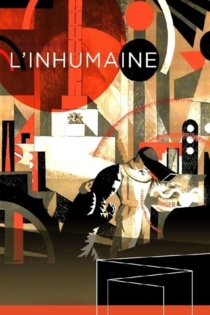
A famous singer Claire Lescot, who lives on the outskirts of Paris, is courted by many men, including a maharajah, Djorah de Nopur, and a young Swedish scientist, Einar Norsen. At her lavish parties she enjoys their amorous attentions but she remains emotionally aloof and heartlessly taunts them. When she is told that Norsen has killed himself because of her, she shows no feelings. At her next concert she is booed by an audience outraged at her coldness. She visits the vault in which Norsen's body lies, and as she admits her feelings for him she discovers that he is alive; his death was feigned. Djorah is jealous of their new relationship and causes Claire to be bitten by a poisonous snake. Her body is brought to Norsen's laboratory, where he, by means of his scientific inventions, restores Claire to life.
L'Inhumaine
Emak-Bakia
Man Ray
Kiki of Montparnasse, Jacques Rigaut
Emak-Bakia (Basque for Leave me alone) is a 1926 film directed by Man Ray. Subtitled as a cinépoéme, it features many techniques Man Ray used in his still photography (for which he is better known), including Rayographs, double exposure, soft focus and ambiguous features. The film features sculptures by Pablo Picasso, and some of Man Ray's mathematical objects both still and animated using a stop motion technique.
Emak-Bakia

La Galerie des monstres
Jaque Catelain
Jaque Catelain, Lois Moran
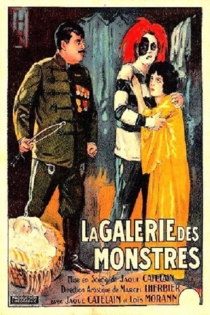
Married carnival performers are subjected to the abuses of their employer in this silent film gem that has not received as much attention as it deserves. When the boss' unwanted advances on the wife are refused, he taunts a lion until it nearly kills her. But the other performers assist in a unique plot for revenge. Jaque Catelain directs and stars in this film made for influential French director Marcel L'Herbier's production company. Some sources also list L'Herbier as co-director, as he is credited here. The film boasts some rapid-fire editing techniques that were decades ahead of its time.
The Gallery of Monsters
Ballet Mécanique
Dudley Murphy, Fernand Léger
Fernand Léger, Kiki of Montparnasse
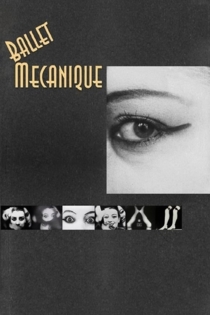
Ballet Mécanique (1923-4) is a Dadaist, post-Cubist art film conceived, written, and co-directed by artist Fernand Léger and filmmaker Dudley Murphy (with cinematographic input from Man Ray). It has a musical score by the American composer George Antheil (However, the film premiered with no soundtrack, on September 24th, 1924 at the Internationale Ausstellung neuer Theatertechnik in Vienna). It is considered one of the masterpieces of early experimental filmmaking.
Ballet Mécanique
Le lion des Mogols
Jean Epstein
Ivan Mosjoukine, François Viguier
In the kingdom of the Moguls, Prince Roudghito-Sing, a young officer of the palace, falls in love with Zemgali, a captive princess held prisoner and coveted by the Grand Khan. Fleeing the country, he takes refuge in Paris and his presentability allows him to be hired as an actor by a French film company. The trouble is that Anna, the star of the movie, is attracted to him. Which displeases banker Morel, the producer and Anna's lover... Written by Guy Bellinger
The Lion of the Moguls

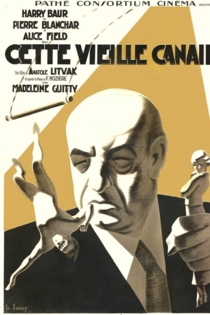
Cette vieille canaille
Anatole Litvak
Harry Baur, Pierre Blanchar
Vautier, a wealthy surgeon in his fifties, falls in love with Hélène, a young woman from a modest background. He allows her to have a string of short-lived lovers - but when Jean Trapeau, an old boyfriend, resurfaces, things get complicated.
The Old Devil
Les Films de Man Ray
Man Ray
Kiki of Montparnasse, Robert Desnos
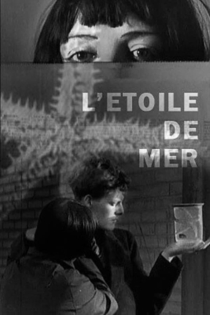
In the 1920s, Man Ray directed four films which, although largely unknown by the general public, made him into a major figure in avant-garde cinema. His films were to be as radical as his images or objects. Included: Le Retour à la Raison, Les Mystères du Château du Dé, Emak-Bakia, L'étoile de Mer and collected shorts.
Les Films de Man Ray