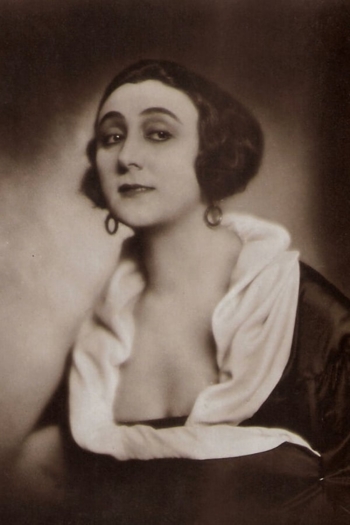
Ressel Orla
1889 - 1931
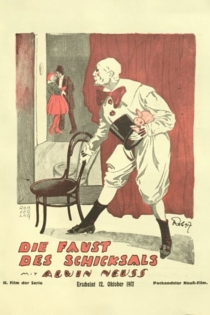


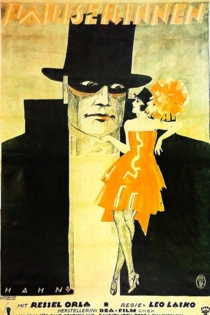
Die Spinnen, 1. Teil - Der Goldene See
Fritz Lang
Carl de Vogt, Ressel Orla
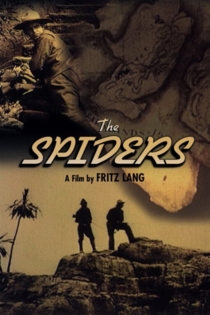
In San Francisco, well-known sportsman Kay Hoog announces to a club that he has found a message in a bottle with a map drawn by a Harvard professor who has gone missing. The map tells of a lost Incan civilization that possesses an immense treasure. Hoog immediately plans an expedition to find it. But Lio Sha, the head of a criminal organization known as the Spiders, is determined to get the treasure for herself and plans a rival expedition.
The Spiders - The Golden Sea
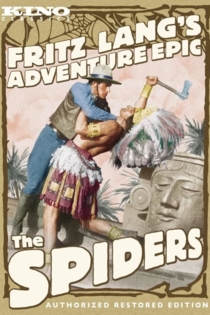
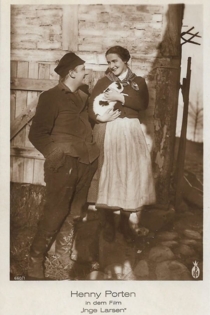
Die Spinnen, 2. Teil - Das Brillantenschiff
Fritz Lang
Carl de Vogt, Ressel Orla
When last we saw Kay Hoog (millionaire adventurer, courageous hunk), he’d been beset with tragedy. Having escaped an ancient Incan city by the skin of his gleaming teeth, Hoog looked forward to a few years of settled life with his (amicably) captured Incan lovely, Naela. But the past struck quickly. Hoog’s arch-nemesis, the homicidal femme Lio Sha, murdered Naela on the very grounds of Hoog’s estate, prompting him to swear revenge upon her and her criminal organization, the Spiders. Now he must find them, as the Spiders continue their global quest for the Buddha-head Diamond. The head, it’s said, has the power to restore Asia to world dominance.
The Spiders - The Diamond Ship
Hoffmanns Erzählungen
Richard Oswald
Kurt Wolowsky, Max Ruhbeck
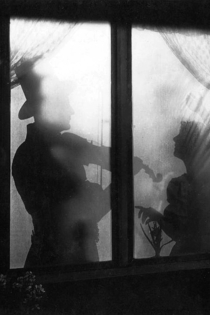
This movie, directed by Richard Oswald, is based on the operetta "Les contes de Hoffmann" by Jacques Offenbach (1819-1880), which is a genial musical potpourri from various short stories and novels by the Prussian writer, composer, painter, lawyer and judge E.T.A. Hoffmann (1776-1822). While Hoffmann's literary work was longtime considered to be merely fantastical, it was finally researched, in the last years, according to its metaphysical background. Characteristic for Hoffmann's work is his life-long fight against rationalism and for the revelation of nature morte, culminating mostly in carnival-like scenes anticipating literary techniques only described in the works of Bachtin and Bachelard.
Tales of Hoffmann
Der Stolz der Firma
Carl Wilhelm
Ernst Lubitsch, Martha Kriwitz
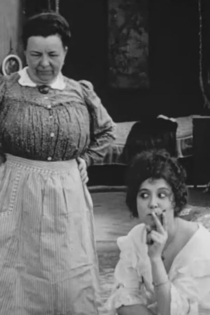
Der Stolz der Firma, meaning The Pride of the Business, is a classic German silent film from 1914. The film tells the story of a shrewd apprentice and is filmed in the comical style of director Lubitsch. This is one of the few Lubitsch films from World War I that wasn’t lost.
The Pride of the Firm