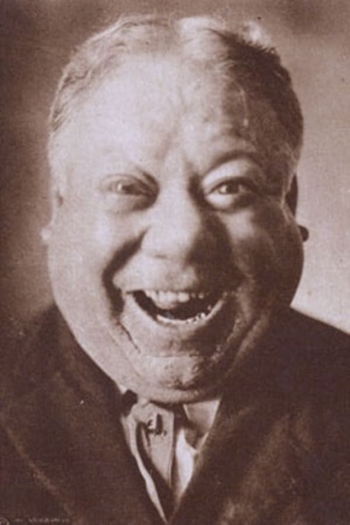
John Bunny
1863 - 1915Three Black Bags
Frederick A. Thomson
John Bunny, Flora Finch
"Slick-Fingered Mag must he captured, or I will know the reason why!" These are the proud words of Detective Brown, as he prepares to go in search of the elusive "Mag." He packs his traveling bag and leaves it open upon the sofa in his room; then goes downstairs to eat his breakfast. "Slick-Fingered Mag," seeing the front door of Brown's home ajar, enters and makes a sneak upstairs. She carries a bag of the same character as Brown's. She gathers up all the valuables she finds handy, not overlooking some of Mrs. Brown's choicest jewels. Hearing sounds of approaching footsteps, she becomes excited and empties the "swag" into Brown's bag, supposing it to he her own, and with it, escapes from the house, leaving her own bag behind her. Mrs. Brown, placing some clean linen in her husband's grip, sees the female apparel.
Three Black Bags

Polishing Up
George D. Baker
John Bunny, Flora Finch
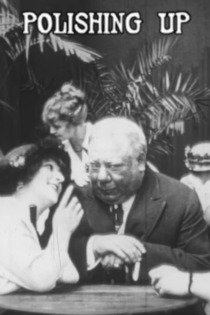
When his wife goes away on vacation, a husband decides to use that time to do a little "playing around" and winds up at a resort hotel with two young girls. Unbeknownst to him, his wife is at the same hotel, planning a little "playing around" of her own.
Polishing Up
Bunny and the Bunny Hug
Wilfrid North
John Bunny, Earle Williams
Norman Winthrop, a surveyor, accidentally meets John Bunny, an Irish watchman of a building. He introduces him to Tom and Will Hawley, two of his friends, at a little poker game in which Bunny pockets all the winnings. Talking over the matter the next day, the three men agree that it would be a great joke to introduce Bunny into society.
Bunny and the Bunny Hug
The Film Parade
J. Stuart Blackton
Kent Stevenson, Charlie Chaplin
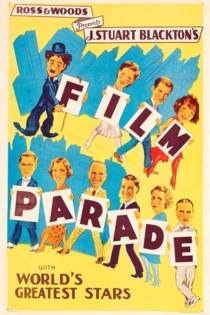
Pioneer filmmaker J. Stuart Blackton was intrigued by the idea of a film about the history of the movies as early as 1915. He finally released a 52-minute feature called The Film Parade that was shown in New York and favorably reviewed by "Variety" in 1933. He continued tinkering with the film for the rest of the decade, and later filmmakers and distributors used Blackton's footage for stock or to produce their own variously titled and truncated versions. -UCLA Film & Television Archive
The Film Parade
Little Nemo
J. Stuart Blackton, Winsor McCay
Winsor McCay, John Bunny
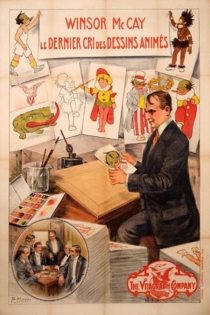
Cartoon figures announce, via comic strip balloons, that they will move - and move they do, in a wildly exaggerated style. Also known as "Winsor McCay, the Famous Cartoonist of the N.Y. Herald and His Moving Comics".
Little Nemo
The Adventure of the Shooting Party
Laurence Trimble
John Bunny
The Pickwick Papers, directed by Laurence Trimble, appeared in 1913. This silent three-reel adaptation of Charles Dickens's first novel starred the American comedian John Bunny, who was very popular in his day but is now almost completely forgotten, and was filmed mainly on location in England.
The Adventure of the Shooting Party
Mr. Bolter's Infatuation
George D. Baker
John Bunny, Charles Eldridge
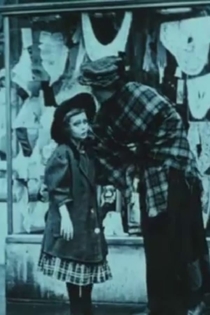
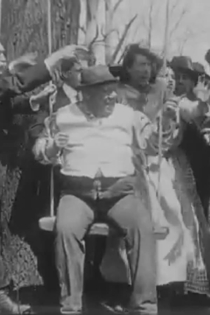
Mr. Bolten is hoping to woo the dancer Céleste and invites her for coffee. Her answer is that she will wait for him in hotel "Des imbeciles' in New York. He obviously cannot find the hotel, and to make matters worse he is robbed by a pickpocket. As a consequence he cannot pay his restaurant bill and is arrested. Luckily for him, a friend pays his bill so he can return home. There he picks up a dictionary and sees what "imbécile" means.
Mr. Bolter's Infatuation
Tangled Tangoists
George D. Baker
John Bunny, Flora Finch
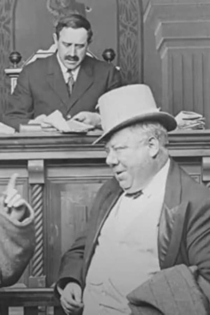
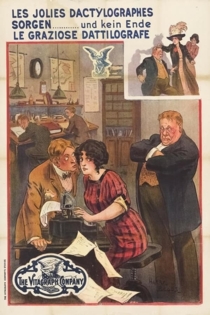
John and Flora meet at a ball, but neither can do these modern dances, so they sit out… and run into each other later at a dance studio. Bunny exudes his usual Pickwickian charm. Miss Finch gets involved in a nice bit of physical comedy when her gawkiness makes the dance lesson less than successful.
Tangled Tangoists