
Maria Augusta Ramos
1964 (62 года)Juízo
Maria Augusta Ramos
Luciana Fiala de Siqueira Carvalho, Guaraci de Campos Vianna
In Rio de Janeiro, over many days, the director Maria Ramos witnesses and films the judgment of several teenagers accused of stealing, trafficking and murdering. Underage youths are protected by the Brazilian laws and their faces can not be exposed; therefore, they are replaced by teenagers from poor communities.
Behave

O Processo
Maria Augusta Ramos
Dilma Rousseff, Gleisi Hoffmann
The impeachment and removal from office of Brazilian President Dilma Rousseff in 2016 was triggered by a corruption scandal involving, among others, her then vice-president Michel Temer. Director Maria Augusta Ramos follows the trial against Rousseff from the point of view of her defence team. This is a courtroom drama that unfolds slowly: the appearances of the various parties gradually turn the proceedings into something akin to theatre. Inside the courtroom, grand emotions are played to full effect whilst, on the other side of the doors, lobbyists and supporters pace the corridors. Meanwhile, outside, in front of Brasília’s modernist government buildings, demonstrators are chanting like a Greek chorus. Only the main character, Rousseff herself, remains professional and aloof.
The Trial

Justice
Maria Augusta Ramos
Fátima Maria Clemente, Carlos Eduardo Rocha
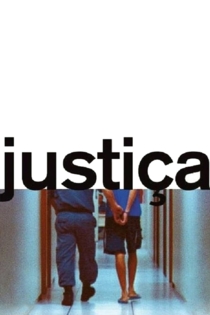
In Justiça, Maria Ramos puts a camera where many Brazilians have never been - a criminal courtroom in Rio de Janeiro, following the daily routine of several characters. There are those that work there every day (public attorneys, judges, and prosecutors) and those that are merely passing through (the accused). The camera is used as an instrument that sees the social theatre, the structures of power - that is to say, what is, in general, invisible to us. The corridors of the Courts of Justice, the design and layout of the courtroom, the discourse, the codes, postures - all the little visual details and sounds become relevant.
Justice


Futuro Junho
Maria Augusta Ramos
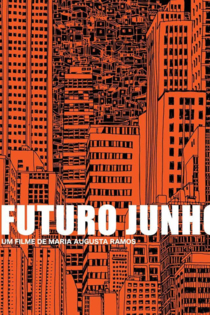
A portrait of the city of São Paulo through the life of four of its inhabitants: an economist and analyst of the financial market, a metallurgist who works at Volkswagen, a motorcycle courier and a railway worker. Each character calls attention to one aspect of the economy in a period of social tension: the three weeks before the start of the soccer World Cup. The director creates the movie by observing the daily life of the characters, without making interviews or commentaries. Future June aims to reflect on this historical moment and on the ways that the current economic model determines social and human relations.
Future June
Seca
Maria Augusta Ramos
Like a road movie, the film accompanies a water delivery truck through the Brazilian landscapes of the Sertão region, plagued by drought. Between fiction and documentary, the driver’s trip bears witness to a determined population endeavouring to live out their daily lives, while the sterile words of politicians seem to soar over the arid lands. A collective portrait that respects the right distance.
Drought