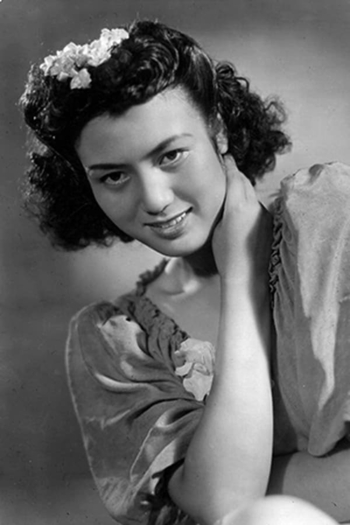
Yuriko Hamada
1923 (102 года)
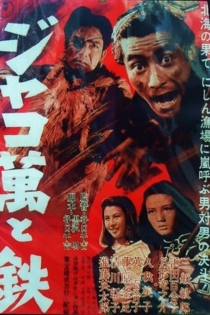
ジャコ万と鉄
Senkichi Taniguchi
Toshirō Mifune, Ryūnosuke Tsukigata
In a village subsisting on it herring fishery, a one-eyed criminal named Jakoman terrorizes the inhabitants. One of them, the son of the head of one of the fish companies by the name of Tetsu, decides to overthrow Jakoman and his cohorts.
Jakoman and Tetsu
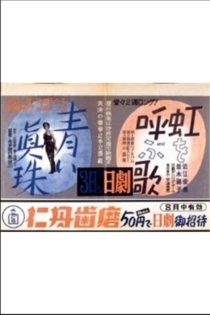
Aoi shinju
Ishirō Honda
Yuriko Hamada, Yukiko Shimazaki
Though recognized worldwide almost exclusively for his colorful kaiju fare, director Ishirō Honda (Godzilla, Rodan, Mothra) was a natural humanist with a particular understanding of the relationship between people and their social environs. His debut fiction feature, The Blue Pearl (Aoi Shinju) – virtually unseen in the west until now – depicts the melodramatic, but keenly-observed interplay between a young man from Tokyo and two ama (pearl divers; literally “women of the sea”) in a superstitious coastal town. Though raised within the same tradition-bound crucible, the two women – Noe and Riu – are portrayed as diametric opposites; the former meek but affectionate, the latter strong-willed but jaded by a tryst with metropolitan life. Nonetheless, Honda provides equal weight to their desires and their ambitions to break free from the social mold imposed upon them from birth.
The Blue Pearl
雪夫人絵図
Kenji Mizoguchi
Michiyo Kogure, Ken Uehara
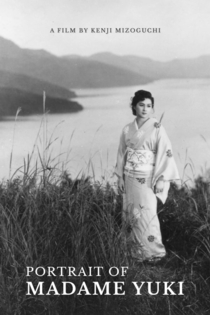
Hamako has just started working for her personal hero, Madame Yuki. Her romanticized view of the Madame is broken immediately, though, as she is introduced with a ever-growing list of the Madame’s personal problems.
Portrait of Madame Yuki

面影
Heinosuke Gosho
Ichirō Ryūzaki, Yuriko Hamada
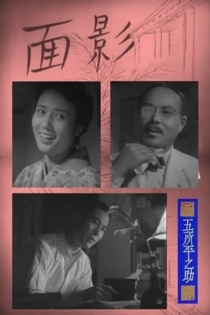
During his summer holiday, Kawasaki Ryuichi (Ryuzaki Ichiro), a handsome engineer in his late twenties, visits his teacher and mentor, Professor Inagaki (Sugai Ichiro), at his seaside home. There he meets the professor's lovely young wife, Sachiko (Hamada Yuriko), and is unsettled by the striking resemblance she bears to his wife, who died three years earlier. Attracted to Sachiko, he does his best to hide his feelings. The couple, however, senses a deep-seated melancholy in him. Attributing it to the loss of his wife, they urge him to marry their niece, Kaoru, but he is not interested. Shortly after, Fumiko , Sachiko's older sister, realizes that Sachiko and Kawasaki have feelings for each other, but she keeps her counsel. One day Kawasaki, Sachiko, and Kaoru go boating when a storm forces them to stay overnight at a hotel. Unable to sleep, Kawasaki takes a walk along the beach where he finds Sachiko, also unable to sleep. He declares his love for her.
A Visage to Remember
ジェラシー・ゲーム
Yōichi Higashi
Reiko Oshida, Yōsuke Natsuki
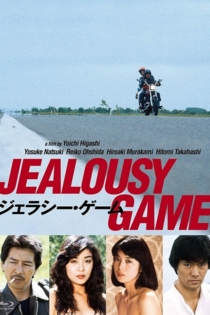
Set in the wilderness of Hokkaido, the story of a couple in their 30s and a couple in their 20s is drawn, and the subtle emotions of the two men and women are depicted with intense Eros and delicate images under the theme of marriage exchange.
Jealousy Game
怒りの街
Mikio Naruse
Jūkichi Uno, Yasumi Hara
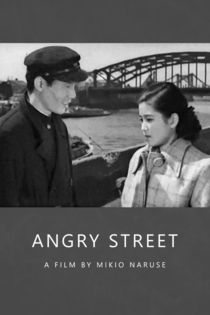
The Angry Street includes a great deal of location shooting in the rebuilt city, including downtown streets, residential neighborhoods, the campus of the University of Tokyo, and the high life of jazzy dance halls. Sudo (Hara Yasumi) and Mori (Uno Jukichi) are two university students who make money by picking up rich girls in dance clubs and conning them into giving them cash. Mori is the brains of the operation, and Sudo is the suave dancer who picks up the girls. Over the course of the film, Sudo becomes involved with three different girls and is drawn into the gangster milieu, which he seems unable to resist even though he is responsible for his mother, grandmother, and sister, Masako (Wakayama Setsuko). In this world of bad boys and girls, Masako is the pillar of strength and moral virtue who finally enables Mori to straighten out.
The Angry Street
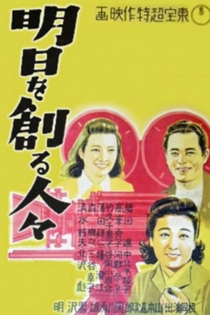
明日を創る人々
Hideo Sekigawa, Kajirō Yamamoto
Chieko Nakakita, Mitsue Tachibana
Two sisters, one a dancer and the other a script supervisor at a big movie studio, become embroiled in union activities when a strike is called in sympathy with striking railroad workers, one of whom boards with the sisters and their parents. The girls' father argues with them about their strike, but finds his views changing when he himself loses his job.
Those Who Make Tomorrow
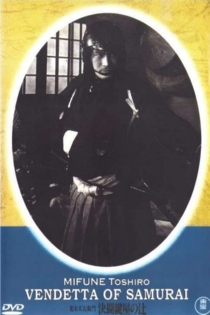
荒木又右衛門 決闘鍵屋の辻
Kazuo Mori
Toshirō Mifune, Yuriko Hamada
The famous showdown at Kagiya corner has been told many times, but never before with the realism and intensity of this version scripted by Kurosawa Akira and starring Mifune Toshiro as the famed swordsman who must face his best friend as they are forced to take opposite sides in a vendetta caused by the murder of a family member. Told mostly in flashback as the avengers await the arrival of their quarry, this film displays true heroism in the face of fear as most of the combatants, while of the samurai class are not skilled swordsmen. They contrast sharply with the true warriors involved in this battle. Araki Mataemon (Mifune), who was not only a direct student of Yagyu Munenori, but the founder of his own sword style under the Yagyu name is a powerful force ready to assist his brother-in-law against the murderer's allies that include not only another noted sword teacher, but the deadly spear of Katsumi no Hanbei.
Vendetta of a Samurai