Holly Fisher
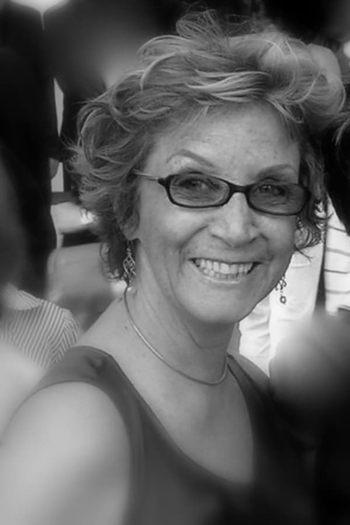
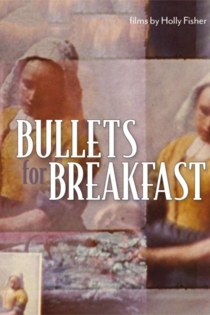
2021Fisher has been active since the mid-sixties as an independent filmmaker, printmaker, teacher, and film editor, including Oscar nominated documentary Who Killed Vincent Chin?. Her experimental short works and long-form essay films are explorations in time, memory and perception. They have been screened in museums and film festivals worldwide including Whitney Museum Biennials; The Tribeca Film Festival; Centre Pompidou, Paris; Film Forum, Japan; and two world premieres in The Forum of the Berlinale, Germany. She has received multiple grants from The Jerome Foundation, NYSCA, CAPS, and The American Film Institute, among others. Her silent film Rushlight won the Grand Prize in the 1985 Black Maria Film Festival, and her feature Bullets for Breakfast received “Best Experimental Film Award” at the 1992 Ann Arbor Film Festival. In 1995, the Museum of Modern Art, New York presented the solo retrospective The Films of Holly Fisher.
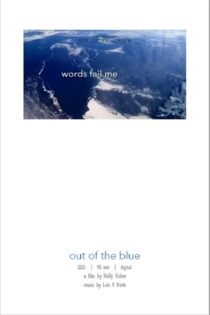
In recent years, Fisher has made works from film and amateur iPhone sources, looped for gallery and storefront installation, as well as for exhibition in conjunction with her ongoing archival digital print projects. Her current work-in-progress, Out of the Blue, is a long-form experimental essay, structured within a series of cloud video studies, filmed with an iPhone on a flight between Berlin and New York. This project will be integrated into Thin/Ice (work-in-progress), which began as a daily filming practice in a small pond behind the refurbished mill where she was living for several years. Both projects will include resonant imagery pulled from Fisher’s video diary, edited within the semi-static imagery of clouds and pond. Thin/Ice integrates issues of (family) suicide and global warming; it will be Fisher’s first large-scale installation project and is scheduled for completion in late 2020.
Soft Shoe
Holly Fisher
"Optical printing links East with West within a mosaic of looped, layered and shifting images filmed originally on Super 8 while on a (train/car/thumb) trip across Europe in 1978. Swinging cow udders, woman sweeping, farm woman walking, nuns chanting, Nude Descending, voices in a bread shop, Dachau and other artworks from Documenta 7, riding the escalator of the Centre Pompidou, etc. are layered in overlapping, shifting, and repetitive frame-clusters pulled from Super 8 footage filmed on a trip that began in Bucharest and ended in Paris. Disparate elements are combined and manipulated to construct a lyrical work about walking, history, and memory." - Holly Fisher
Soft Shoe
Apple Summer
Holly Fisher
Camping in Down East, Maine with artist friends evolved into a spurt-framed portrait of artist Donn Moulton. Footage of Moulton in Maine, his studio in Cambridge, and installation of his fiberglass apple paintings at Kornblee Gallery, NYC, is intercut with edited-in-camera expressionistic sequences from our camping trip.
Apple Summer
A Question of Sunlight
Holly Fisher
Linking 9/11 with the Holocaust via “the telling of memories” by visual artist José Urbach, witness to both. José speaks almost magically, from childhood to the present, and anywhere in between. Recorded in the shadow of the World Trade Center towers only months after their collapse
A Question of Sunlight
Deafening Silence
Holly Fisher
A non-linear mix of poetry and politics -- is a living history of Burma in the guise of a travel diary, as a way to describe life in a place where every reality is off-limits to both tourist and filmmaker. 'A nation, a society, a people, dying a slow death. How do you get that on camera?' asks exile/protagonist Dr. Zarni early on. Documentary and experimental techniques combine in a hybrid collage as much about media as it is about human rights, gradually putting the viewer at the center of a slippery vortex which begs the question: is Burma a country or a metaphor?
Deafening Silence
t h i n k t a n k
Holly Fisher
"Thinktank is a tapestry in motion – in which 24 layers of iPhone video of swimming goldfish are laced with ambiguous floating text–transforming over time from a playful meditation on language into a haunting look into the ethos of the U.S. government surveillance dragnet. Music is by avant-garde composer Lois V Vierk." - Holly Fisher
t h i n k t a n k
Subway
Holly Fisher
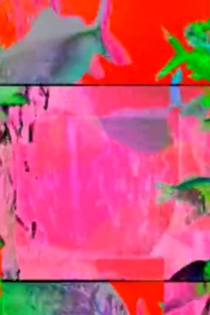
Subway is a subterranean passage that lies somewhere between fiction and diary, with literal and psychological overtones from the late ’60s. Framed within a ride on the Harvard/Ashmont Subway Line at rush hour–as the train fills and then empties, moving further from downtown Boston while I direct my 7-year-old nephew, Ben, to stand and look around, sit, get off, watch himself depart, get back on, and walk away–intercut with various scenes from my on-going (Bolex) film diary; seagulls circling, anti-war street demonstration past Playboy Club in downtown Boston, large dogs leaping into saltwater, crowd on escalator, Ben’s image in surveillance camera, twilight through half-built, backlit Coop City under construction…
Subway
b e d e v i l e d
Holly Fisher
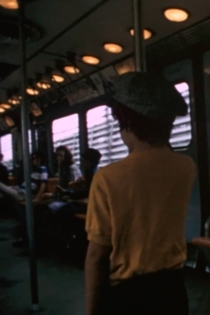
Dragon bones and snakes embracing; skeletons in underwear, flying shoes and bug-eyed aliens are among the characters that comprise the annual NYC Halloween Parade — filmed and transformed into a subjective extra-terrestrial dreamscape. Fragmented, cyclic, and in continual flux, b e d e v i l e d is a collage in motion, grounded within a visible construct of open and ever-shifting frames. From early furtive sketches I’ve reworked my original Hi-8 video into a layered weave of images cut to phase between the imaginary and ‘reality’ — from Day of the Dead spectacle to clocks at play with light bulbs. The haunting music of avant-garde composer Lois V Vierk is performed by cellist Theodore Mook.
b e d e v i l e d
Softshoe for Bartok
Holly Fisher
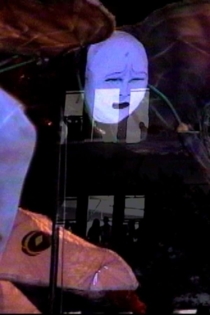
“softshoe for bartok is next in my on-going play/experimenting with film structure –– relative to memory, time, perception, and in this case, travel. This project is a film/video re-imaging of my 16mm film s o f t s h o e from 1987, made via optical printer from S8 film imagery shot ten years earlier on an east-west trip across Europe; using home-movies as the original source, this work is a cross/weave, or perhaps more a chance-encounter, with images from rural Romania, traces from the contemporary art exhibit documenta 6, Kassel, Germany, and a ride on the iconic escalator of the Centre Pompidou, Paris. Three decades later and with the advent of multi-track video I revisited this film, using it now as template –– for the lush, layered, and intentionally subversive collage of still and motion that is softshoe for bartok.” –Holly Fisher
Softshoe for Bartok
Glass Shadows
Holly Fisher
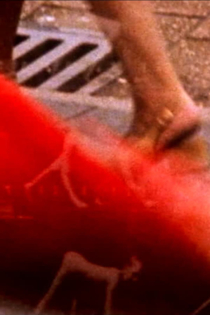
"Glass Shadows is a sensual formalistic diary, filmed in the early morning light of my studio. The primary images are of my Bolex-filming nude reflection set within window frames, a pane of glass, and light projected by the rising sun. The film moves forward via on-going exploration of reflected and overlapping images––sustained by light, color, and the rhythmic pulse of a leaky kitchen faucet. A fusion of form and subject is inevitable within a work that is the story of its making." - Holly Fisher
Glass Shadows
Rushlight (Here Today Gone Tomorrow)
Holly Fisher
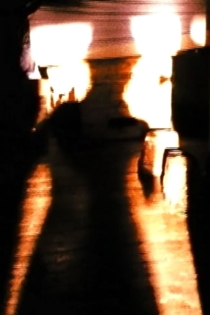
Here Today Gone Tomorrow (aka Rushlight) was made from a single, three minute roll of Super 8 footage shot over one day of stop/start driving through the Maramures folk district of Romania. I reworked this footage via JK Optical Printer using a larger than normal film gate designed (by myself) to allow the re-filming and hence layering of frame clusters as well as single frames. This project explores an intersection between transition and memory (passing time, times past, arrested in time, what lies ahead) through looping, stretching, and layering of images filmed originally while driving through this unique preserve of Romanian culture. A silent, visual sketchbook of sorts, this work explores the repetitive, cyclical structuring of this Super 8 footage developed over several years of working with a JK Printer. The result is an open and meditative work around the subject of “passage.”
Rushlight (Here Today Gone Tomorrow)
Watermen
Holly Fisher
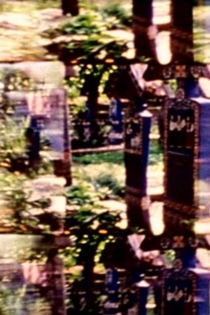
In 1965, on the Eastern Shore of the Chesapeake Bay, there was the last operating fleet of sailing work boats in the United States. Forty-odd "Skipjacks" were still used by Maryland watermen to dredge up oysters from the Bay. At that time, the fleet had survived because of a Maryland conservation law which prohibits the use of motor power for oyster dredging. The watermen traditionally marked the opening of each oystering season with a skipjack race which the Maryland State Tourist Board incorporated into its annual "Chesapeake Bay Appreciation Day."
Watermen

This Is Montage
Holly Fisher
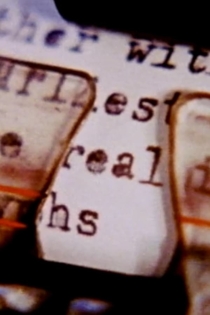
"Inspired by a passage from Sergei Eisenstein’s Film Form, this film explores relationships between film and language while playfully challenging the Russian filmmaker’s theory of film montage … and thus lies between a wink and a nod to the master. Also a bit of tongue-in-cheek to myself as aspiring film studies student: had I been a good typist I very likely would never have become a filmmaker." - Holly Fisher
This Is Montage
Everywhere at Once
Holly Fisher
“ ... photographer Peter Lindbergh and experimental filmmaker Holly Fisher collaborate to weave together a tapestry of images, incorporating Lindbergh’s still pictures with clips from the Tony Richardson film Mademoiselle (1966), starring Jeanne Moreau. The photographs are animated through a re-filming process to create a flow of moving images that are intercut with passages from the movie. Iconic actress Jeanne Moreau, using a text by American poet Kimiko Hahn, narrates the diary-like fragments of memories and recollections in the first person. The haunting music by Lois V Vierk accentuates the fleeting quality of these fragments of dreams and memories.” — Jon Gartenberg
Everywhere at Once
Out of the Blue
Holly Fisher
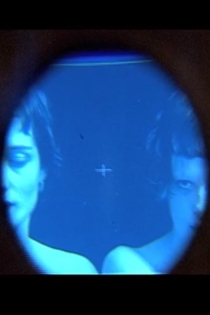
OUT OF THE BLUE is a typically thought-provoking and contemplative work constructed from seemingly disparate elements: imagery recorded from the window of a plane during her trans-Atlantic travels, diary-like footage, found imagery and sound, and onscreen texts. The result is a highly personal, open-ended meditation on the passage of time, historical trauma, and liminal physical and emotional spaces that embodies Fisher’s radically multilayered approach: she juxtaposes multiple layers of visual and aural materials not only to create a rich visual experience, but to bring into play a dizzying and cross-pollinating array of ideas. The soundtrack features composer Lois V Vierk’s long-form piece, “Words Fail Me,” a work inspired by Vierk’s experience as an eyewitness to the fall of the World Trade Center, twenty years ago.
Out of the Blue