Zbigniew Koczanowicz
1909 - 1987Nights and Days
Jerzy Antczak
Jadwiga Barańska, Jerzy Bińczycki
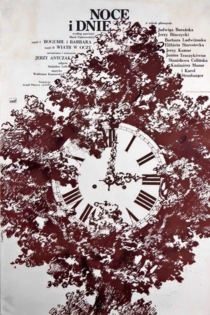
Nights and Days is a family saga of Barbara Ostrzenska-Niechcic, (played by Jadwiga Baranska) and Bogumil Niechcic, (played by Jerzy Binczycki) against the backdrop of the January Uprising of 1863 and World War I. The film is a rather straightforward and faithful adaptation of a novel by Maria Dabrowska with the same title. The plot is woven around the changing fortunes of a noble (upper-class) Niechcic family in the pre-WWI Poland. There are two main crossing threads: a social history one and an existential one. The cinematographic version is a condensation of the 12 part award winning TV serial of the same title and using the same cast and producers.
Nights and Days
The Gorgon Case
Janusz Majewski
Ewa Dałkowska, Aleksander Bardini
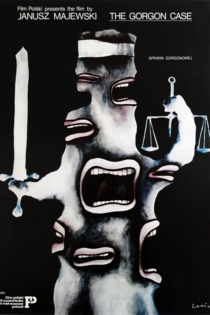
In 1931, just before the New Year, in a house of architect Henryk Zaremba scream rips the night. The daughter of Zaremba is found killed in her bedroom, obviously killed with a pickaxe. The police arrives and starts the investigation. Rita Gorgonova, the governess of the girl and also lover of Zaremba becomes the main suspect. Film based on real events - investigation and court trials of the most famous pre-war Polish murder case. Despite being historically accurate the movie is both involving and entertaining since the case was simple on the surface, but very complicated in details.
The Gorgon Case
Little Dramas
Janusz Nasfeter
Wojciech Litynski, Andrzej Nasfeter
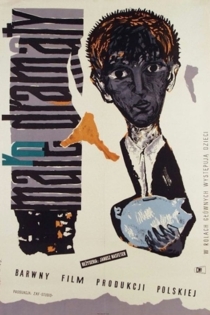
The film opposes the view that childhood is the happiest time of our lives. Childhood dramas are deeply etched in memory and leave a permanent imprint on our consciousness. The Carousel Part I. Little boys from a small town want to take a ride on the carousel but they have no money. They push the carousel for hours. They hope that the owner will eventually give them a free ride. In the evening, however, they are already too tired to take up his offer. They are allowed a ride, but they refuse. The Fall of a Millionaire Part II. A ten-year-old boy wants to impress his friends. He is feeble and shy, but he has a piggy bank, which becomes the object of desire for his peers. He tells the other boys that he will soon buy a bicycle from the accumulated savings. When the bank is broken into pieces, the myth of the millionaire is shattered. There are only banknotes painted by the little dreamer. Joanna Piątek, Leksykon polskich filmów fabularnych, Warszawa 1996
Little Dramas
Zbrodniarz, który ukradł zbrodnię
Janusz Majewski
Zygmunt Hübner, Barbara Brylska
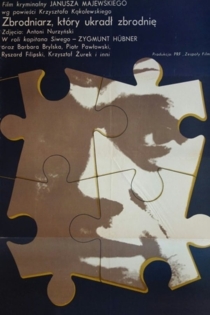
A retired police captain, Siwy, tells a reporter about his latest action, carrying on his own investigation into the mysterious death of a Eve Salm, a.k.a. Princess. She was a witness in a case where the defendant pled guilty and was sentenced to eight years in prison. Siwy doubts the defendant's guilt and risks his life to apprehend the real killer.
The Criminal Who Stole a Crime
Wściekły
Roman Załuski
Bronisław Cieślak, Ewa Kania
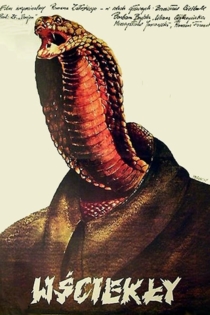
Detective thriller about a killer loose in the crowds. The film follows a sniper on his rounds looking for victims, while a police inspector, with few clues in hand, has to figure out the motive for the killings as well as who the psychopath is and where he might strike next. He uncovers that the mentally deranged sniper can't stand seeing people happy together in public places.
Wściekły
Wenus z Ille
Janusz Majewski
Witold Pyrkosz, Zbigniew Koczanowicz
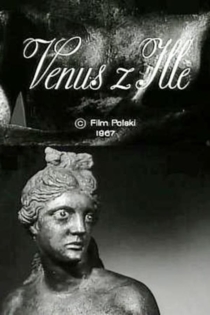
In 1969’s WENUS Z ILLE (VENUS D’ILLE) Majewski returned to the work of Prosper Merimee, specifically his 1835 story “Venus d’Ille,” about an accursed statue (a story that was subsequently filmed by Mario and Lamberto Bava in 1979). Said statue, fashioned in the guise of an anguished woman, is seen in a remote inn, having been recently interred from the ground. The occasion is a wedding attended by the protagonist, an unassuming man who becomes caught up in a bizarre nightmare when the groom unthinkingly sticks his wedding ring on a finger of the statue--and can’t get it off!
Venus of Ille
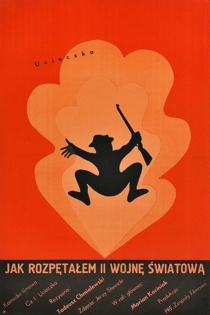
Jak rozpętałem drugą wojnę światową: Cz.1 - Ucieczka
Tadeusz Chmielewski
Marian Kociniak, Emil Karewicz
On the night of August 31, 1939, Dolas, from a platoon reinforcing a train station on the German border, falls asleep in a train car and unknowingly crosses into Germany. The moment he shoots a German, who he thinks is a saboteur, the German invasion of Poland begins, and Dolas is convinced it was his fault. He is taken to Stalag POW camp, the first destination in his odyssey around Europe.
How I Unleashed World War II, Part I: The Escape