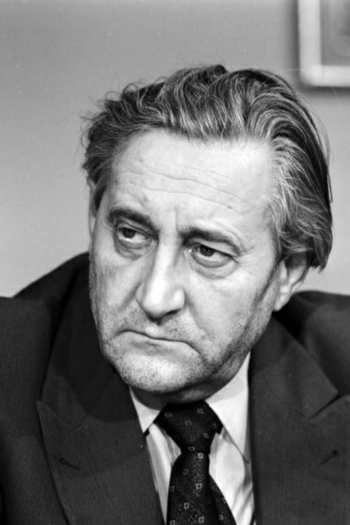
Zygmunt Malawski
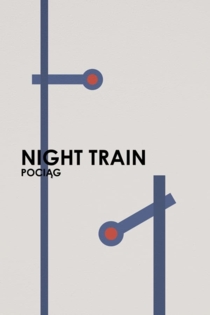
1923 - 1983Pociag
Jerzy Kawalerowicz
Lucyna Winnicka, Leon Niemczyk
Two strangers, Jerzy and Marta, accidentally end up holding tickets for the same sleeping chamber on an overnight train to the Baltic Sea coast. Also on board is Marta's spurned lover, who will not leave her alone. When the police enter the train in search of a murderer on the lam, rumors fly and everything seems to point toward one of the main characters as the culprit.
Night Train
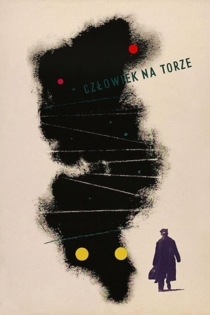
Człowiek na torze
Andrzej Munk
Kazimierz Opaliński, Zygmunt Maciejewski
One night in 1950 a passenger train runs over a man, who turns out to be the veteran train engineer Władysław Orzechowski, knows for his old ways and stern demeanor. As the inquiry panel tries to deduce why would a man like Orzechowski jump in front of a moving train several of the people involved in the case are interrogated, each telling their own version of the story. Can the panel arrive at the truth in a world where workers unite, inferior coal is a badge of honor, and the old order is suspect?
Man on the Tracks
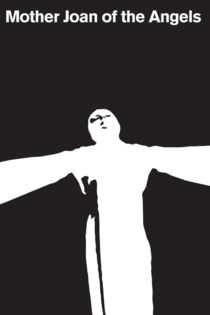
The Mother of the Kings
Janusz Zaorski
Magda Teresa Wójcik, Zbigniew Zapasiewicz
Made in 1982, shelved for five years. Story opens with Lucja Krol's husband under the tram. She gives birth to her fourth son on the floor of their new apartment. Neighbor Wiktor, a communist intellectual, befriends the poverty-stricken family but is soon arrested and sent to jail. During the war Lucja narrowly escapes a Nazi roundup at the black market. Her sons hold ardent Communist meetings in their apartment, with her blessing. Lucja works hard, but without complaint. After the war, Klemens is inexplicably arrested, accused by the new regime of being a collaborator. Wiktor, now a high-ranking party member, trying to defend him, himself falls into disgrace. Klemens is tortured to "confess" and dies in jail, a Communist to the end. Lucja is never told about his fate.
The Mother of the Kings

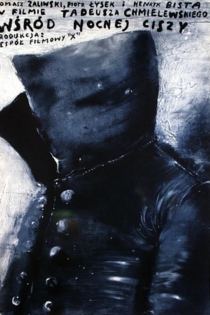
Wśród nocnej ciszy
Tadeusz Chmielewski
Tomasz Zaliwski, Piotr Łysak
A psychological detective story about a police hunt for the murderer of young boys. The police comissioner ends up tracing the clues to his own home, where he has an adolescent son he has not been able to communicate with.
Quiet Is the Night
Gorączka
Agnieszka Holland
Barbara Grabowska, Adam Ferency
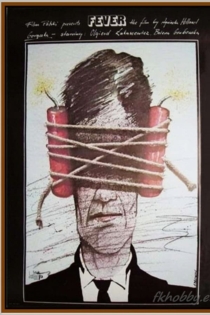
The film is set in 1905, in a time of feverish revolutionary underground activity in Poland partitioned between three neighbours. All the characters are committed anarchists. The bomb maker puts an invention together to place it at the disposal of young inexperienced terrorists fighting against Tsarist oppression. The story follows the passing of this bomb from anarchist to anarchist as several attempts are made on the life of Tsarist governor general, until, at the end, it is effectively and harmlessly defused by a bomb expert. The presence of the bomb has a destroying effect on all of the Polish revolutionaries, they either die or breakdown.
Fever

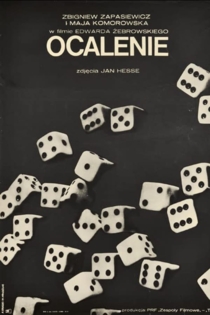
Ocalenie
Edward Zebrowski
Zbigniew Zapasiewicz, Maja Komorowska
A biology professor, Adam, after several dizzy spells, enters a hospital for observation. He is a loner and a serious-minded man, who dislikes any display of emotions. He spends three months in the hospital while being tested. After observing patients and hospital routines around him from a distance, he learns that he will need a kidney transplant. Meanwhile his personal and professional life is falling apart: he refuses his wife's offer to donate the kidney for him; the scientific problem he was working on has been solved elsewhere. In the end Adam cracks under the prolonged pressure, waiting for the sound of an ambulance bringing a moribund patient whose kidney may be used for the transplant.
Salvation
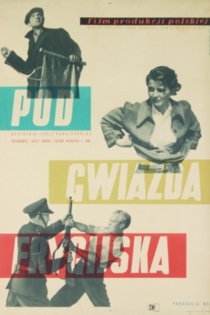
Pod gwiazda frygijska
Jerzy Kawalerowicz
Józef Nowak, Lucyna Winnicka
With the second part of his Cellulose Diptych, award-winning director Jerzy Kawalerowicz returns to protagonist Szczesny, now a full-fledged, middle-aged communist militant in pre-war Poland. Based on the writings of Igor Newerly, Kawalerowicz's epic chronicles the romance between Szczesny and the charismatic Madzia, as the ill-fated pair fall in love amid the social and political upheaval of their homeland.
Under the Phrygian Star
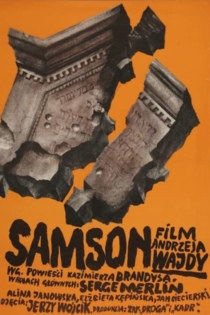
Samson
Andrzej Wajda
Serge Merlin, Alina Janowska
Sampson is one of several Andrzej Wajda films harking back to his youth during the Nazi Occupation of Poland. Many of these concern not only the struggle between good and evil, but also between passive and impassive. The hero is a Jewish youth. He, like his family, has always been silent and undemonstrative in the face of prejudice. Now he stands up for his right to survive, and in so doing represents the fighting spirit that culminated in the 1943 Warsaw Uprising. It was originally titled Samson, but re-spelled as Sampson upon its American release to avoid confusion with a sword-and-sandal epic of the same name.
Samson