Takashi Makino
1978 (48 лет)
Generator
Takashi Makino
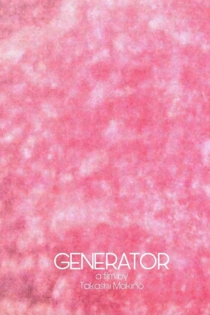
Takashi Makino’s source of inspiration, our place in the world and the universe, never seems to dry up in view of the never-ending flow of immersive films. Generator may well be the earthiest of his films so far, made as a reaction to the Fukushima disaster. A reality check, but in the world that Makino shows, this can never be achieved without looking inwards too.
Generator
Elements of Nothing
Takashi Makino
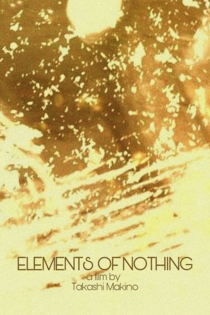
For this film, Takashi Makino allowed himself to be inspired by the earth. In a never-ending stream of images, we recognize elements from the forest that he then reduces to an abstraction. The film came about as a classical composition in which the picture and the musical contribution of Jim O’Rourke link up seamlessly and lead the mood in turn. A sense of freedom is what predominates.
Elements of Nothing
No is E
Takashi Makino
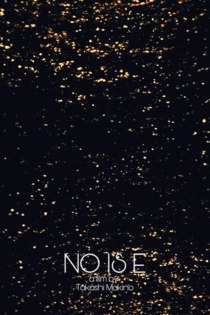
With the aid of a layered construction of the image, Takashi has managed to capture the different reflections of light on the surface of water. The acoustic-noise-like music and the dancing particles of light move like swarms of microorganisms and in this way slowly cover the entire screen.
No is E
Still in Cosmos
Takashi Makino
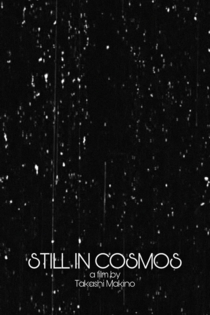
An immersive work that uses skilled manipulation of the film surface and a powerful drone soundtrack to create a layered and dense universe of controlled chaos. In about eighteen minutes we experience life to the fullest, from birth to death and eternity.
Still in Cosmos
At the Horizon
Manuel Knapp, Takashi Makino
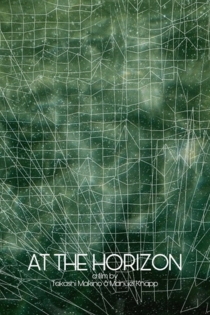
An audiovisual snow storm in front of a black ground, a white horizontal line that divides the image, grid planes, unfolding and folding dimensions. Set to atonal, techno, and orchestral sounds; an abstract (non-)world beyond comprehension, a visual experience that one must intuitively sense. Lost in space and time – the big bang of consciousness
At the Horizon
Double Phase
Takashi Makino
Filmed entirely on location in Australia, Double Phase follows a discrete visual chronology captured by Takashi Makino. It considers how the complexity of ’natural world’ continues to be reductively framed within contemporary society. Pushing back against the simplistic and monocular sensing of the world, Makino responds with an intensely affective projection of lived experience. Moving far beyond the capacity of lived day to day experience, the film collides image after image into a cascade of almost-cosmic complexity. A reminder that we must always be reaching out and extending ourselves into the world that emerges before us. (Asia TOPA 2020)
Double Phase
Memento Stella
Takashi Makino
Makino Takashi takes us to a place where different rules apply. He overwhelms us with his universe, which is built up of countless images, figurative and non-figurative, accompanied by an equally sophisticated soundtrack. At times very abstract and distant, at others almost palpable and narrative. We naturally seek recognition in the infinite layering of the images, and in so doing compose our own story, based on what we ourselves know of the world, using our personal references to help us. In this way, a work arises unique to every viewer, which continues to reverberate long after we leave the cinema.
Memento Stella
On Generation and Corruption
Takashi Makino
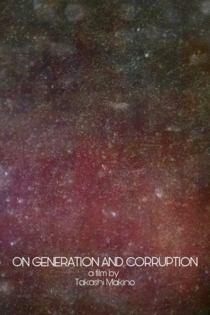
Borrowing its title from a treatise by Aristotle, the latest film by Makino Takashi is an abstract work that finds its drive in the clash between light and darkness. Entirely composed of superimposed images of Tokyo’s landscape and water sites, the film takes its rhythm from the cycles of repetition that are the pillars of life and civilisation. As light emerges from the chaos, Jim O’Rourke’s ambient drone sets the tone for what is to come.
On Generation and Corruption