William E. Jones
2021V.O.
William E. Jones
In a variation on what DJs call a “mash-up,” director William E. Jones combines segments of sound from classic foreign language films with segments of picture from gay porn films produced before 1985, making decisions based upon the length of the segments rather than their content. The somewhat arbitrary juxtaposition of diverse “found” materials often yields surprisingly appropriate results. v. o. suggests a new narrative space and pays tribute to a former era of gay life and cinephilia.
V.O.
Tearoom
William E. Jones
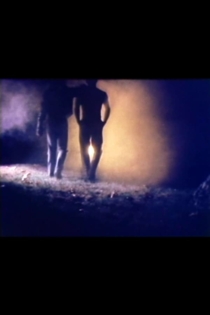
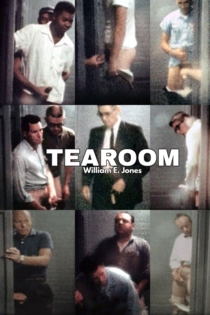
Tearoom consists of footage shot by the police in the course of a crackdown on public sex in the American Midwest. In the summer of 1962, the Mansfield, Ohio Police Department photographed men in a restroom under the main square of the city. The cameramen hid in a closet and watched the clandestine activities through a two-way mirror. The film they shot was used in court as evidence against the defendants, all of whom were found guilty of sodomy, which at that time carried a mandatory minimum sentence of one year in the state penitentiary. The original surveillance footage shot by the police came into the possession of director William E. Jones while he was researching this case for a documentary project. The unedited scenes of ordinary men of various races and classes meeting to have sex were so powerful that the director decided to present the footage with a minimum of intervention.
Tearoom
Is It Really So Strange?
William E. Jones
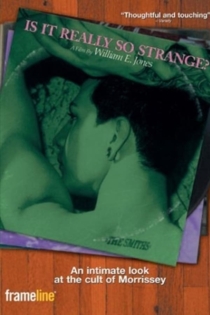
Making the connection between The Smiths' working-class, Manchester-raised, ethnic Irish experience and that of the sons and daughters of Latino immigrants in Los Angeles, Is It Really So Strange? is the first documentary that allows the fans themselves to speak at length about their lives, their loves and their brief encounters with their idol.
Is It Really So Strange?
Shoot Don't Shoot
William E. Jones
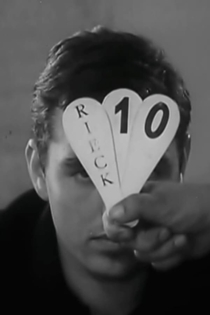
An instructional film on when to shoot at a victim and when to wait. The film plays with instructions for real action, but also explores the short film's distinctive narration and structure, the rising tension resulting from unpredictability. Identifying the subtle sign indicating the need for action acts as a parallel for the act of finding reference points in cinematic storytelling.
Shoot Don't Shoot

More British Sounds
William E. Jones
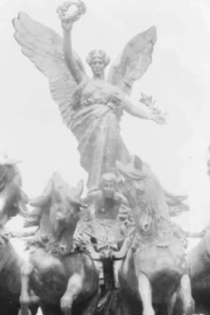
In More British Sounds images from The British Are Coming (1986) collide with dialogue from See You at Mao (1969) also known as British Sounds, produced by the Dziga Vertov Group under the direction of Jean-Luc Godard. “Workers have come to expect too much,” a narrator intones, as an English lad in a state of undress polishes the boots of a royal guard in full uniform. The soundtrack consists of a speech from British Sounds layered four times in the structure of a round. Gaps in the dialogue—filled by Godard’s heavy breathing in the original—allow certain key phrases to be heard in the chaos. The super-reactionary spouting venom must have seemed horrendous and absurd in the late 1960s, but his line was practically adopted as policy in early 21st Century America. The fetishistic sports underwear, skinhead tattoos, and bad boy snarls have been widely adopted as well.
More British Sounds
All Male Mash Up
William E. Jones
All Male Mash Up makes use of the gay porn industry’s marginalia: establishing shots revealing urban landscapes of the recent past, charmingly inept dialogue scenes, and close-ups of performers, many now dead. This material, while of no particular commercial use, can be seen as an invaluable document of a lost world of eroticism and sociability.
All Male Mash Up
Mansfield 1962
William E. Jones
In the summer of 1962, the Mansfield, Ohio, Police Department photographed men having sex in a public restroom under the main square of the city. A cameraman hid in a closet and watched the clandestine activities through a two-way mirror. He filmed over a three week period, and the resulting movie was used to obtain the convictions of over 30 local men on charges of sodomy. With some of this footage the Mansfield Police later produced Camera Surveillance, an instructional film circulated in law enforcement circles. It showed how to set up a sting operation to film and arrest “sex deviants.” A degraded version of the film found on the internet was reedited to make Mansfield 1962, a haunting, silent condensation of the original.
Mansfield 1962
Film Montages (For Peter Roehr)
William E. Jones
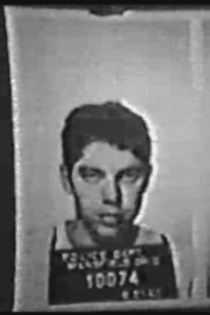
An appropriated video work that also serves as a tribute to a great artist of the 1960s, Film Montages (for Peter Roehr) takes simple repetition as its first principle. It arranges fragments of gay porn films into a musical composition at once austere and delirious.
Film Montages (For Peter Roehr)
Spatial Disorientation
William E. Jones
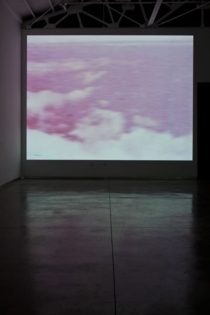
The original footage of Spatial Disorientation is a flight test seen from the cockpit of a U. S. Air Force plane. The material has been edited into a loop that repeats in variations: magenta and green, with motion blurs applied to each individual frame, some blurs parallel to the horizon line in the shot, and others perpendicular to it. The result is a visually complex movie with stroboscopic sequences that are a challenge to the eye.
Spatial Disorientation
Actual T.V. Picture
William E. Jones
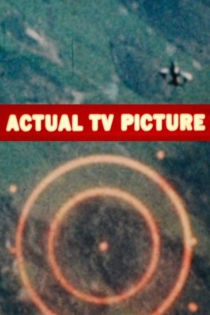
Actual T. V. Picture (2013) juxtaposes footage of a jungle in Viet Nam being bombed by an American war plane with a late-60s television commercial showing recent advancements in the miniature transistors. This technology made possible improvements in consumer goods like television sets, but its origin was in military weaponry, as the advertisement shows.
Actual T.V. Picture
Industry
William E. Jones
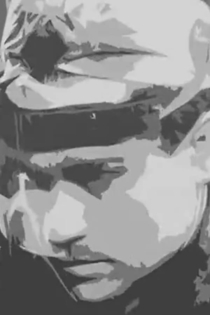
Industry is composed of loops within loops, the repetitive motions of the factory, progressively simplified to fields of tones, until the images are as simple as possible without being monochromes. Human figures become gray geometric patterns. They perform tasks that seem antiquated in the digital age, yet the movie itself could not exist without digital technology.
Industry
What Have You Been Doing?
William E. Jones
Tallulah Bankhead
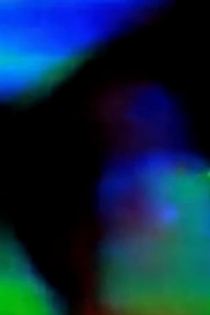
What Have You Been Doing? is a response to the perpetual question asked during the COVID-19 lockdown. The source materials are extremely degraded found videos, plus on the soundtrack, an acting lesson from Tallulah Bankhead.
What Have You Been Doing?