Nicky Hamlyn
2021That Has Been
Nicky Hamlyn
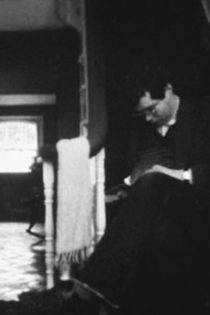
That Has Been is the last in a series of longer works made in the first half of the 1980s. The film was shot in two adjacent rooms. Outside views are seen in reflection via an aluminum photographic lamp, while some of the imagery is generated from photographs taken in the same spaces. The occasional voice over explores the relationship between places and dreams and that between memories and the physical events that can trigger them.
That Has Been
Four Toronto Films
Nicky Hamlyn
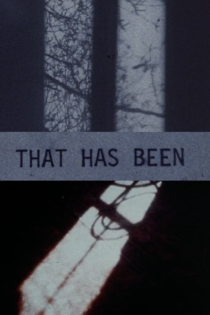
Static shots with moving shadow of the tripod, including the shooting camera, are shifting through the film about direct association between an object and the machine which transforms it into an image - shadow drawings are completed one day by windows, clouds in a lake and texture of walls.
Four Toronto Films
Not to See Again
Nicky Hamlyn
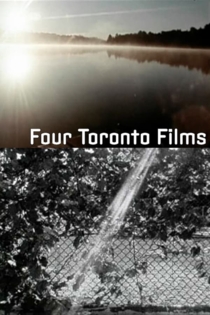
Misrecognitions and simulacra. An anti-montage film: a series of discrete shots that nevertheless gel at one or two points to produce simple meanings. Hovering on the line between abstraction and representation, the film hopes to problematize them both. According to Peter Gidal, “the abstract quality (never total, for the objects are always recognizable as objects) helps Hamlyn to negotiate sexual imagery as it occurs in the film by rendering those images relatively abstract and on a par with other objects depicted. The effect is to drain the image [of the naked body] of its conventional sexual meanings and associations (with pornography, for instance) and instead neutralize it almost.”
Not to See Again
Ernest Atkinson Park
Nicky Hamlyn
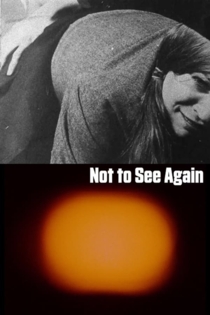
A short shot made in a children’s playground in Windsor, Ontario, is cut into three-frame sections, each of which is looped for ten seconds. Each loop advances by one one frame at a time. The process generates multiple and complex kinetic effects, which vary depending on which part of the screen the spectator fixates upon.
Ernest Atkinson Park
Michigan Central Station
Nicky Hamlyn
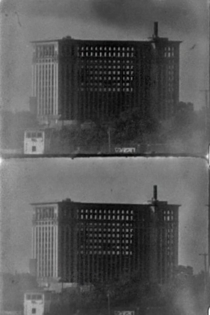
A single time-lapse shot of the abandoned Michigan Central Station in Detroit. Recording subtle changes in light as it pierces the hollow skeleton of the building, the film was made at a rate of one frame every ten seconds. Part of a series of 7 films completed by the artist in Windsor-Detroit.
Michigan Central Station
Pristino
Nicky Hamlyn
The film is composed from thirty-second long time-lapse sequences, filmed in Northwest Umbria. Condensing days into seconds, Hamlyn makes use of lap dissolves and time-lapse photography to compress the temporal duration of the Italian landscape. The film invokes some pre-cinematic technologies mainly in the shadow plays where light and shadow manifest as the movement of trees, clouds, and other objects cast by the sun project and dance onto white walls and other surfaces, emulating and interacting with the film’s grain
Pristino
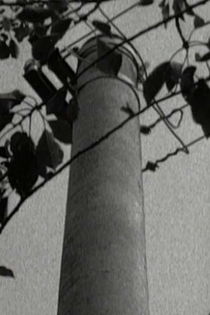
Matrix
Nicky Hamlyn
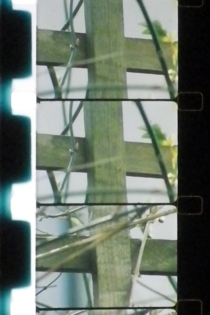
The film is composed of receding planes in a landscape: a back garden and the houses beyond. The wooden lattice fence, visible in the image, marks the border between enclosed and open, private and public space, and forms both a fulcrum for the work and a formal grid by which the shots are framed and organised.
Matrix
Hole
Nicky Hamlyn
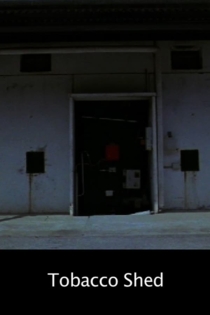
In Hole, the subject matter is a man made hole near a construction site. Employing static camera shots and conventional compositions, the film is an exploration of light, but also of scale as the filmmaker contrasts the human and feline appearances that pass through the hole
Hole
Ghost Stories
Nicky Hamlyn
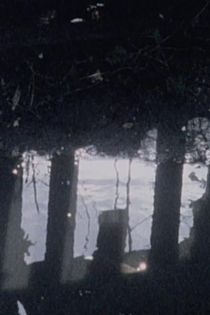
Ghost stories opens with a sequence of polemical shots: a mysterious shadow, an ambiguous advertisement which has deeper ambiguities unknown even to itself, and a lengthy quotation from Roland Barthes on the nature of autobiography. These opening shots outline the context in which I hope the bulk of the film will be seen: as a critique on so-called visual literacy, which is frequently based on a complacent mis-reading of images, and also as a rejection of film-biography, whose efficacy depends on such visual complacency. The body of the film consists of fragmentary views of the interior of a house, in which desultory activity occasionally takes place, sometimes in front of the camera, sometimes not. A ghost story is told, firewood is sorted.
Ghost Stories