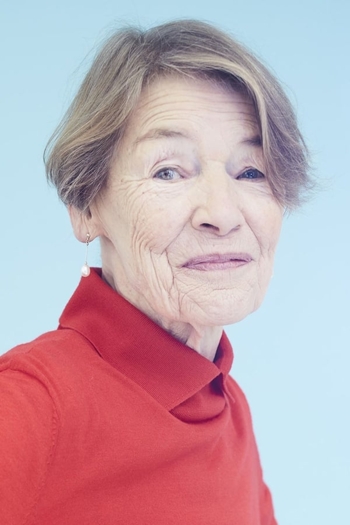
Glenda Jackson
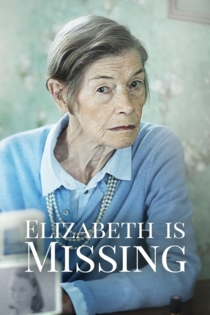
1936 (89 лет)She won the Academy Award for Best Actress twice: for her roles in Women in Love (1970) and A Touch of Class (1973). She won the BAFTA Award for Best Actress in a Leading Role for Sunday Bloody Sunday (1971). Her other notable roles include Mary, Queen of Scots (1971), Hedda (1975), The Incredible Sarah (1976) and Hopscotch (1980). She won two Primetime Emmy Awards for her role as Elizabeth I in the BBC series Elizabeth R (1971). She received the British Academy Television Award for Best Actress for her role in Elizabeth Is Missing (2019).
Jackson studied at the Royal Academy of Dramatic Art (RADA). She made her Broadway debut in Marat/Sade (1966). She received five Laurence Olivier Award nominations for her West End roles in Stevie (1977), Antony and Cleopatra (1979), Rose (1980), Strange Interlude (1984) and King Lear (2016), the later being her first role after a 25 year absence from acting, which she reprised on Broadway in 2019. She won the Tony Award for Best Actress in a Play for her role in the revival of Edward Albee's Three Tall Women (2018).
Jackson took a hiatus from acting to take on a career in politics from 1992 to 2015, and was elected as the Labour Party MP for Hampstead and Highgate in the 1992 general election. She served as a junior transport minister from 1997 to 1999 during the government of Tony Blair, later becoming critical of Blair. After constituency boundary changes, she represented Hampstead and Kilburn from 2010. At the 2010 general election, her majority of 42 votes, confirmed after a recount, was the narrowest of that parliament. Jackson stood down at the 2015 general election and returned to acting.
Description above from the Wikipedia article Glenda Jackson, licensed under CC-BY-SA, full list of contributors on Wikipedia.
Miranda: Morecambe & Wise and Me
Paul King
Miranda Hart, David Walliams
Eric and Ernie devotee Miranda Hart celebrates the incomparable comedy duo as she takes a look back at their top twenty greatest TV moments, ranked by comedy actors and comedians.
Miranda: Morecambe & Wise and Me

The House of Bernarda Alba
Stuart Burge, Núria Espert
Glenda Jackson, Joan Plowright
A domineering,reclusive, and ostentatiously pious widow in a small Spanish town keeps such close watch on her daughters that they are unable to have normal social lives. However, the eldest is allowed to become engaged to an unprincipled young man, primarily for the financial advantages it will bring the mother, Bernarda. Jealousy and envy ensues among the other daughters.
The House of Bernarda Alba
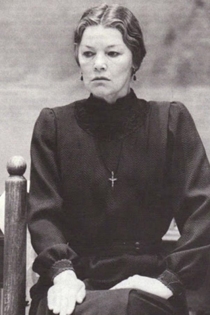
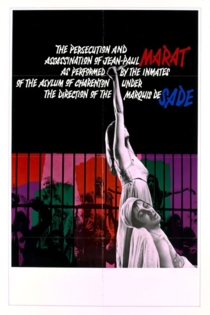
Marat/Sade
Peter Brook
Patrick Magee, Ian Richardson
In Charenton Asylum, the Marquis de Sade directs a play about Jean Paul Marat's death, using the patients as actors. Based on 'The Persecution and Assassination of Jean-Paul Marat as Performed by the Inmates of the Asylum of Charenton Under the Direction of the Marquis de Sade', a 1963 play by Peter Weiss.
Marat/Sade
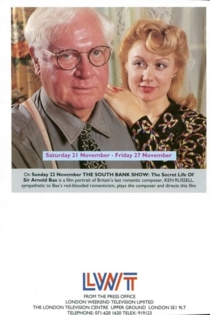
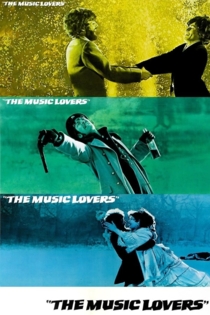
The Music Lovers
Ken Russell
Richard Chamberlain, Glenda Jackson
Composer, conductor and teacher Peter Ilych Tchaikovsky struggles against his homosexual tendencies by marrying, but unfortunately he chooses a wonky, nymphomaniac girl whom he cannot satisfy.
The Music Lovers
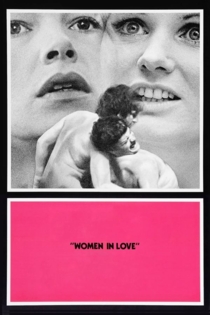
Women in Love
Ken Russell
Alan Bates, Oliver Reed
Growing up in the sheltered confines of a 1920's English coal-mining community, free-spirited sisters Gudrun and Ursula explore erotic love with a wealthy playboy and a philosophical educator, with cataclysmic results for all four.
Women in Love
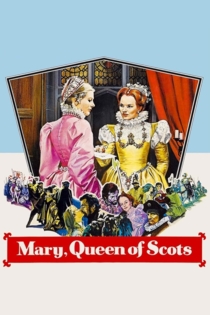
Mary, Queen of Scots
Charles Jarrott
Vanessa Redgrave, Glenda Jackson
Mary Stuart, who was named Queen of Scotland when she was only six days old, is the last Roman Catholic ruler of Scotland. She is imprisoned at the age of 23 by her cousin Elizabeth Tudor, the English Queen and her arch adversary. Nineteen years later the life of Mary is to be ended on the scaffold and with her execution the last threat to Elizabeth's throne has been removed. The two Queens with their contrasting personalities make a dramatic counterpoint to history.
Mary, Queen of Scots
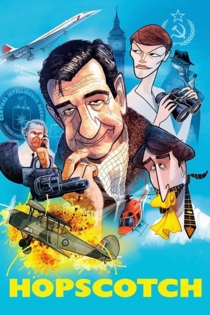
Hopscotch
Ronald Neame
Walter Matthau, Glenda Jackson
When CIA operative Miles Kendig deliberately lets KGB agent Yaskov get away, his boss threatens to retire him. Kendig beats him to it, however, destroying his own records and traveling to Austria where he begins work on a memoir that will expose all his former agency's covert practices. The CIA catches wind of the book and sends other agents after him, initiating a frenetic game of cat and mouse that spans the globe.
Hopscotch
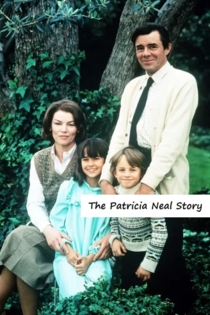
The Patricia Neal Story
Anthony Harvey, Anthony Page
Glenda Jackson, Dirk Bogarde
The dramatic account of actress Patricia Neal's miraculous recovery from a near-fatal stroke in 1966 with the help of her then-husband, author Roald Dahl, and their close friend, veteran actress Mildred Dunnock.
The Patricia Neal Story
Ken Russell: A Bit of a Devil
Eleanor Horne
Ken Russell, Alan Yentob
Following the recent death of Ken Russell, Alan Yentob looks back over the career of the flamboyant film director responsible for Women In Love, Tommy and The Devils. Friends and admirers - including Glenda Jackson, Terry Gilliam, Twiggy, Melvyn Bragg, Robert Powell and Roger Daltrey - recall a pioneering documentary-maker, talented photographer and fearless film director.
Ken Russell: A Bit of a Devil
Turtle Diary
John Irvin
Glenda Jackson, Ben Kingsley
Two separate people, a man and a woman, find something very stirring about the sea turtles in their tank at the London Zoo. They meet and form an odd, but sympathetic camaraderie as they plan to steal two of the turtles and free them into the ocean.
Turtle Diary
The Benefit of the Doubt
Peter Whitehead
Peter Brook, Ian Hogg
A documentary following US, Peter Brook's experimental play about the moral issues surrounding the Vietnam War, Benefit of the Doubt is the only known film record of the Royal Shakespeare Company production. It was filmed by Peter Whitehead concurrently with his Tonite Let's All Make Love in London (1967), on the surface a very different film, yet both share a central concern with the war, protest and Britain's political and cultural relationship with America.
The Benefit of the Doubt
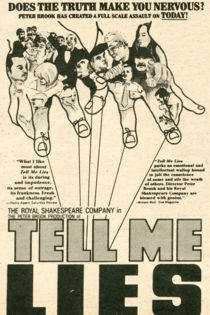
Tell Me Lies
Peter Brook
Mark Jones, Robert Langdon Llyod
Adapted and directed by Peter Brook from the Royal Shakespeare Company’s ‘production-in-progress US’, this long-unseen agitprop drama-doc – shot in London in 1967 and released only briefly in the UK and New York at the height of the Vietnam War – remains both thought-provoking and disturbing. A theatrical and cinematic social comment on US intervention in Vietnam, Brook’s film also reveals a 1960s London where art, theatre and political protest actively collude and where a young Glenda Jackson and RSC icons such as Peggy Ashcroft and Paul Scofield feature prominently on the front line. Multi-layered scenarios staged by Brook combine with newsreel footage, demonstrations, satirical songs and skits to illustrate the intensity of anti-war opinion within London’s artistic and intellectual community.
Tell Me Lies