Pedro Efe
1942 (83 года)Liberdade para José Diogo
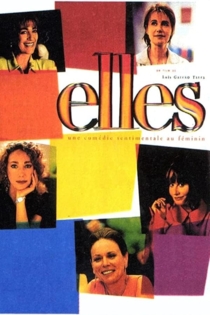
Luís Galvão Teles
José Diogo, Margarida Carpinteiro
The film documents two phases of an incident occurred in Portugal, during the 1974 revolution. In September 30, 1974, José Diogo, a tractor driver, kills his boss, Columbano Líbano Monteiro, after being dismissed from his job, when he claimed his right to work. He is imprisoned in Beja, Alentejo, and he is freed until prossecution. The courts are reluctant to judge him, because of the social unrest and the political aid Diogo is receiving from trade unions and political parties. A crowd will disrupt the court, in Tomar, and conduct a popular judgement in the hall of the tribunal, deciding to free Diogo, and condemning the boss, posthumously, for dismissing his employee and attacking him. The case became a law case study since then.
Liberdade para José Diogo

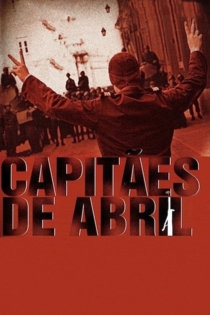
Capitães de Abril
Maria de Medeiros
Stefano Accorsi, Maria de Medeiros
Story of the 1974 coup that overthrew the right-wing Portuguese dictatorship--which continued the fascist policies of long-time dictator Antonio Salazar--and of two young army captains who were involved in it.
April Captains
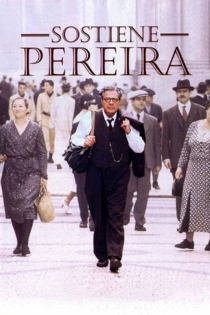
According to Pereira
Roberto Faenza
Marcello Mastroianni, Stefano Dionisi
Lisbon, 1938. Mr. Pereira is the editor of the culture section of an evening paper. Although fascism is on the rise in Europe, like in nearby civil war Spain or even inside Portugal itself in the form of Salazar's regime, Pereira only concerns himself with writing bios and translating French novels. Things change after he hires a young writer as his assistant, getting to know also his girlfriend – both opponents to the regime – and reluctantly helps them when they begin to get in trouble for subversive activities. Eventually, he's forced to take a stand...
Pereira Declares
O Passado e o Presente
Manoel de Oliveira
Maria de Saisset, Manuela de Freitas
This is an intriguing avant-garde look at what motivates the leisurely classes in Portugal, for better or worse, by director Manoel de Oliveira. Set in a spacious country home peopled with a wide-ranging cast of characters, the drama begins as the friends of a widow come to console her on the loss of her husband. But at one point, the widow goes upstairs, encounters her husband, and is faced with his accusations about the past. This event and others provide the means of revealing the petty, self-serving, egocentric, and romantic pursuits of the melange of people in the house. - Eleanor Mannikka, Rovi
Past and Present

Jaime
António-Pedro Vasconcelos
Saúl Fonseca, Fernanda Serrano
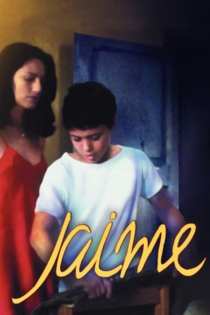
A woman takes her young son, leaves her husband and moves in with her lover. The boy, desperate to get his parents back together, becomes convinced that if only he can get his father's stolen motorcycle back everything will be fine again, so he sets out to get enough money to buy his father a new one.
Jaime
O Cerco
António da Cunha Telles
Maria Cabral, Miguel Franco
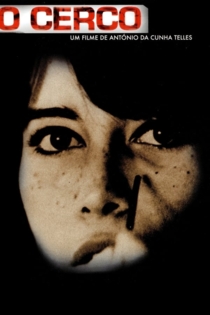
A look at the urban society of the seventies. The story of Marta a young and pretty girl, who leaves her husband to search for her true identity. She doesn't quite know what she wants, but at least she knows what she's escaping from. Soon she encounters financial difficulties and finds herself involved with shady characters, a situation that leads to a mysterious murder. The net closes around her.
The Circle
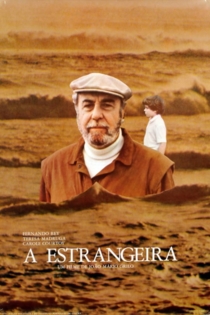
A Estrangeira
João Mário Grilo
Fernando Rey, Teresa Madruga
The shady side of an Italian textile trade in northern Germany is the subject of this slow-paced but atmospheric drama featuring Alberto Sordi as Totonno, a low-level, petty criminal anxious to move up a somewhat crooked ladder. Rising to the rank of the "dons" -- Don Raffaele (Carmine Ippolito) or Don Gennaro (Pasquale Cenammo) -- is not an easy task, as Totonno is about to find out. In the meantime, Paula (Belinda Lee) provides a romantic distraction, and another would-be entrepreneur opts for the straight and narrow. This uneven feature offers some colorful performances but the sum is less convincing than its parts.
A Estrangeira
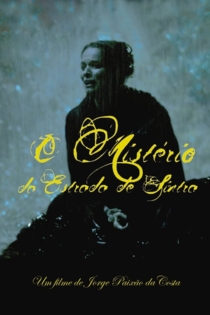
O Mistério da Estrada de Sintra
Jorge Paixão da Costa
Ivo Canelas, António Pedro Cerdeira
Summer of 1870. Two writers, Eça de Queiroz and Ramalho Ortigão, decide to write a four-handed whodunit for the daily "Diário de Notícias". Could it be that the story they wrote as fiction is based on a real case? This question fuels the conflict between the two writers and drives them to a nearly fatal duel. Lisbon is in commotion. One crime follows another in a story in which love is stronger than tradition. Everything happens at frenzied pace, as in a game.
The Mystery of Sintra
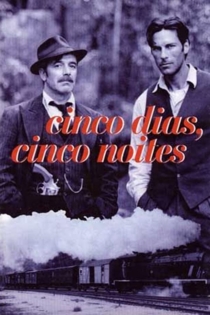
Cinco Dias, Cinco Noites
José Fonseca e Costa
Paulo Pires, Vítor Norte
Portugal, late 1940's. André must leave the country after running away from prison. In Oporto some friends get him a guide, Lambaça, a smuggler who knows very well the Trás-os-Montes border from Portugal to Spain.
Five Days, Five Nights
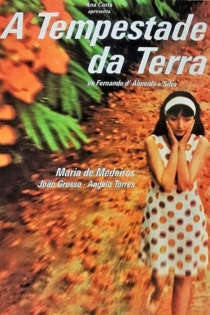
A Tempestade da Terra
Fernando D'Almeida e Silva
Maria de Medeiros, João Grosso
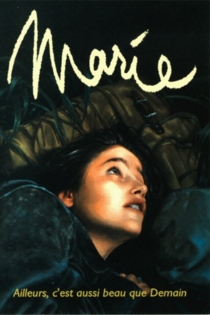
Lena disappears mysteriously during the winter of 1976. This is the last stop on a journey that begins in colonial Mozambique on new year's eve at 1957 gives way to 1958. Ningo, a black boy brought up by Lena's parents, and her childhood friend, comes to Lisbon to help find her, at the request of Lena's mother. Using the letters that Lena has left behind as a testament to her life, in wich she has rebelled against the challenged the powers that be, Ningo discovers the identity of her kidnapper - Jorge Matos - a former secret policeman who has followed her from Lourenço Marques, motivated by morbid desire. Lena's kidnapper dies from two inexplicable snake bites to the neck, in accordance with a legend and ritual that had been part of Lena and Ningo's childhood.
Land of Storms