Lilli Schoenborn
1898 - 1987Kriegsgericht
Kurt Meisel
Karlheinz Böhm, Christian Wolff
In this war drama, three Nazi survivors are rescued after their battleship sank. Initially they are given heroes' accolades for their courage, but then it becomes apparent that these men actually jumped ship three hours before the boat sank. The men are tried and subsequently executed.
Court Martial

Liebesleute
Erich Waschneck
Renate Müller, Gustav Fröhlich
Baron von Goret is an impoverished landowner, whose estate is about to go into receivership. And so, for that reason, he wishes to marry off his son Hermann with his well-off girlfriend Helga. But Hermann is in love with the farmer’s daughter Dorothea. He leaves his father’s estate with her and makes his way to Berlin to make a name for himself. He’s not successful in this and, so as not to stand in his way, Dorothea leaves him. Hermann’s aunt brings him back to his father’s estate, where, depressed over losing Dorothea, works tirelessly to clear the estate of all its debts.
Liebesleute

Unter der Laterne
Gerhard Lamprecht
Lissy Arna, Gerhard Dammann
Else Riedel (Lissy Arna), locked out by her authoritarian father, seeks refuge with her boyfriend Hans. Complications threaten when Hans's roommate Max falls in love with her, but the situation is resolved: the three remain friends, and decide to form a music hall act. They want to ascend, but how? A way out beckons when a theatrical agent named Nevin enters Else’s life. He is played by Hubert von Meyerinck as a slick and oily villain, who oozes refinement; his experience behind bars is waved away with a silk scarf. He is cunning to the point of perfidiousness, but is not completely unsympathetic. He also embodies a new type - the scrounger.
Under the Lantern

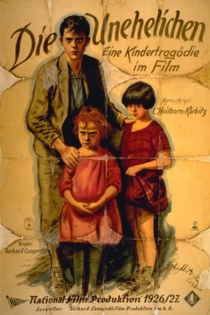
Die Unehelichen
Gerhard Lamprecht
Ralph Ludwig, Fee Wachsmuth
If watching a fellow facing indifference/rejection in the slums of Berlin didn't convey enough pathos, Gerhard Lamprecht gathered much of the same crew from Die Verrufenen and turned his attention to the city's population of unwanted children for the heart-tugging Die Unehelichen, released the following year. The trio of foster children at the center of Die Verrufenen are survivors who use their own resourcefulness to get by when the kids' guardians and the system itself let them down.
Children of No Importance
Irgendwo in Berlin
Gerhard Lamprecht
Charles Brauer, Hans Trinkaus
After WWII, Berlin lies in ruins. For Gustav, Willi and their friends the rubble provides an adventurous, dangerous playground. Especially for Gustav, it helps pass the time, as he longs for his father's return from a POW camp. One day a stranger arrives, looking helpless and hopeless.
Somewhere in Berlin

Kuhle Wampe oder: Wem gehört die Welt?
Slatan Dudow
Hertha Thiele, Ernst Busch
Kuhle Wampe takes place in early-1930s Berlin. The film begins with a montage of newspaper headlines describing steadily-rising unemployment figures. This is followed by scenes of a young man looking for work in the city and the family discussing the unpaid back rent. The young man, brother of the protagonist Anni, removes his wristwatch and throws himself from a window out of despair. Shortly thereafter his family is evicted from their apartment. Now homeless, the family moves into a garden colony of sorts with the name “Kuhle Wampe.”
Kuhle Wampe or Who Owns the World?