Adolf Fischer
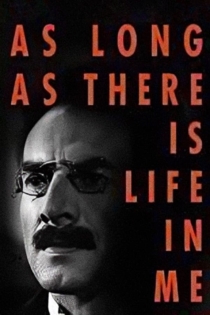
1900 - 1984Solange Leben in mir ist
Günter Reisch
Horst Schulze, Lyudmila Kasyanova
This is part one of a two-part biopic about Karl Liebknecht. In 1914, Germany is arming itself for war. Karl Liebknecht, left-wing revolutionary Social Democrat, workers’ leader and a virulent antimilitarist, is one among 110 SPD members of Parliament who vote against approving war loans. From then on, he is considered un-German and a traitor to the fatherland, and his own party’s leadership turns against him. Despite threats, Liebknecht speaks up against the war and writes the manifesto “The Main Enemy Is at Home.” Even when he is arrested and charged with treason, he does not surrender.
As Long as There’s Life in Me
Trotz alledem!
Günter Reisch
Horst Schulze, Lyudmila Kasyanova
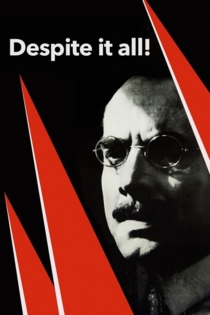
October 1918: Karl Liebknecht is released from prison and Berlin workers celebrate his release. Although WWI is almost over, the German Kaiserreich in vain sends its last reserves to the slaughter. The working class is in a rebellious mood; the uprising of Kiel’s sailors against war and militarism sets off a call for revolution led by Liebknecht. On November 9, Liebknecht declares the Free Socialist Republic of Germany. But pro-Kaiser military and right wing Social Democrats oppose him.
Despite It All!
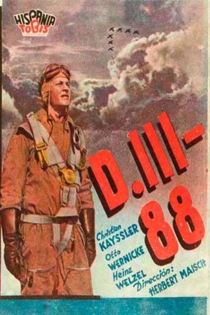
D III 88
Hans Bertram, Herbert Maisch
Christian Kayßler, Otto Wernicke
Across German screens at the outbreak of WWII streaks "DIII88: The New German Air Force Attacks", an aeronautic and maritime spectacle glorifying Hermann Goring's Luftwaffe and the spirit of the newly arisen Germany. Once war became imminent, Joseph Goebbels instructed the German film industry to initiate production of numerous militaristic projects, but DIII88 was initiated by the Propaganda Minister's rival, Goring, who commissioned several aviation pictures. DIII88 is not a war picture per se, because it takes place in peacetime, but the young, fresh-faced air aces enthusiastically look forward to the coming war. The propaganda is blatant: The only thing that matters is dedication to duty and unconditional commitment to the Fatherland.
D III 88
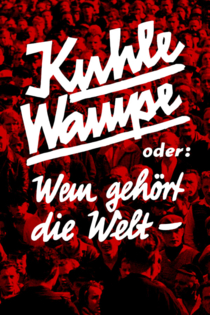
Kuhle Wampe oder: Wem gehört die Welt?
Slatan Dudow
Hertha Thiele, Ernst Busch
Kuhle Wampe takes place in early-1930s Berlin. The film begins with a montage of newspaper headlines describing steadily-rising unemployment figures. This is followed by scenes of a young man looking for work in the city and the family discussing the unpaid back rent. The young man, brother of the protagonist Anni, removes his wristwatch and throws himself from a window out of despair. Shortly thereafter his family is evicted from their apartment. Now homeless, the family moves into a garden colony of sorts with the name “Kuhle Wampe.”
Kuhle Wampe or Who Owns the World?