
Thelma Reston
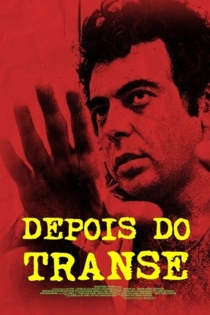
1937 - 2012Depois do Transe
Paloma Rocha, Joel Pizzini
Glauber Rocha, Paulo Autran
The documentary "Depois do Transe" covers the entire process of creating the masterpiece "Entranced Earth", which was released and awarded at the Cannes Film Festival in 1967. "Entranced Earth" charmed the world and won great admirers such as filmmaker Martim Scorsese and the writer Marguerite Duras, who at the time considered a "fabulous filmic opera."
Depois do Transe
Improvisiert und zielbewusst: Cinema Novo
Joaquim Pedro de Andrade
Glauber Rocha, Arnaldo Jabor
Originally produced for German TV, Improvised and Purposeful is a firsthand look at the "Cinema Novo" movement (otherwise known as the 'Brazilian New Wave'). Director Joaquim Pedro de Andrade focuses on six Cinema Novo filmmakers working in Rio in 1967.
Improvised and Purposeful: Cinema Novo

Proezas de Satanás na Vila de Leva-e-Traz
Paulo Gil Soares
Zózimo Bulbul, Emmanuel Cavalcanti
In the village of Leva-e-Traz, the discovery of a oil field is responsible for a mass evasion of the townspeople. Left are the old and incapable for the extraction job. When the local priest announces he, too, is leaving the town, Satan emerge thrilled with the chance of overtaking the place.
Proezas de Satanás na Vila de Leva-e-Traz

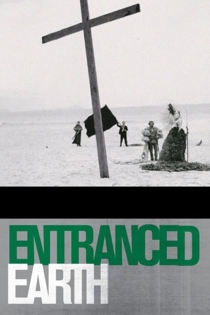
Entranced Earth
Glauber Rocha
Jardel Filho, Paulo Autran
Eldorado, a fictitious country in America, is sparkling with the internal struggle for political power. In the eye of this social convulsion, the jaded journalist Paulo Martins opposes two equally corrupt political candidates: a pseudopopulist and a conservative. In this context, Paulo is torn between the madness of the elite and the blind submission of the masses. But, in this complex tropical reality, nothing really is what it seems to be.
Entranced Earth
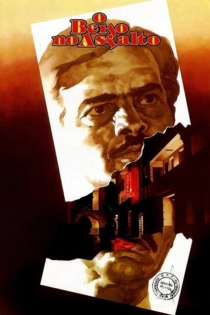
The Asphalt Kiss
Bruno Barreto
Ney Latorraca, Christiane Torloni
When a pedestrian is hit by a bus, the simple clerk Arandir runs and kisses the moribund in a gesture of sympathy and unconditional pure love. Opportunist photographer Amado Pinheiro witnesses the scene and sees the opportunity to sell newspaper and, together with the despicable and abusive chief of police Cunha, accuses Arandir of homosexuality.
The Kiss
El Justicero
Nelson Pereira dos Santos
Arduíno Colassanti, Adriana Prieto
A shockingly irreverent follow-up to the rural austerity of Barren Lives, dos Santos’ Godardian social satire owes more than a nod to the self-conscious antics of the French New Wave. The pampered son of a general, El Justicero is a hipster playboy who fancies himself a James Bond/Jean Paul Sartre urban hero. “Archetypical” yet “full of contradictions,” he sees that justice is achieved for the disadvantaged while taking advantage of certain bourgeois perks. His exploits are closely followed and eventually directed by his biographer who decides a film is not only more lucrative than a book, but it gives him the luxury of reviewing previous scenes. Unlike Bond, El Jus eventually experiences an awakening which threatens to compromise the entertainment value and glamour of his life story. - Harvard Film Archive
El Justicero

Na Boca do Mundo
Antônio Pitanga
Antônio Pitanga, Norma Bengell
A black fisherman now working at a local gas station, Antônio lives at the small beach town of Atafona. His biggest ambition is to stash enough money to leave to a big city with his fiancee, a mix-raced girl who sells fresh crabs to locals and wishes for a better life. When a rich white woman from the high society arrives to spend a few days away after ending a failed marriage, Antônio soon bonds with her and begins to change his plans.
Na Boca do Mundo

Otalia de Bahia
Marcel Camus
Antônio Pitanga, Mira Fonseca
The adventures of Otalia, a strangely innocent young Brazilian prostitute who has just arrived in Salvador, Bahia. Though her belongings are stolen from her shortly after arrival, Otalia swiftly meets up with a group of charming and helpful friends.
Bahia

Engraçadinha Depois dos Trinta
J.B. Tanko
Irma Álvarez, Fernando Torres
After marrying everyday man Zózimo, Engraçadinha, who had been through intense sexual experiences as a teenager, settles to live a quiet and normal life. As the years go by, her teenage daughter's behaviour seems to call back Engraçadinha's own teenage days.
Engraçadinha Depois dos Trinta



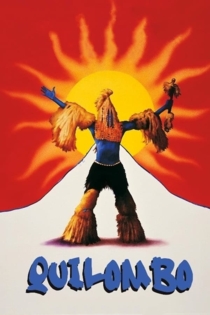
Quilombo
Carlos Diegues
Tony Tornado, Antônio Pompêo
Quilombo dos Palmares was a real-life democratic society, created in Brazil in the 17th century. This incredibly elaborate (and surprisingly little-known) film traces the origins of Quilombo, which began as a community of freed slaves. The colony becomes a safe harbor for other outcasts of the world, including Indians and Jews. Ganga Zumba (Toni Tornado) becomes president of Quilombo, the first freely elected leader in the Western Hemisphere. Naturally, the ruling Portuguese want to subjugate Zumba and his followers, but the Quilombians are ready for their would-be oppressors. The end of this Brave New World is not pleasant, but the followers of Zumba and his ideals take to the hills, where they honor his memory to this day. Writer/director Carlos Diegues takes every available opportunity to compare the rise and fall of Quilombo with the state of affairs in modern-day Brazil.
Quilombo
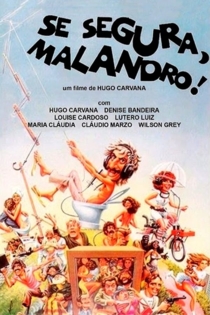
Se Segura, Malandro!
Hugo Carvana
Hugo Carvana, Denise Bandeira
Paulo Otávio is the host of a pirate radio station on the slums of Rio de Janeiro. He struggles to mantain the station working, since the only help he's got comes from news reporter Calói. Their story goes beyond as the city starts to face a crime wave.
Se Segura, Malandro!
Dedé Mamata
Rodolfo Brandão
Guilherme Fontes, Malu Mader
Dede (Guilherne Fontes) is a Brazilian teen who lives with his middle-class grandparents who are members of the local communist party. When his grandmother dies, his grandfather's health soon fades to the point where he can't speak or walk. The local party officials ask Dede to continue to family tradition and take over his grandfather's position of social authority, but when Dede is introduced to cocaine by his best friend Alpino (Marcos Palmeira), the attraction to drugs is more appealing to him than political activism.
Dedé Mamata