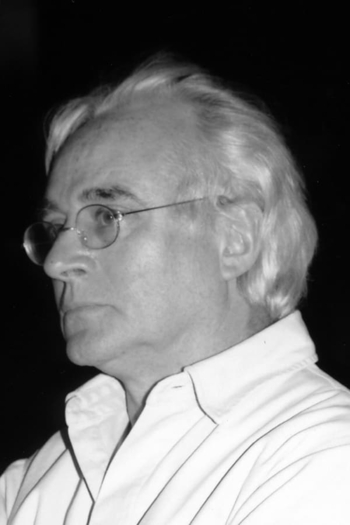
Jean-Claude Rousseau
1946 (80 лет)La Vallée close
Jean-Claude Rousseau
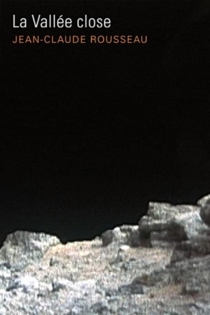
My films are like that: in a room, but looking out onto an open sky. [...] I can’t really say it except to repeat that Bresson note, ‘that without a thing changing, everything is different.’ The film exists. The fiction is set up, and we believe in it. The justness of the agreement leads us to believe it, because everything plays equally at being a sign. That’s the arrangement of the elements. It’s an act of faith. La vallée close is just this: elements treated above all as if in a documentary that, without being changed, portray the story and reveal between them the elements of fiction. But above all seen as they are, insignificant. And then in the relations they set up, they can satisfy our desire for a story. -- Rousseau
The Enclosed Valley

Les antiquités de Rome
Jean-Claude Rousseau
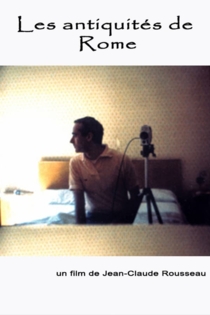
Rousseau's first full-length feature, and one of the best documentaries/experimental films of the past few decades, sprung equally from Robert Bresson, Michael Snow, and Jean-Marie Straub (who has called Rousseau one of the three best working artists in modern Europe). Again hard places played against drifting sounds from unseen sites beyond the image; the images and sounds, repeated, become inflections of each other. But this time there are historical inflections; Rousseau's film, like Straub's, takes place in a sort of meta-history as characters and ancient sites each become products of outside light and shadow.
The Antiquities of Rome
Keep in Touch
Jean-Claude Rousseau
Rousseau is shown sitting in a room, waiting. Voices leave messages on his answering machine (sound); a table lamp (light) and an empty writing pad (memory) adopt the meaning due to them under this arrangement. In between, the flowing movements of nocturnal ice dancers are accompanied by Rousseau’s humming a tune.
Keep in Touch
De son Appartement
Jean-Claude Rousseau
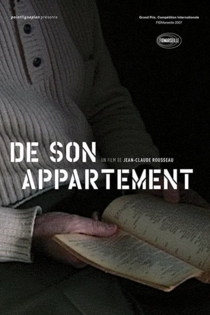
The continuing demand for high standards is what sets Rouseau's work apart. What makes this film distinctive is the way Rousseau explicitly returns to the source of his creative inspiration. So here he is at home reciting «Bérénice» to himself, whilst going about his household chores. It verges on the comical: There are repeated shots of him obstinately trying to turn off a dripping tap, or the jubilant close up of bare feet carried away in performing a dance step or two. Combining art with life in such a way, that nothing is compartmentalised, nothing lost - that is the goal.
De son Appartement
Un monde flottant
Jean-Claude Rousseau
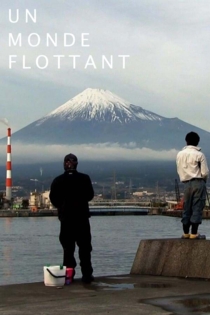
Between rain and clearer spells, in the footsteps of Ozu in today’s Japan, people met, wordless encounters… Also some seismic events, a trembling of the ground which does not interrupt the course of the film. And just for the sake of a story: a forgotten umbrella in a hotel room.
A Floating World
Saudade
Jean-Claude Rousseau
“My eyes are imprisoned/ Weeping with great longing”. Soèdade (saudade) — “longing” or “yearning” — is a Portuguese word that does not have a precise translation in English. It has been described as a “…vague and constant desire for something that does not and probably cannot exist…”
Saudade
Jeune femme à sa fenêtre lisant une lettre
Jean-Claude Rousseau
Jean-Claude Rousseau
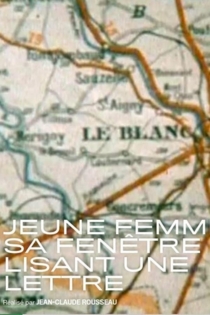
Jean-Claude Rousseau's Jeune femme à sa fenêtre lisant une lettre is not only his first medium-length film, but a chance to discover this filmmaker whom Jean-Marie Straub has called, along with Frans Van de Staak and Peter Nestler, the greatest working in Europe. With this newly restored print there is also a possibility to discover the relationship between Rousseau's art of filming and Jan Vermeer's famous painting. As Prosper Hillairet wrote in 1988, four years after Rousseau had finished Jeune femme ... (for the first time as we know today): «Without adopting the usual systematic spirit and form of cinéma structurel, Rousseau presents us with simple images and leaves it at that. Keeps the image in hand. A minimalist and ascetic expression of cinema: a shot that lasts.»
Jeune femme à sa fenêtre lisant une lettre
Série noire
Jean-Claude Rousseau
The title is playing with us, claiming that the film is a detective story. Witch in a way it is not untrue. The camera is peeping tom and it does not lose a thing (almost) in its surveillance: every movement, people coming and going, sounds, a sudden shot... A crime ? Maybe. Some phone calls and nobody answering: another crime ?
Série noire
Venise n'existe pas
Jean-Claude Rousseau
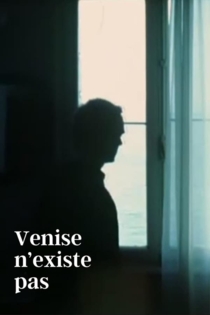
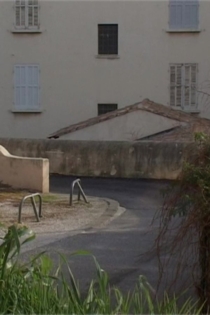
"if he leaned out the window, if he did that movement, if he risked to fall or to drop the camera, if he leaned to fall, then he would see and it would be seen, through the doorway, inhabited islands, churches and palaces where the boats dock. "
Venise n'existe pas