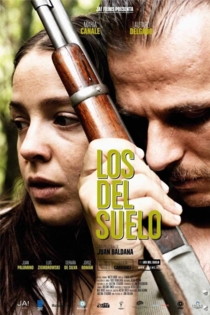
Juan Palomino
1961 (64 года)Tiempo de pensar
Silvana Sosto, Soledad Comasco
Time to Think proposes to address the problem of gender violence, questioning stereotypes and the ways in which women are represented in the media. Each episode poses a conflict that runs through the daily life of a woman and her environment. With a mixture of drama, romantic comedy, and humor, it addresses a socio-emotional conflict that runs through a woman's life, faced with situations that intersect opposite feelings.
Tiempo de pensar

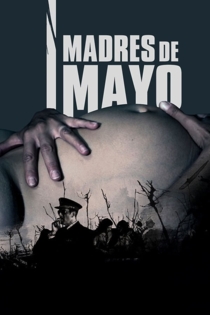
Madres de Mayo
Pablo Yotich
Juan Palomino, Alejandro Fiore
Story of a young couple who suffered the tragic events of Argentina in the late seventies. He, because of the pregnancy of his girlfriend, decides to leave political activism, not knowing that the military are looking for him. After being arrested and taken to a clandestine detention center will be savagely tortured. His daughter Natalia will be raised by a military bourgeois family. But, eventually, the girl decides to investigate the truth about his origins and his true identity.
Madres de Mayo

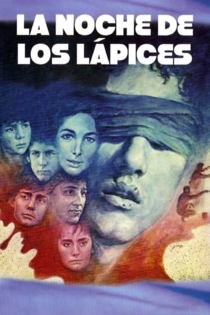
La Noche de los Lápices
Héctor Olivera
Alejo Garcia Pintos, Vita Escardó
The Night of the Pencils was a series of kidnappings and forced disappearances, followed by the torture, rape, and murder of a number of young students during the last Argentine dictatorship (known as the National Reorganization Process). The kidnappings took place over the course of several days beginning on September 16, 1976.
Night of the Pencils
Contrasangre
Nacho Garassino
Emilia Attías, Sergio Boris
Daniel, Juan Palomino is a security guard, he was once a policeman, and he would have liked to be a vigilante hero. But, far from it, his job is to take care of the buildings of others. The city will cross with Analía (Emilia Attias), a distant woman, obsessive and beautiful in a mysterious way. She avoids contact with men because she has been the victim of rape. That terrible past comes back when Julio, Esteban Meloni, a violent and obsessed man, gets out of jail. Between the three are weaving on the streets of the city a plot of passion and crime.
Contrasangre

El pozo
Rodolfo Carnevale
Eduardo Blanco, Patricia Palmer
Pilar is autistic since she was four years old, now she is 26. The father wants to send her to an Institution , but the mother refuses, this creates a rift in the couple. The family is breaking up: Alejo, the youngest son, has conflicts at school and with his friends. Pilar suffers from increasingly frequent attacks that makes their living really impossible. Finally, they put her in an Institution. She will find another way to live, but something will happen that will change the course of the family.
El pozo


Standard
Jorge Acha
Libertad Leblanc, Juan Palomino
Does someone remember that project of López Rega’s which, in 1975, thought up the construction of a Great Homeland Altar where all mythical figures of Argentine history could be in the same building? From San Martín to Perón on his pinto horse. From the Billiken stamps of our childhood to Libertad Leblanc’s tits of our teenage years. All clichés of Argentine-ness gathered under one roof. But the construction delays. Workers entertain themselves with their own masturbatory drives. Or is it that Argentina is an impossibie construction? Always about to begin. always displaying great projects, great plans that never come to fruition. A second-rate country that hides its fundamental vacuity behind monuments. in Acha’s cinema, second-rateness is exposed, shown in all its lying pomposity.
Standard

La corporación
Fabián Forte
Osmar Núñez, Mariana Anghileri
The story focuses on Felipe Mentor, an ambitious and successful entrepreneur forties. Her company, called Mentor, is ascendant, to signing an agreement with a prestigious firm. Personally, Philip is married to a beautiful and charming woman named Luz, who seems to be the perfect woman. She runs her innermost desires and shown to Felipe madly in love and happy. This is because light works for a firm called Hit Life, a company that makes the dreams and aspirations of people from becoming reality.
The Corporation

Yo nena, yo princesa
Federico Palazzo
Eleonora Wexler, Isabella G.C.
The story focuses on the life of a couple and their twin sons, one of whom begins to show that he identifies as a girl. From this, Gabriela, the mother, will try to understand the situation of her son who soon becomes a trans girl, thus beginning a struggle for the rights and gender identity of Luana , who will also have to face the rejection of her father Guillermo.
I'm a Girl, I'm a Princess


Viaje a Tombuctú
Rossana Díaz-Costa
Andrea Patriau, Jair García
Trip to Timbuktu is the story of Ana and Lucho, two teenagers who live in Peru. Their story of love, which starts in childhood, reveals the changes which took place in this country during the 80's. For them, the only way to survive in the middle of violence, poverty and lack of opportunities is through their love, a sort of refuge which has as its homeland an imaginary country called Timbuktu. Nevertheless, the reality will stand in their way and collapse their utopia.
Viaje a Tombuctú

Gunman
Nicolás Galvagno
Lautaro Delgado Tymruk, Diego Cremonesi
Pistolero is a fiction that in a certain way is an essay on violence. The story follows the criminal raid of Isidoro Mendoza and his brother Claudio in the rural Argentina during Ongania’s dictatorship, and how the violence of his criminal deeds begins to leave a mark in them. A teacher from Buenos Aires arrives to Isidoro’s life, and love is the possibility to open himself to a new life, but even as he tries, he can not escape the entropy generated by his own drives and actions.
Gunman