Chris Gallagher
2021The Tungsten Shadows events, Santa, The Kodak Kahuna Show, Santa's Luau, 1000 dollars, Lets get Painting Moving existed in a territory formed by a triangle between theatre, art and carnival act. The installation, Aerial Image, projected motion pictures into industrial steam plumes in the Regina and Winnipeg winter night sky and the winter equinox, outdoor screening of Time Being juxtaposed philosophical musings on time with the physical need to stay warm and was presented at Illuminate Yaletown.
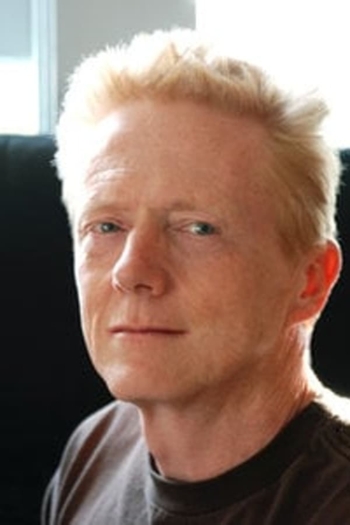
Gallagher's photography has been included in exhibitions, publications and collections and his picture of a floating cup, from the 13 Cameras exhibition and book, was describes as a "major image" by The National Gallery of Canada and Reindeer Discipline, from the Santa series, creating a furor when exhibited at The Vancouver Art Gallery. His current work includes Around Here, single exposure photography with his radial pan camera that alters narrative space by the injection of a pure motion at the time of capture and his short film work looks at time and space as they dissolve and recrystallize each other in the liquid of representation.
Seeing in the Rain
Chris Gallagher
Photographed through the windshield of a Vancouver city bus and edited according to the rhythms of the bus' windshield wiper, the film transforms the linear narrative of the bus ride into a temporal construction that can be described as cubist. The effect of the cutting strategy on the actual temporal organization of the film is as remarkable as its effect on our sense of time.
Seeing in the Rain

Atmosphere
Chris Gallagher
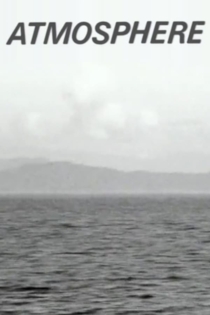
In Atmosphere the camera pans back and forth over a body of water at a varying tempo and most people assume that a camera operator is in charge. The final image of the film carries a great deal of significance. It opens up a gap between the film’s appearance and its reality; what it appears to be – what it imitates – is not an object or scene from everyday life, but a film. Atmosphere is not just an imitation, but an imitation of an imitation, a metafilm that plays with the viewers’ expectations about cinematic form. —R. Bruce Elder, Image and Identity
Atmosphere
Undivided Attention
Chris Gallagher
An episodic road movie, “Undivided Attention” offers experiences in cinematic metaphor and structure that contradict, tickle and soothe our desire to understand and make sense of what we see or think we see. A young couple driving in an open car take the viewer through more than twenty intriguing sequences that stimulate the visual sensibility as the film explores the relationship between intellectual and sensual knowledge. It also comments on some conventions of narrative and documentary and has some fun with film theory. “Undivided Attention” works on various levels, the most accessible being entertainment value and on a more astute level, the cinematic exploration of denotation/connotation in an oblique narrative. It is a rich and challenging film that is also a pleasure to watch. - 42nd Edinburgh International Film Festival
Undivided Attention
Plastic Surgery
Chris Gallagher
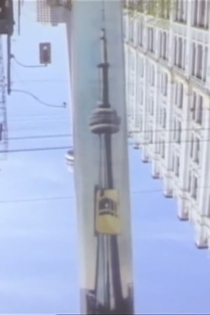
The film draws an analogy between the cutting and suturing of the human body and the reconstruction of the world through film. Using optical printing techniques, it connects diverse elements in a dream-like flow: a vision of mind at play amid the anxieties of our society. It's also an operation on our image systems, including cinema.
Plastic Surgery
The Nine O’Clock Gun
Chris Gallagher
Real time is an oxymoron. The film presents one firing of Vancouver's famous gun; an event that attracts an audience visible on screen unlike the audience watching the film; ourselves. Our experience of time in our innermost self is unlike our experience of space or mass yet nothing in physics corresponds to the passage of time. How can something we experience as so real be based on an illusion. Norfolk, Virginia also has a Nine O'clock Gun.
The Nine O’Clock Gun
Where is Memory
Chris Gallagher
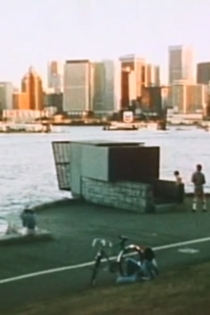
Part fictional narrative, part travelogue, part documentary, this unusual film serves as another sign that non-fiction film as we know it is going through a major revolution. Engaging fictional narrative elements to create a ‘mystery,’ Where is Memory is a boldly original and affecting meditation on the nature of complicity and the Third Reich. Masterful use of archival footage matched with contemporary footage of Europe, a haunting score and an inspired mix of realities for a thoughtfully framed poetic odyssey that charts new cinematic territory. — Judges’ Award, Northwest International Film Festival
Where is Memory
Terminal City
Chris Gallagher
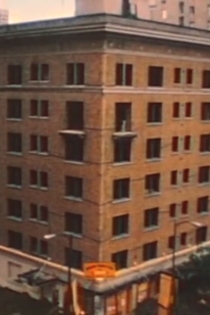
Terminal City records the demolition of the Devonshire Hotel in Vancouver; through extreme show motion (200 frames per second) and symmetrical diagonal framing, Gallagher underscores the passage from order to chaos within the event. The sparseness of this centering and he patience required of the viewer heightens the literally explosive climaxes of the film, and transforms the everyday violence of the events into moments of convulsive beauty. – Jim Shedden, Michael Zryd, The Independent Eye
Terminal City
Time Being
Chris Gallagher
Chris Gallagher’s feature-length film essay Time Being is an elegant and thought-provoking investigation of the nature and experience of time, and its filmic representation. 88 one-minute shots or shot-sequences counterpoint a spoken commentary that probes and questions the subject from many different angles – psychological, philosophical, mechanical, cosmological, artistic. Equally, Gallagher combines aspects of different cinemas – documentary, structural, poetic, narrative, and personal – skillfully interweaving all the elements into a complex yet coherent and surprisingly moving statement on the human condition. The most brilliant film on its subject I’ve ever seen, Time Being is cool and non-academic yet deeply engaged, and beautifully shot. An educational film in the best sense. —Tony Reif
Time Being
Mirage
Chris Gallagher
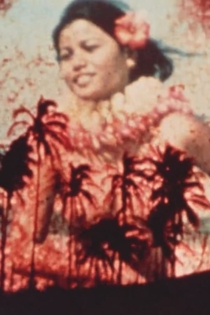
Mirage offers a thoughtful and disturbing meditation on a wide variety of cinematic problems - the portrayal of women in film, the ability of a reassuring male commentary (“Dreams come true in Blue Hawaii”) to direct our gaze and our conventions of fantasy/dreamland. The film tests ones ability to pay attention. We keep seeing essentially the same image and hearing the same phrase yet we have a difficulty grasping what this film is about. The film has a mystery or haunting feeling to it that perhaps surfaces well after one has seen it, and is the basis of thought on the subject of the sexual portrayal of women on film. Mirage could be seen many times; perhaps the tail could be spliced to the head resulting in a continuous loop - as there is no clear beginning, middle, or end to the film – somewhat like the nature of our own existence. – Martin Rumsby, The Invisible Cinema
Mirage