Marina Freire
1910 - 1974
Compasso de Espera
Antunes Filho
Zózimo Bulbul, Renée de Vielmond
Jorge de Oliveira is an Afro-Brazilian poet who works in a publicity agency in São Paulo. Torn between his rich white lovers and his black family and friends, Jorge's situation serves as a springboard to a discussion about racial issues in Brazil.
Compasso de Espera

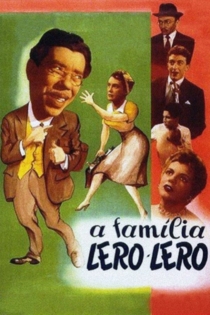
A Família Lero-Lero
Alberto Pieralisi
Walter D'Ávila, Marina Freire
Aquiles Taveira is a civil servant harassed by his own family's financial demands. Tired of it, he decides to fake an embezzlement at his work and runs away to the seaside resort of Guarujá, where he manages to live peacefully, for too short a time.
A Família Lero-Lero
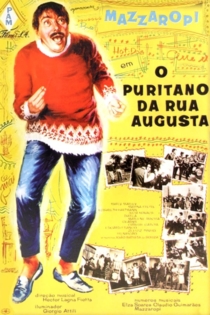
O Puritano da Rua Augusta
Amacio Mazzaropi
Amacio Mazzaropi, Marly Marley
Old and conservative industrialist goes to São Paulo to visit his children, who are locally in charge of his business. When he finds out they're having more fun than work, at first he is shocked, but gradually starts to join in.
O Puritano da Rua Augusta
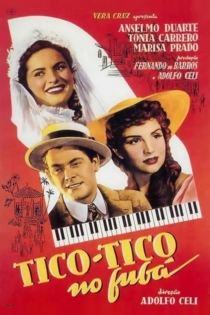
Tico-Tico no Fubá
Adolfo Celi
Anselmo Duarte, Tônia Carrero
Tico-Tico no Fubá is a 1952 Brazilian comedy film directed by Adolfo Celi and starring Anselmo Duarte. It was entered into the 1952 Cannes Film Festival. The film is a fictionalized biography of Brazilian composer Zequinha de Abreu (1880–1935), who penned the song "Tico-Tico no Fubá" that became an international hit in the 1940s.
Tico-Tico no Fubá