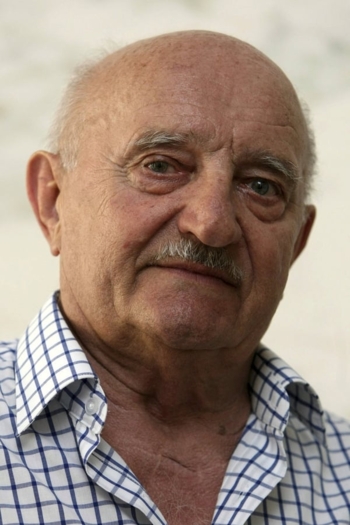
Josef Somr
1934 (91 год)
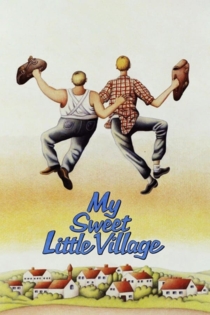
My Sweet Little Village
Jiří Menzel
János Bán, Marián Labuda
The movie's main storyline follows the life of Otík, a young man, in a tight-knit village community. The sweet-tempered Otík works as an assistant truck driver with Mr. Pávek, his older colleague and practical-minded neighbor. Pávek's family takes care of Otík, whose parents are dead. However, the two coworkers become at odds over Otík's inability to perform even the simplest tasks. Pávek demands that Otík be transferred to assist another driver, who happens to be a choleric and suspicious man named Turek (Turk in Czech). Rather than work with Turek, Otík decides to accept an offer of employment in Prague, but finds he does not fit in to the city life. After discovering that the transfer of Otík to Prague was a trick by a crooked politician to get a deal on Otík's large inherited house, Pávek agrees to give Otík a second chance and retrieves him from the city to resume their work together.
My Sweet Little Village
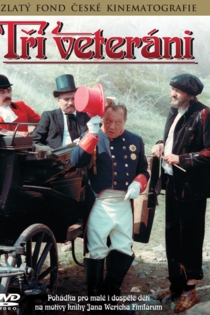
The Three Veterans
Oldřich Lipský
Rudolf Hrušínský, Petr Čepek
It is a story of three veterans released from the army. During one night spent camping in the country they one by one wake up and meet three elvish brothers. Each of the veterans is given a magic item - one gets magic harp that provides him with servants by wish, other one endless pouch of gold and the last one owns magic hat that can create all the staff excluding money and people.
The Three Veterans
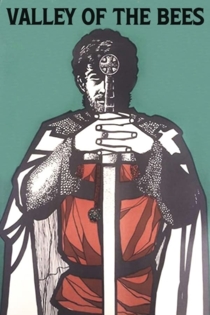
Údolí včel
František Vláčil
Jan Kačer, Věra Galatíková
Cast out by his father, young Ondrej joins the Order of the Teutonic Knights, where he is raised by strict monk Armin. After years of hardship, Ondrej escapes from the Order when he is wrongly punished, and sets out for his former home. Arriving to discover his father to be dead, Ondrej now not only assumes control of his father's properties, but seeks to marry his former stepmother.
The Valley of the Bees
Cerni baroni
Zdeněk Sirový
Ondřej Vetchý, Pavel Landovský
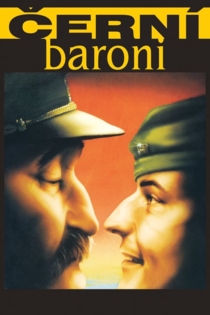
Life of Czechoslovak soldiers in a military unit for the so called "politically unreliable" - the Technical auxiliary battalions, aka "the black barons". Although it might seem like a political satire and it's mostly funny, it shows the reality and the absurdity of military service under the communist regime. Based on a novel by Miloslav Svandrlik.
Cerni baroni
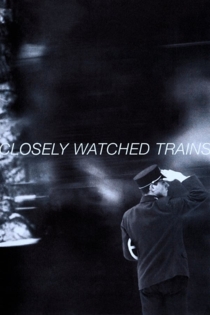
Closely Watched Trains
Jiří Menzel
Václav Neckář, Josef Somr
At a village railway station in occupied Czechoslovakia, a bumbling dispatcher’s apprentice longs to liberate himself from his virginity. Oblivious to the war and the resistance that surrounds him, this young man embarks on a journey of sexual awakening and self-discovery, encountering a universe of frustration, eroticism, and adventure within his sleepy backwater depot.
Closely Watched Trains
Smuteční slavnost
Zdeněk Sirový
Jaroslava Tichá, Josef Somr
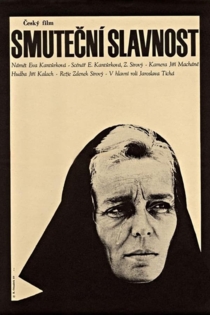
Matylda (Jaroslava Ticha), who lives in the Czech countryside, is trying to arrange burial plans for her dying husband, Jan (Ludvik Kroner). While Matylda hopes to have a funeral for Jan in the small town where they once lived, there are complications. Years earlier, Jan spoke out against the Communist government and was consequently expelled from the town. When Matylda fails to convince a local politician to allow the ceremony, she uses her husband's funeral as a public show of dissent.
Funeral Ceremony
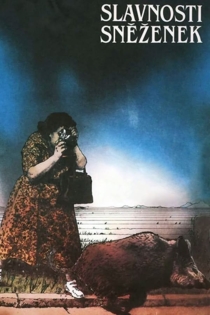
Slavnosti sněženek
Jiří Menzel
Rudolf Hrušínský, Jaromír Hanzlík
This movie is based on texts of Bohumil Hrabal, world-known Czech prosaic. It's a story (in a form of a mosaic of short episodes and pictures) about the sadness and happiness of inhabitants of Kersko (Kersko is a small woody area full of cottages and roods). These people are both simple and sensitive, they have their own pleasures (e.g. Leli is a collector of cheap, but inutile things) and the greatest delight of all of them is a hunting. Crude poetics of amateur hunting is screened by dreamy pictures of this area. Menzel mixes sentimental lyricism and rough (but not vulgar!) humor and the outcome is the never-ending landscape of continuous life in the proximate nearness of nature. The performances of actors are brilliant. Both Rudolf Hrusinsky as a Franz and Jaromír Hanzlik as a Leli have nonrecurring charm bottomed on a pain and inebriation. Only the music is not perfect: Jiri Sust usually assembled his film music from his older works and in this movie there is many quotations.
The Snowdrop Festival