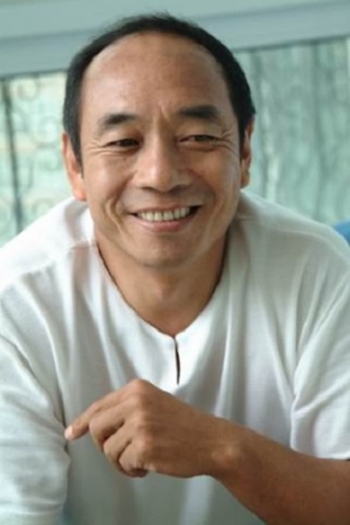
Tao Zeru
1953 (72 года)
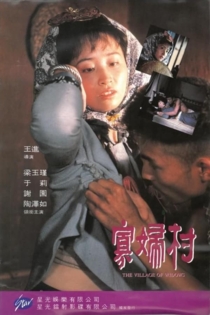
The Village of Widows
Jin Wang
Shijun Niu, Tao Zeru
In 1949, a small Chinese fishing village populated almost entirely by women awaits the establishment of a government by the newly victorious communist regime. In addition to other worries, the villagers wonder how the government will react to their traditional customs, which decree that wives may only see their husbands three times a year, and the circumstances under which they are permitted to become pregant are very limited. In addition, those who are caught violating these rules are drowned. The almost exclusively female population of the village is explained by the fact that most of the male population died during an ocean storm. Winner of the Hundred Flowers Award for Best Film in 1989
The Village of Widows

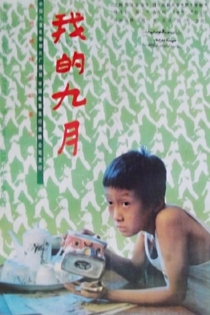
The September of Mine
Yin Li
Danping Shen, Tao Zeru
Before the Beijing Asian Games in 1990, a group of elementary school kids compete for the chance to participate in a martial arts performance for the opening ceremony. In this coming-of-age story, kind-hearted An Jianjun pursues his dreams through sweat and tears, friendship and betrayal. The comedy depicts Beijing locals in precise, humorous, and loving detail.
The September of Mine
一个和八个
Zhang Junzhao
Chen Daoming, Xiaoyan Lu
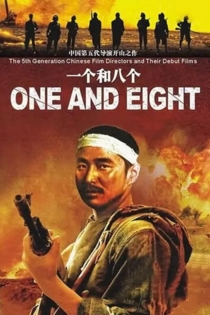
Director Zhang Junzhao's superbly tense revisionist war film (featuring striking cinematography from future Fifth Generation standard bearer Zhang Yimou) is widely considered to be the first work of Mainland Fifth Generation cinema.
One And Eight
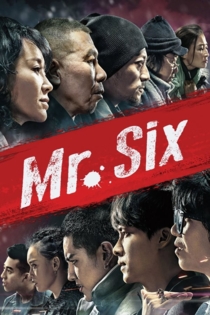
Mr. Six
Fei Zhen-Xiang, Guan Hu
Feng Xiaogang, Xu Qing
Many years ago Mr. Six was a notorious gangster. That was back when there was still such a thing as honour among thieves, when criminals earned respect and maintained principles. These days Mr. Six is all but forgotten, a living relic residing in a narrow alley. One day Six's son, Xiaobo, is abducted by some spoiled punks after he scratches their precious Ferrari. Mr. Six realizes that he must do whatever it takes to get his son back — even if that means returning to the life he thought he had left behind.
Mr. Six
晚钟
Wu Ziniu
Tao Zeru, Sun Min
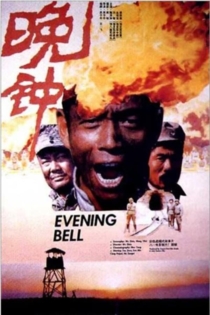
Taking place in the immediate aftermath of the Second Sino-Japanese War, Evening Bell follows a small platoon of five Chinese soldiers who must negotiate a devastated landscape, burying bodies, disarming mines, and eventually facing off against a starving band of Japanese soldiers who do not yet know that the war has ended.
Evening Bell
南京1937
Wu Ziniu
Chin Han, René Liu
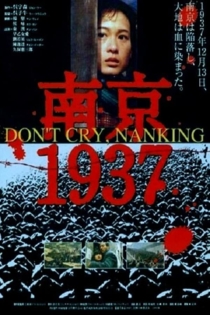
In December 1937, during the Second Japanese-Sino War, a Chinese doctor, his Japanese pregnant wife, their teenage daughter and their young son travel from Shanghai to Nanjing seeking shelter in the Capital during the Japanese invasion. The family faces the Rape of Nanking by the Imperial Japanese Army, with rapes, mass murder of prisoners of war and civilians including women, children and elders, and disrespect of international conventions.
Don't Cry, Nanking
Da hong mi dian
Huang Jian-Zhong
Tao Zeru, Shi Lan
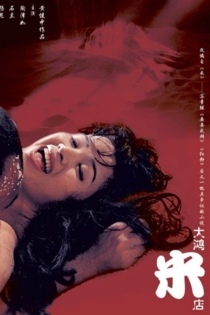
Shot in 1995, but banned until 2004, this is an adaptation of Su Tong's novel about a shrewd amoral country boy who arrives in the big city in the 1930s and works at a rice emporium.. Initially pushed around, he learns the ropes in his new environment quickly, eventually climbing to the position of boss by marrying the daughter of the house.
Rice
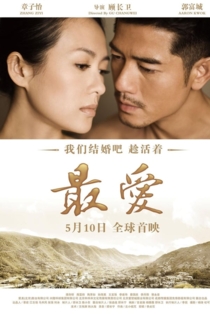
最爱
Gu Changwei
Zhang Ziyi, Aaron Kwok
Set in a small Chinese village where HIV virus is spreading rapidly as a result of illicit blood trade, Mo shu wai zhuan revolves around De Yi and Qinqin are both estranged from their respective family because of their disease and unexpectedly find love with each other by their misfortunes.
Love for Life