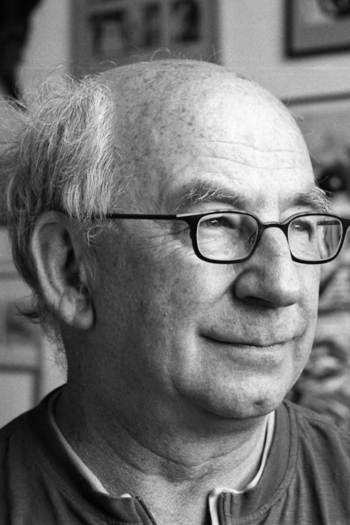
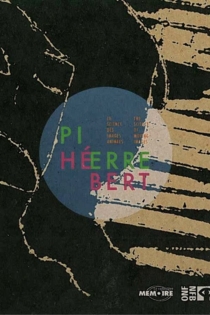
Pierre Hébert
1944 (82 года)The Reach of Resonance
Steve Elkins
John Luther Adams, Jon Rose
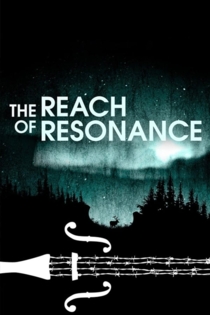
Miya Masaoka uses music to interact with plants and insects; Jon Rose turns fences into musical instruments with a violin bow in conflict zones ranging from the Australian outback to Israel; John Luther Adams translates geophysical phenomena in Alaska into music; and Bob Ostertag explores socio-political issues through processes as diverse as transcribing riots into string quartets, and creating live cinema with garbage. By contrasting the creative paths of these artists, and a connection between them by the world renowned Kronos Quartet, the film explores music not as a form of entertainment, career, or even self-expression, but as a tool to develop more deeply meaningful relationships with people and the complexities of the world they live in.
The Reach of Resonance
Songs and Dances of the Inanimate World: The Subway
Pierre Hébert
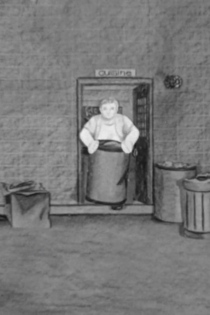
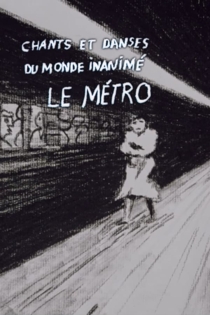
In this animation film without words, filmmaker Pierre Hébert and musicians Robert Lepage and René Lussier worked together, and separately, in their respective media. This cinema/music performance recreates, impressionistically, the dehumanizing environment of the urban subway. Drawings etch the outlines of people hurtling through space in underground tunnels. The sound track, elemental and atonal, gives compelling expression to their alienation.
Songs and Dances of the Inanimate World: The Subway
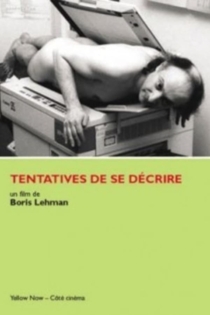
Tentatives de se décrire
Boris Lehman
Mirèse Aerdts, Nathalie André
Trying to describe oneself is a movie about representation. How it is possible, through film, to describe oneself and describe others. With the camera as mirror and third eye. At first, a collage-like combination of letter-writing, investigation and journey, something between documentary and feature film. Finally, a portrait of Boris Lehman from 1989 to 1995, part II of BABEL.
Trying to Describe Oneself
Souvenirs de guerre
Pierre Hébert
This haunting animation film, rich with symbolism, is the filmmaker's plea for a peaceful world in which to raise his newborn son. Using the menacing imagery of the howling wind, the artist provokes viewers to reflect on the insanity of war. While the film is symbolic, its message is unmistakably clear: unless there is an end to conflict, we will continue to see our children swept away like leaves in the wind.
Memories of War
Op Hop/Hop Op
Pierre Hébert
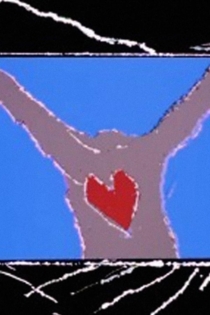
A hand-made, scratched-on film experiment in intermittent animation. The images are a group of twenty-four visuals, all non-representational, which arrange and rearrange on the screen in many combinations. The result is a changing pattern of sound and image that has its own rhythm for eye and ear.
Op Hop/Hop Op

Around Perception
Pierre Hébert
An early experiment in employing computers to animate film. The result is a dazzling vibration of geometric forms in vivid color, an effect achieved by varying the speed at which alternate colors change, so producing optical illusions. In between these screen pyrotechnics appears a simple line form gyrating in smooth rhythm. Sound effects are created by registering sound shapes directly on the soundtrack of the film.
Around Perception
Explosion démographique
Pierre Hébert
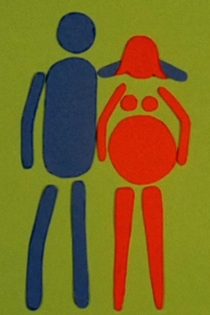
A film in cut-out animation depicting the demographic problems of the world. It shows that in many countries freedom from the old scourges of famine and disease has in turn created the new problem of more mouths to feed. The film suggests that wealthier nations might increase all forms of aid to struggling nations to create a better world.
Population Explosion
Opus 3
Pierre Hébert
"A film in which both sound and image were created with a minimum of photographic or electronic equipment. The images are a few simple geometric forms – squares, circles, lines, ellipses – arranged and counter-arranged to generate an increasing number of perceived images. Their appearance on the screen is as percussive as the sound that accompanies them." — National Film Board of Canada
Opus 3