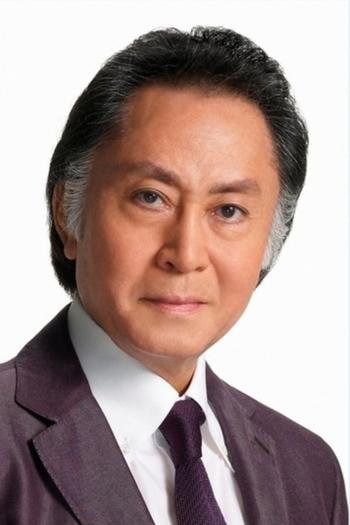
Kinya Kitaoji
1943 (83 года)He was born in Kyoto, son of jidaigeki film star Ichikawa Utaemon, and graduated from Waseda University School of Letters, Arts and Sciences Ⅱ in Tokyo.
Acting career:
Kin'ya made his debut with his father in the 1956 Toei film Oyakodaka in the role of Katsu Kaishū. He is a contemporary of, and was taken to be a rival of, Hiroki Matsukata, who was also the son of a famous actor (Jūshirō Konoe). In 1964, Kin'ya made his first appearance on stage in Cyrano de Bergerac.
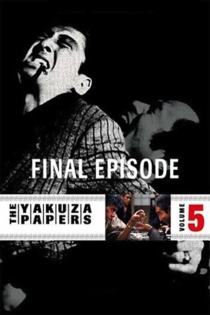
The 1960s and 1970s saw him in many contemporary roles. He appeared in Battles Without Honor and Humanity: Deadly Fight in Hiroshima and Battles Without Honor and Humanity: Final Episode as well as Karei naru Ichizoku. The title role in the 1975 film Takehisa Yumeji was his.
On television, Kitaōji portrayed Miyamoto Musashi in the Nippon Television show of the same name. A major historical role was Sakamoto Ryōma in the year-long prime-time NHK Taiga drama Ryōma ga Yuku (1968). He landed the title role in the long-running cop show Zenigata Heiji, set in the Edo period. In the 1985 twelve-hour New Year special Fūun Yagyū Bugeichō, he played Yagyū Jūbei, and in the following year's special, he portrayed both Tokugawa Yoshimune and Yagyū Shinrokurō. The role of another shogun fell to him in the following new year as TV Tokyo tapped him to play Tokugawa Iemitsu. Kin'ya returned to NHK for the 1987 Taiga drama Dokuganryū Masamune as Date Terumune, father of title character Date Masamune.
Another role he took had been created by his father. Saotome Mondonosuke was the title character in the series Gozonji! Hatamoto Taikutsu Otoko. It ran from 1988 to 1994 on TV Asahi. His father, Ichikawa Utaemon, had appeared in numerous films as Mondonosuke.
Kin'ya reprised the part of Miyamoto Musashi in the 1990 New Year's special. Toshirō Mifune had portrayed Musashi in the earlier film, also based on the Eiji Yoshikawa story, that had won an Academy Award. He returned to the New Year's special in 1996, again as the famous swordsman, in Tokugawa Kengōden Sore kara no Musashi.
His first portrayal of Ōishi Kuranosuke was in the 1996 Chūshingura. He took up the role again in 2004 for the NHK Saigo no Chūshingura and in 2007, in the New Year special Chūshingura Yōzei-in no Inbō. Other historical roles from the Sengoku period include Azai Nagamasa, Saitō Dōsan, and Yamamoto Kansuke. In addition to historical parts, he appeared in fictional series. His portrayal of Ogami Ittō in the Lone Wolf and Cub ( Kozure 2) Which was a series for Asahi TV in Japan is representative of these appearances.
In 2008, Kitaōji revisited the role of Katsu Kaishū in the Taiga drama Atsuhime. He had portrayed Katsu in his 1956 debut.
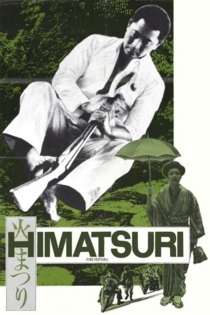
He won the award for best actor at the 10th Hochi Film Award for Fire Festival and Haru no kane. Kitaōji played one of the lead roles in Hideo Nakata's psychological thriller film The Incite Mill.
In recent times, Kitaōji voices the Hokkaido-inu character of "Father" in SoftBank Mobile's White Family advertising campaign.
祇園祭
Daisuke Itō, Tetsuya Yamanouchi
Kinnosuke Nakamura, Toshirō Mifune
Shinkichi, a peasant employed as a cloth-dyer, has a dream: in the midst of the civil war which ravages Japan, he hopes to revive the long-banned custom of the Kyoto Gion Festival, and by doing so, bring together the warring clans and rampaging brigands in peaceful celebration.
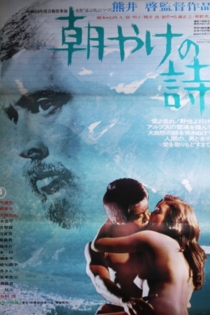
The Day the Sun Rose

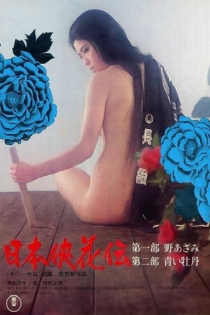
日本侠花伝
Tai Katô
Hiroko Maki, Tetsuya Watari
Tai Kato’s early 20th century set yakuza epic about an ordinary merchant girl (Hiroko Maki) who crosses paths with an assassin (Tetsuya Watari). The encounter sends her to jail as a suspected accomplice. Years later she marries a yakuza boss, whose gang is affiliated with working class people.
The Blossom and the Sword
犬笛
Sadao Nakajima
Bunta Sugawara, Kinya Kitaoji
In this crime thriller produced by Toshiro Mifune (who has a supporting role), hard-boiled Shiro Akitsu goes on a relentless search for his abducted 7-year old daughter, with the aid of an Ainu dog summoned by a whistle she gave him.
Dog Whistle
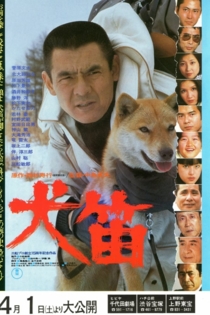
砂の器
Shunsaku Kawake
Noriyuki Higashiyama, Kento Nakajima
A bruised and battered corpse in Shibuya, Tokyo has the attention of the local cops. A veteran detective is assigned to the case. The last utterance of the victim is one clue that detective Imanishi has to work on. Yet, the case becomes more tangled quickly. Elsewhere, a prodigy named Waga Eiryo is composing an orchestral piece.
Castle of Sand
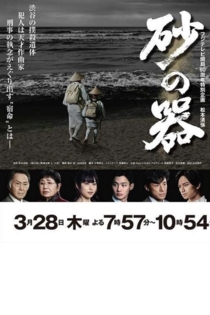
水戸黄門 助さん格さん大暴れ
Tadashi Sawashima
Hiroki Matsukata, Kinya Kitaoji
The story of two young men whose ambition is to become the personal bodyguards to the Shogun's uncle, Lord Mito Komon. Portrayed by a pair of up and coming stars, Sasaki Sukesaburo (Matsukata), the son of a widower and Atsumi Kakunoshin (Kitaoji), whose mother is a widow find themselves constantly in trouble and are forced to become two of the most powerful fighters in all Japan. The stories about Mito Komon and his travels througout Japan are many, but this is one that had yet to be told. The struggles of Suke-san and Kaku-san faced in order to join the Elder in his quest to fight against injustice and corruption during the samurai era.
Lord Mito: Struggle of Suke and Kaku
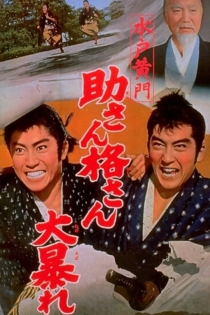
仁義なき戦い 広島死闘篇
Kinji Fukasaku
Bunta Sugawara, Shin'ichi Chiba
Repeatedly beat to a pulp by gamblers, cops, and gangsters, lone wolf Shoji Yamanaka finally finds a home as a Muraoka family hitman and falls in love with boss Muraoka's niece. Meanwhile, the ambitions of mad dog Katsutoshi Otomo draws our series' hero, Shozo Hirono, and the other yakuza into a new round of bloodshed.
Battles Without Honor and Humanity: Deadly Fight in Hiroshima
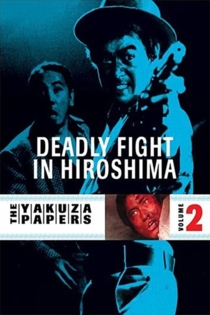
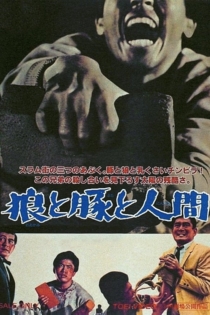
Wolves, Pigs & Men
Kinji Fukasaku
Ken Takakura, Rentaro Mikuni
Sabu and his pals hold a pauper's funeral for Sabu's mother. His brother Jiro arrives home, fresh out of jail, and Sabu pointedly states that Jiro is not invited. Jiro meanwhile is planning a big job - steal 40 million in cash and drugs, and he invites Sabu and gang to act as decoys, for 50,000 each. The sting is a success, but the double-crossing starts almost immediately. Sabu discovers how little of the take they were promised and hides the stash. Jiro and his slimy partner pressure the kids to fess up. Meanwhile, their respectable elder brother Ichiro is being leaned on by the town's big boss, whose money it was.
Wolves, Pigs & Men
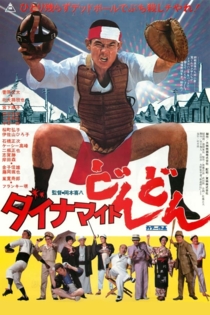
ダイナマイトどんどん
Kihachi Okamoto
Bunta Sugawara, Junko Miyashita
Yakuza Gang War is at the height in North Kyūshū Area in the summer of 1950, particularly between the Okagen Group and the rising Hashiden Gang. Now with the mediation/interference of the Americans, they decide to settle it in a peaceful, *democratic* way, that is, to settle it with a baseball game. Now, with its money and power, The Hashiden group soon recruits a group of gamblers known to be good at baseball from the whole country. So, what is the Okagen Gumi gonna do?
Dynamite Don-Don
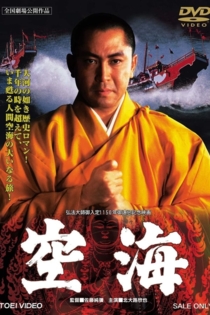
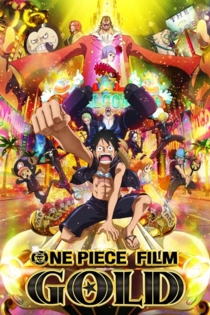
One Piece Film: GOLD
Hiroaki Miyamoto
Kazuya Nakai, Mayumi Tanaka
The glittering Gran Tesoro, a city of entertainment beyond the laws of the government, is a sanctuary for the world’s most infamous pirates, Marines, and filthy rich millionaires. Drawn by dreams of hitting the jackpot, Captain Luffy and his crew sail straight for the gold. But behind the gilded curtains lies a powerful king whose deep pockets and deeper ambitions spell disaster for the Straw Hats and the New World alike.
One Piece Film: GOLD
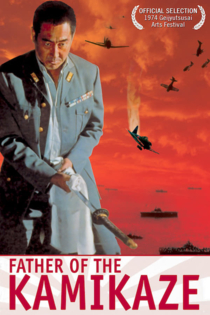
あゝ決戦航空隊
Kōsaku Yamashita
Koji Tsuruta, Noboru Andô
Vice Admiral Takajiro Ohnishi could see that Japan's defeat in WWII was inevitable. He came to realize that the only way to force a negotiated solution was to convince the Americans that invading Japan would cause massive casualties on both sides. The cold logic of suicide attacks, where one man and one plane could kill hundreds, seemed the only solution. In one of the cruel ironies of fate, Ohnishi actually succeeded; he convinced the Americans that invading Japan would be too costly in lives. But what he could not foresee was that America had another way of ending the war.
Father of the Kamikaze
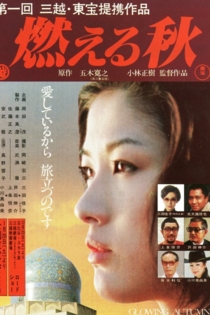
燃える秋
Masaki Kobayashi
Shinsuke Ashida, Hisashi Igawa
A very beautiful Japanese woman is in love with Persian carpets. She is being chased by lecherous Saburi Shin and a handsome young photographer. Lecherous Saburi Shin knows what she wants, and is able to produce it for her.
Glowing Autumn
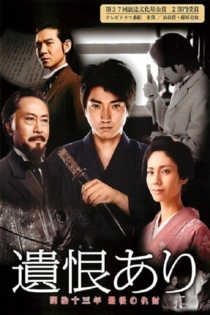
遺恨あり 明治十三年 最後の仇討
Takashi Minamoto
Tatsuya Fujiwara, Nao Matsushita
This is the true story of the last officially recorded case of adauchi, when a young man avenged the death of his father by brutally killing the murderers in broad daylight. Samurai revenge killings, or adauchi, was considered a rightful and noble act of honor and virtue.But all that changed abruptly on February 7, 1873, when adauchi became prohibited as part of the Meiji Restoration’s goal to Westernize Japan.
The Last Revenge