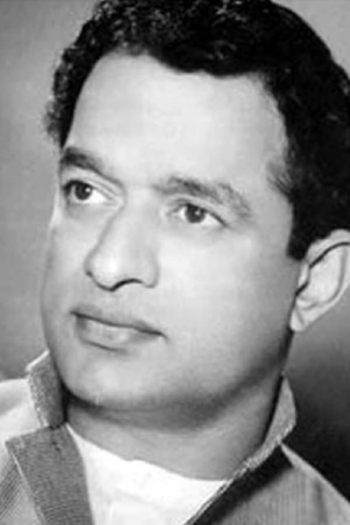
Shantaram Rajaram Vankudre
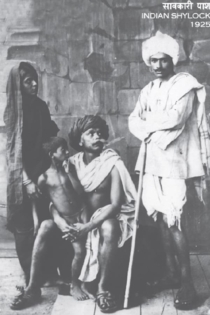
1901 - 1990Savkari Pash
Baburao Painter
Rajaram Vankudre Shantaram, Zunzharrao Pawar
A social film with high melodrama, concerning a peasant (Shantaram) who loses his land to a greedy money-lender and moves to the city where he becomes a mill worker. Taking its cue from the realist tradition, the film counterposes an idyllic rural life (destroyed but the greedy money-lender who uses forged papers to steal the peasant's land) with the harsh city life. The shot of a hut accompanied by a howling dog are regarded as one of the most memorable moments of Indian cinema to date.
Savkari Pash
Shejari
Rajaram Vankudre Shantaram
Keshavrao Date, Gajanan Jagirdar
The story is set in a small village in India where the villagers of different communities live in harmony. Pandit (Mazhar Khan) a Hindu, and Mirza (Gajanan Jagirdar) a Muslim, are two old friends who function as the village elders and look out for each other's families. An industrialist, Onkar, arrives to construct a dam in the village. He is opposed by the two friends and the other villagers. Onkar decides to create distrust and disunity between the two communities and friends. When a house is set on fire, Mirza is made to believe it is the work of Pandit and his son. Encouraged by the villagers, he is forced to ex-communicate the two. This causes strife and the dam is constructed. Finally the dam breaks and the two old friends come together again and die in their attempt to save lives.
Shejari

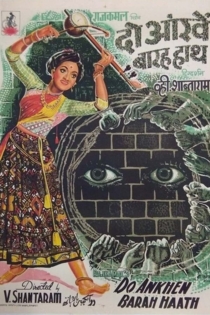
Do Ankhen Barah Haath
Rajaram Vankudre Shantaram
Rajaram Vankudre Shantaram, Sandhya
Progressive, reform-minded young warden gets permission to take six surly murderers from prison to dilapidated country farm, to rehabilitate it and themselves through hard work and kindly guidance.
Do Ankhen Barah Haath
Shakuntala
Rajaram Vankudre Shantaram
Jayashree, Chandramohan
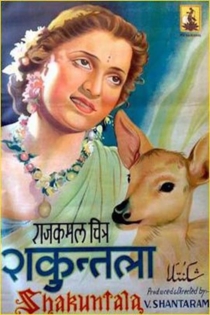
Following a passionate encounter with King Dushyanta (Chandramohan), the comely Shakuntala (Jayashree) finds herself pregnant and rejected by the royal court. She gives birth in a forest to a son which she names Bharat (Kumar Ganesh). When the King tracks his former lover down and tries to take her back, she flatly refuses him.
Shakuntala
अमर भूपाळी
Rajaram Vankudre Shantaram
Panditrao Nagarkar, Sandhya
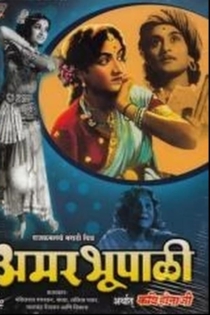
Veteran director V. Shantaram spins this bio-pic about poet and musician Honaji Bala -- best know for popularizing the lavani dance form and for writing the classic raga Ghanashyam sundara shirdhara -- who reached the zenith of his creative powers just as the Maratha empire was collapsing to British invasion forces. The film shows not only Bala's passionate interest in lavani, but also his passionate interest in prostitutes -- particularly a beautiful dancer named Tamasha (Sandhya). As the Pune court bestows Bala an award for his talents, the film shows the Maratha army getting routed by the British onslaught.
The Immortal Song
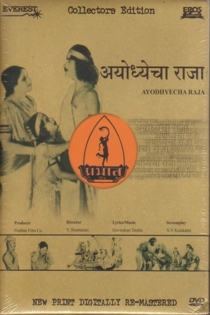
अयोध्येचा राजा
Rajaram Vankudre Shantaram
Govindrao Tembe, Durga Khote
Ayodhyecha Raja, literally "The King of Ayodhya", was the first Marathi talkie. It is based on the mythological story of Raja Harishchandra of Ayodhya and his test by sage Vishwamitra, as recounted in Valmiki's epic, Ramayana. The film was also made as a double-version, Ayodhya Ka Raja (1932) in Hindi, making it the first double version talkie of Indian cinema.
Ayodhyecha Raja
Manoos
Rajaram Vankudre Shantaram
Shahu Modak, Shanta Hublikar
A love tragedy featuring a policeman, Ganpat (Modak) and a prostitute, Mainal (Hublikar). Ganpat saves Maina from a police raid on a brothel and they fall in love. Her reputation and sense of guilt resist his attempts to rehabilitate her. Ganpat's respectable middle-class mother (Sundarabai) symbolizes all that Maina would like to be, but she is arrested for murdering her evil uncle and refuses Ganpat's offer to release her from prison.
Manoos
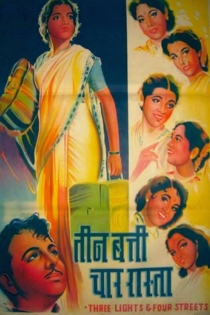
Teen Batti Chaar Raasta
Rajaram Vankudre Shantaram
Karan Dewan, Sandhya
Ramesh, the youngest son of a well-to-do family, falls in love with a woman he hears singing on the radio -- even though he's never seen her. When he finds out his mystery woman is Ksama, a servant in his parents' house, everything is thrown into turmoil. Will Ramesh accept Ksama? Will they get married? Love may just conquer all in this classic Bollywood melodrama.
Three Lights & Four Streets
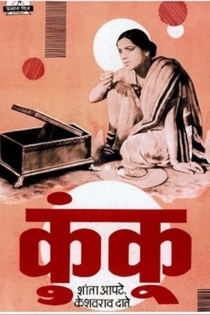
Kunku
Rajaram Vankudre Shantaram
Keshavrao Date, Shanta Apte
Neera (Apte) is trapped into marrying an old widower Kakasaheb (Date). He is a progressive lawyer with a son and daughter of Neera's age. Neera refuses to consummate the union claiming that while suffering can be borne, injustice cannot. Neera faces many hurdles including her mother-in-law and a lascivious stepson Pandit (Nene).
Kunku
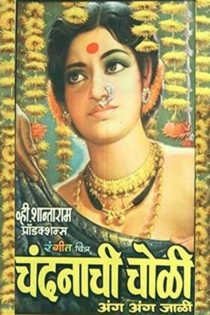
Chandanachi Choli Anga Anga Jali
Rajaram Vankudre Shantaram
Arun Sarnaik, Sandhya
Vasudeo Deshmukh gets married on his mother's insistence without seeing the girl. Gaura, a famous dancer is on the same train as Vasudeo's. As fate has it, Gaura becomes Vasudeo's wife.
Chandanachi Choli Anga Anga Jali
Navrang
Rajaram Vankudre Shantaram
Mahipal, Sandhya
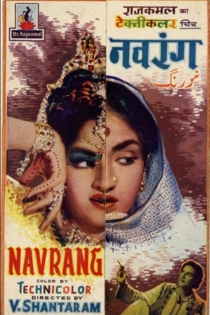
Diwakar is a poet and loves his wife Jamuna on everything. But Jamuna does not agree that Diwakar lives out of sheer poetry in a fantasy world and the real world less and less responsible. Diwakar goes so far that he is a fantasy woman in his wife's body creates what he calls Mohini. Diwakar will soon become a recognized poet and Jamuna gives birth to a boy. Unfortunately, the happiness does not last long: Diwakar loses his job because of a critical songs against the British. Now he can no longer feed his sickly father nor his son, who is starving. All this makes Jamuna angry, but above all Diwakars growing obsession with Mohini. As Jamuna decides to live apart from Diwakar, it is destroyed internally and no longer capable of proof. Jamuna slowly realizes that she can not live without Diwakar and forgives him.
Navrang
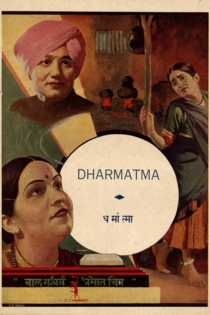
धर्मात्मा
Rajaram Vankudre Shantaram
Bal Gandharva, Ratnaprabha
This saint film is about Sant Eknath (1533-99), a major Marathi poet, author of the Eknathi Bhagvata and numerous abhangas evoking folk poetry, especially the bharuda form of solo performances. The film focuses on Eknath's humanitarian defence of the 'untouchable' castes. Opposed by the evil Mahant (Kelkar/Chandramohan), Eknath becomes a social outcast when he arranges to have the lower-caste people fed before the Brahmins during a prayer meeting at his house, compounding the offence by going to eat in one of their houses. The drama is heightened by Eknath's son Hari Pandit (Kale) who joins the ranks of the opposition. The happy ending occurs when the film transcends the food motif and Eknath defends himself by reading his poems to the Pradayananda Shastri of Kashi.
Dharmatma