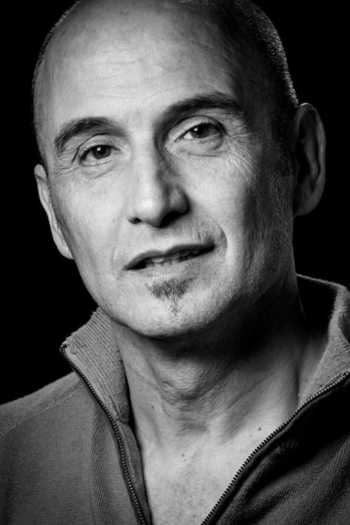
Paulo Filipe
1965 (60 лет)
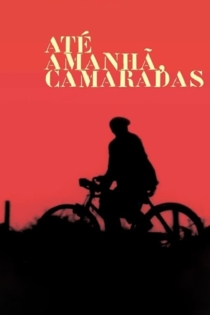
Até Amanhã, Camaradas
Joaquim Leitão
Gonçalo Waddington, Cândido Ferreira
Portugal, 1944. In a country oppressed by a brutal dictatorship, there are those who resist and mobilize the people to fight for bread and freedom, even if it cost them prison, torture or their lives.
Until Tomorrow, Comrades
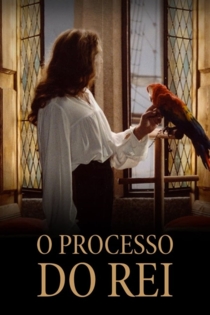
O Processo do Rei
João Mário Grilo
Carlos Daniel, Aurelle Doazan
At the time Portugal presented a strange spectacle to the rest of Europe. D. Afonso VI, son of the fortunate D. João de Bragança, was in possession of the throne and was an insane imbecile. His wife, daughter of the Duke of Nemours and cousin of Louis XIV, dared hatch a plot to oust her husband from the throne. The king's stupidity justified the queen's bravado. Despite being master of unusual strength and having slept with his wife for a long time, she accused him of being impotent. Marie Françoise had acquired through artfulness what Afonso had lost in anger in the kingdom. She had him imprisoned ( November 1667 ) and quickly obtained a papal bull from Rome to confirm her virginity and bless her marriage to her brother-in-law Pedro. Portugal's submission for the Academy Award for Best Foreign Language Film in 1990.
The King's Trial
O Filme do Desassossego
João Botelho
Cláudio da Silva, Pedro Lamares
Lisbon, today. In a room of a house at Douradores Street, a man invents dreams and theorizes about them. The essence of the dreams itself becomes physical, palpable, visible. The text itself materializes in its musicality. And, in front of our eyes, this music can be felt with the ears, brain and heart. It spreads itself in the street where the man lives, in the city that he loves above all and over the entire world.
Disquiet


Os Maias: Cenas da Vida Romântica
João Botelho
Graciano Dias, Maria Flor
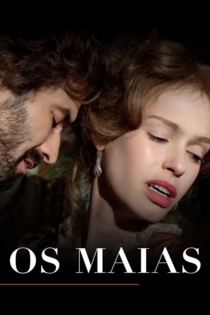
The tragedy and comedy in Carlos' life begins, grows and ends like the tragedy and comedy of Portugal. In the company of his close friend, João da Ega, allegedly a brilliant writer, Carlos, with his idle existence as an aristocratic doctor, spends his time to enjoying friends and lovers. Until he falls in love. She is a new character in this revolutionary novel. It's a vertiginous passion that goes beyond that past gloominess to reach a new and darker abyss, incest.
The Maias: Story of a Portuguese Family
O Ano da Morte de Ricardo Reis
João Botelho
Chico Diaz, Victoria Guerra
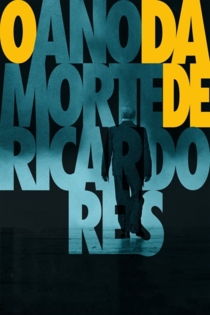
Fernando Pessoa, one of the greatest writers in Portuguese, created an immense parallel world and several heteronyms so as to endure the loneliness of genius. José Saramago, 1998 Nobel Laureate in Literature, has a heteronym, Ricardo Reis, return to Portugal after a 16-year exile in Brazil. 1936 is a perilous year with Mussolini’s fascism, Hitler’s Nazism, Spain’s Civil War and Salazar’s New State in Portugal. And Fernando Pessoa meets his creation, Reis. Two women, Lídia and Marcenda, are Reis’ carnal and impossible passions. “Life and Death as one” allows for literature and cinema.
The Year of the Death of Ricardo Reis
Passagem por Lisboa
Eduardo Geada
Anthony Story, Margarida Reis
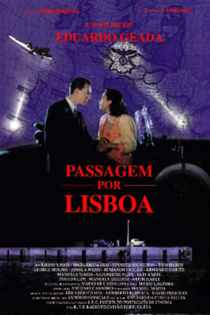
Lisbon, early 1940s. The neutral port town is an open door to freedom, for those who are escaping the Nazi occupied France and eastern European countries, and a war field for spies of every description. Lisbon became a cosmopolitan town, where the Duke of Windsor, Primo de Rivera, Pola Negri, Leslie Howard, Walter Schellenberg and Juan Garcia are often together in the luxury hotels and night-clubs. Espionage and crime go hand in hand, despite of, or encouraged by, the Portuguese secret police.
Passagem por Lisboa
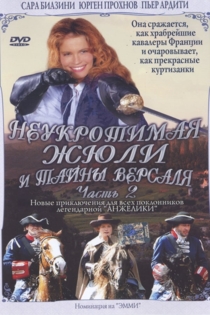
Julie, chevalier de Maupin
Charlotte Brändström
Sarah Biasini, Pietro Sermonti
Agnès Dormes, a famous opera singer, saves Julie, a baby girl who was about to be sacrificed during a black mass. Twenty years later, the baby has turned into a beautiful energetic twenty-year-old young lady determined to find out about her origins. In Avignon, Julie manages to meet Agnès and discovers on the occasion she is not her real mother. A series of adventures will ensue and at a time Julie is nearly burned on the stake. But she eventually achieves her end and can marry, a street performer close to her heart.
Julie, chevalier de Maupin

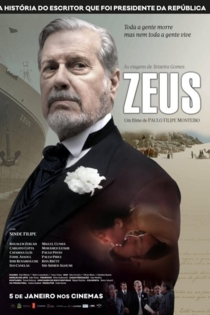
Pele
Fernando Vendrell
Daniela Costa, Francisco Nascimento
Pele is a film about a young mulatto woman that in spite of being rich, beautiful and intelligent, feels discriminated because of the colour of her skin. The entire plot is in the early 70's, when Portugal had a dictatorial government, ultramarine territories and lots of racism in its society… Issues like racism, female condition and the spoilt lives of the high-society are the main themes of this movie
Skin

Fin de curso
Miguel Martí
Jordi Vilches, Álvaro Monje
There are two months to the end of High School Spanish classes in Lisbon and it's time to decide the destination for the end of year trip. That decision will cause a real "Civil War" between two irreconcilable groups: the "class nerd", who propose the typical cultural trip to Paris, and "freeloaders" who prefer to enjoy the week in Benidorm, the "New York's Costa Blanca ".
Fin de curso


Les femmes et les enfants d'abord
Sandra Joxe
Anna Galiena, Féodor Atkine
Rose was a brilliant student of Fine Arts. Then, she gave up everything for a "beautiful marriage". Now in her thirties, she is experiencing more and more difficulties in her life, which is both materially overprotected and difficult with her three children and an increasingly absent husband. She breaks down, cracks up and tries to imagine how she could broach the subject with her husband before it's too late. To her great amazement, it was Didier who, one evening before going to visit friends, announced that he was leaving and that he had already rented a small studio. After the shock, Rose goes to her father, an old Spanish anarchist, who gives her back the taste for values she thought she had lost.
Les femmes et les enfants d'abord