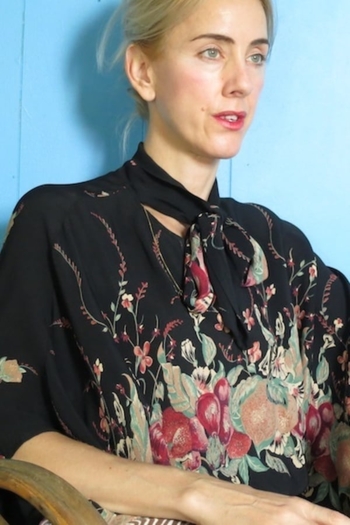
Stephanie Barber
2021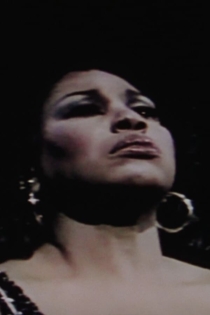
Another Horizon
Stephanie Barber
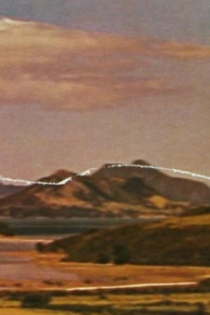
The horizon, where the sky and the earth meet, is always elsewhere, a promised place where these two elements come together. a metaphor, an orienting, a promise of transition, change, transcendence. a place where the corporeal and spiritual meet, or are cleaved apart. Also, here, the space between narrative and documentary, fact and fiction, is scratched between two voices. Jayne love reads a text i wrote for her, short sentences on the concept of the horizon and the briefest suggestion of narrative collide with pieces of Richard (Oswan) Williams' beautiful, rum-fueled living room sermons to me.
Another Horizon
3 peonies
Stephanie Barber
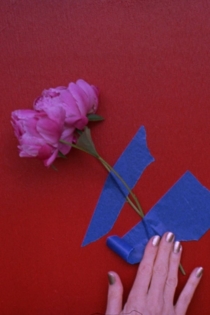
A brief, poetic 16mm film on a simple sculptural action. What becomes apparent is the humor possible in material interactions and the tender and sometimes melodramatic symbolism of cut flowers. What begins as a reverence for natural beauty ends up pointing towards the abstract expressionism and color field work of high modernism which, in many cases eschewed the banality of such 'natural' beauty. The collaged soundtrack suggests weightier concerns, gently insistent behind the flatness of the utilitarian sounds of ripping tape.
3 peonies
the inversion, transcription, evening track and attractor
Stephanie Barber
Stephanie Barber 2008 | 00:13:21 | United States | English | Color | Stereo | 4:3 "how looking at what has become the skeletons of photographs is a visual lecture on aesthetic pleasure or emotion. and how being, almost entirely denied of this pleasure, or having the pleasure merely suggested induces a viewer to ruminate on the act of viewing and that of wanting to view. and maybe it is evolution which causes this anxiety and art form." A series of collages recreating the photographs of well known artists (Uta Barth, Kohei Yoshiyuki, Candida Hofer, Deborah Willis) and a very slight suggestion of the actual photographs. The soundtrack is composed of approximately 25 statements on photography. -- Stephanie Barber
the inversion, transcription, evening track and attractor

Dogs
Stephanie Barber
A mini-revolution. Wrong choices. The divorce of ethereal beauty and mystery so common in experimental films. In Stephanie Barber's films. What begins as devastatingly awkward or "tender" unfolds itself to show a deceptive, strangely rigid literary formalism commented upon by the content. The two (form and content) dance around, moving towards and away from each other in the tricky, clear dialogue. Hyper-reflexivity, art and love (and the role faith plays in each of these). The filmmaker writes, "I, myself, feel safest around purposefulness, can read more clearly an artist's work when I trust that choices have been weighed, bear meaning. This film requires a great deal of faith because it is strange and labile. Its device-ness is so apparent as to have left it naked. And then so naked as to be, perhaps, closed again."
Dogs
shipfilm
Stephanie Barber
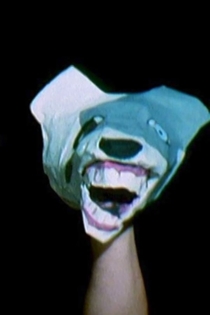
According to filmmaker Stephanie Barber, "This is probably the most heartbreaking film I have made." The pacing is romantic and simple, haiku-esque pauses and inclusions, with the words contrasting this poetry with their factual, disinterested narration. And that narration is a simple statement of failure; one which lies not in any action but in the pre-thought to that action, the hope or faith one holds in oneself, one's knowledge or abilities.
shipfilm
Razor's Edge
Xav Leplae, Stephanie Barber
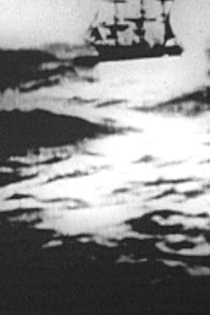
One friend tells another friend what she remembers from reading the Somerset Maugham novel "The Razor's Edge" ten or fifteen years ago. It is a sketchy and slanted remembering. They decide to shoot a film of this memory, a foggy tale with scant connection to the original but feeling the patronage of that text. Being artists and tricksters, they do it as a game, all in one week, with donated short-ends and gestural implications to narrative. What they really do is visit after years of not visiting. Endless talks about the state of the planet and our access to knowledge or the ineptitude of art. All this talking and the film turns out with almost no dialogue but sweeps through the city of Baltimore (which is often destitute, tropical and friendly).
Razor's Edge
A Little Present (For My Friend Columbus the Explorer)
Stephanie Barber
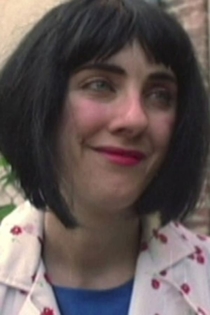
While referencing the explorer Christopher Columbus, the film is actually a gift for filmmaker Stephanie Barber's friend, the performance artist Theresa Columbus. The short imagistic film is suggesting (or questioning) ever so gently the effects (both positive and negative) that exploring has on that which is being explored. Our most well known Columbus, now so often vilified, here stands in for a more psychological and artistic exploration and the fall out that can occur from that sort of expansionism as well. Like many of Barber's films, the piece itself works almost separately from the implications and sidelong glances of the title and the way it interacts with the (almost passive) images and (often quite dominant) soundtrack.
A Little Present (For My Friend Columbus the Explorer)

dwarfs the sea
Stephanie Barber
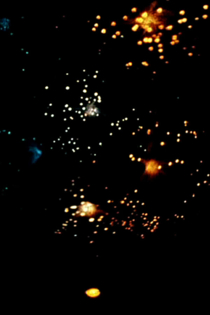
Small biographies and musing generalizations--men’s relations to each other and their lives. There is hope and loneliness, companionship and isolation and the simplest of filmic elements to contrast the complexity of human emotions. The delicacy of the formalist writing moves the listener from intimacy to universalism and back again, swaying gently to and fro like the rocking of a ship. The minimalism of the photographic presentation allows the viewer to recognize the humanity in each individual document of a body.
dwarfs the sea
In The Jungle
Stephanie Barber
Cricket Arrison, M.C. Schmidt
In The Jungle, playfully and sorrowfully tells the tale of an unreliable narrator in a self imposed exile. Given a grant to study the equivalent of animal cries and whines in jungle flora our heroine has lived for 1, 612 days deep in an unnamed jungle. This jungle serves as an extended metaphor for excessive and continual growth and death and fear and sustenance; a metaphorical space of chaos in which the scientist finds solace and which stands in contrast to the human jungle of 'civilization'.
In The Jungle
They Invented Machines
Stephanie Barber
THEY INVENTED MACHINES is about colonialism, entertainment and love. The images are taken mostly on Disney World rides where one is shown facsimiles of people from far away lands. The soundtrack, a little more than half-way through, ceases its cricketing and, against impressionistic waterfalls, mentions love ("they have love here") which must then be thought of in the context of this same wonder, possession and amusement. The film ends with a series of flights.
They Invented Machines
Daredevils
Stephanie Barber
A portrait of risk and language, the experimental narrative Daredevils, presents a writer as she interviews a well-known artist and feels the reverberations of their discussion throughout her day. Visually spare, still and verbose the video constructs a metaphor of an artist’s life and work as daredevilry. –S.B.
Daredevils